


Issue-Transitional Justice
There was no trick
There was no trick because there was no intention to evade the popular will. In a very difficult and volatile context, the government opted for the representative of the people, which is Congress, to interpret and decide whether or not the new agreement met the popular mandate of the plebiscite.
Read MorePeace implementation: was there a trick?
In the plebiscite for peace, some voted for hatred of the FARC; others because they conscientiously read the agreement and rejected it; others came out in anger after reading certain messages, not always accurate, that they received, etc. An obvious question arises: who could interpret and decide whether the changes incorporated into the new agreement genuinely responded to the concerns of those who voted against it?
Read MoreA year after the plebiscite, we learned the hard way
We learned the hard way about a country with very few bridges between different sectors. It is still necessary to defend the progress of the Peace Agreement: it is a remarkable success that today, there are 7,132 fewer weapons in our country, and that in the last ten months, there have been no registered victims from FARC actions.
Read MoreWhat If Colombia Does Not Fulfill Its Promise to the FARC?

Colombia has a unique opportunity to build a future without an armed conflict. However, the statistics are against Colombian success, since 45% of the peace accords signed between 1989 and 2004 failed within the first five years of implementation. Therefore, there should not be additional destabilizing factors such as a breach of agreement.
Read MoreThe Special Jurisdiction for Peace (JEP)
Despite all of its flaws, the Selection Committee made the best selection of judges for a high court that has been made in Colombia for decades. And we have a JEP that, given its integration, has all the capacity to achieve a worthy legal closure to our long and painful war.
Read MoreLessons of the Special Jurisdiction for Peace
We do not have to look far to find immediate reasons against clientelism in justice. The judge selection for the Special Jurisdiction for Peace (JEP) has just given us two lessons that should be applied throughout the judicial system.
Read MoreFrom Ricaurte to the Special Jurisdiction for Peace
The Special Jurisdiction for Peace must be composed of people selected with criteria and procedures free of suspicion. Specially at a critical time for justice, when there is an arrest warrant against former Supreme Court President Francisco Ricaurte.
Read MoreUndue pressure in the wrong direction

Why let the United States continue to pressure the government to deal harshly with communities that plant coca, if the problem lies in the ban promoted by the U.S. and delays in rural development in Colombia?
Read MoreTo prohibit paramilitarism?
Perhaps the constitutional prohibition of paramilitarism will not magically make disappear this atrocious phenomenon and its consequences in Colombia. But it would mean a big step in building a robust policy to prevent and punish it, along with the actions that have made it possible.
Read MoreMass release of criminals?
This measure – which undoubtedly causes alarm and creates problems – is necessary to mitigate the damages caused by the inability of the Colombian State to provide this basic service quickly and efficiently. Six necessary clarifications on a Law that has been poorly understood.
Read MoreLessons for Colombia from eight countries on corporate responsibility in transitional justice: report

The report includes a comparative study of eight countries (Argentina, Brazil, South Africa, Guatemala, East Timor, Sierra Leone and Liberia) that used transitional justice to judge crimes by corporate actors during armed conflicts.
Read MorePeace Implementation: What’s in the works; what already happened (and what should not go through fast-track)
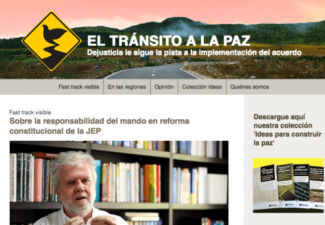
Visit Dejusticia’s web resource, El tránsito a la Paz (The Road to Peace), and view our featured “Visible Fast Track” section
Read MoreProposal for the draft legislative act giving stability and security to the Final Agreement

As part of a plural group, Dejusticia presents an analysis on the political expediency and constitutional justification of Draft Legislative Act 01 of 2016 Senate (PAL 1/2016), which gives stability and legal security to the Final Peace Agreement.
Read More
The first four books of the “Ideas for Peace Building” collection are already available

The series, which will have a total of ten texts, seeks to provide thematic documents that offer diagnoses and proposals on some of the post-agreement challenges.
An organization with collective leadership: our history reviewed in the Leader Network
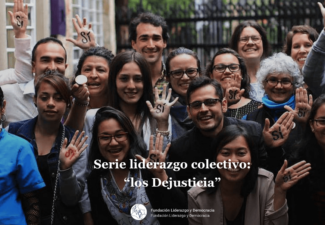
The Leader Network chose Dejusticia to initiate the series of profiles on collective leadership. The profile published in Silla Vacía investigates three fundamental measures of leadership: vision, example and results.
Read MoreThe transition to peace: our commitment to democratize and contribute to the implementation process of the agreement
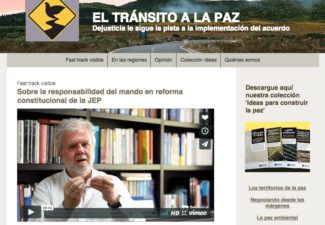
In Dejusticia, we believe that citizen participation and the transparency of the implementation process are fundamental for the construction of a lasting peace beyond what is agreed on paper. In that sense we want to contribute with the website ‘The transit to peace’.
Read MoreCommuniqué on transparency and publicity of decree-laws and process management of the Constitutional Court, in the fast-track
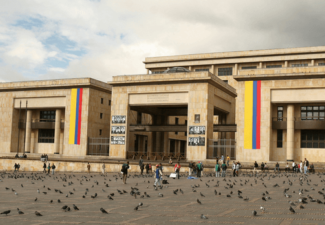
Dejusticia, alongside several civil society organizations, academics and research centers, issued an open letter with proposals to create transparency and dissemination measures regarding the development of norms to implement the peace accord.
Read MoreWhat is the balance of the constitutional reform project on the JEP?
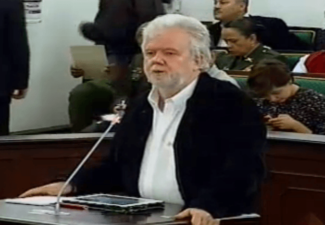
On February 14, Rodrigo Uprimny participated in the hearing convened by the First Committee of the Senate to discuss the constitutional reform project that creates the Special Jurisdiction for Peace (JEP) and regulates the special treatment of the Public Force. This reform is two debates from being approved by the Senate. Find here the document on which your intervention was based and which gives an overview of this project
Read MoreThe Integral System of Truth, Justice, Reparation and Non-Repetition, as the axis of the purposes of coexistence and peace: joint statement
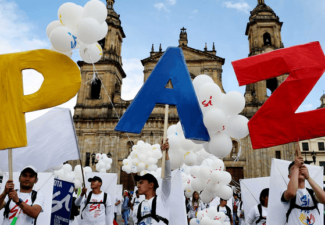
The civil society organizations and academics who subscribe to this document agree that we are facing a unique opportunity for the changes and adjustments that our democracy requires to definitively overcome the causes and consequences of the armed conflict and to guarantee the stability and durability of peace.
Read MoreFive points that concern us about the Special Jurisdiction for Peace and the special treatment of the public force
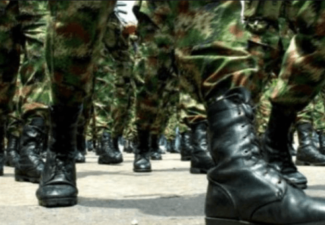
The House of Representatives has already approved the constitutional reform that creates the Special Peace Jurisdiction (JEP) and regulates the special treatment to the public force. This project, which will give life to the transitional justice mechanism to investigate and punish the crimes committed during the conflict, is two debates in the Senate from becoming a reality.
Read More