


Issue-Transitional Justice
Clarifications on the fast-track process
Even though the Court’s sentence on the fast-track process is legally wrong and makes the implementation of the Peace Accord more difficult, it is important to understand its scope. A poor understanding of the sentence could increase its negative impact.
Read MoreThe Court on the fast-track process
The Court’s ruling on the fast track procedure could be an opportunity to achieve greater democratic legitimacy for the peace agreement, as the new rules of the game demand the construction of stronger consensus in Congress.
Read MoreKidnapping and IHL
It is not coherent for the ELN to say it respects international humanitarian law (IHL) and seeks peace negotiations that meet the aspirations of Colombian society while it keeps practicing kidnapping for ransom.
Read MoreThe road to peace is not only about eradicating coca
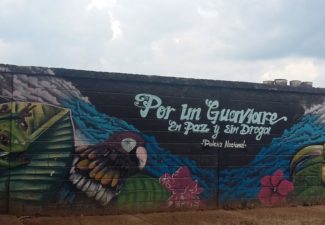
In Havana, the agreement did not only lay out the number of hectares to be eradicated, but also the means to make it possible and sustainable in order to achieve that “stable and lasting” peace that is called for in the final agreement.
Read MoreSmearing the Special Jurisdiction for Peace
Those who opposed the Peace Accord, and particularly the Special Jurisdiction for Peace, have all the right to criticize it. But they do not have the right to lie in order to mislead public opinion.
Read More“If there is no water for the people, there is no water for the palm”: the ‘peace’ conflicts of Marialabaja
The Montes de María subregion in the Colombian Caribbean has been living for ten years what is now called postconflict: the absence of formal armed actors in the territory and the government’s commitment to guarantee rights and non-repetition.
Read MoreRenewing Pathways to Peace in the Philippines: International Law and Amnesties
In 2016, I was attending a book launch in Manila pertaining to the Communist peace process in the Philippines, when the topic of amnesty came up. I realized that while there was scant awareness of the intricacies of the topic, amnesty was critical to the resolution of the conflict but it was also a potential landmine.
Read MoreOvercoming skepticism
Peace with the FARC advances decisively, but does not generate enthusiasm or defeat the skepticism of large urban sectors
Read MoreDisarmament
The FARC’s transition from war to life without arms is ever closer. A few days ago, the FARC’s walk to the rural zones ended, and with it, the concentration of almost 7,000 people seeking to leave the war.
Read MorePopulation and stigmatization
The growing polarization of peace is further eroding debate and democratic coexistence, due to stigmatizations against those who defend certain positions, as has happened to me in the debate on the so-called “command”responsibility.”
Read MoreOrganizations across the world say YES to peace in Colombia

More than 60 civil society organizations around the world, including Dejusticia, sign this declaration supporting the YES to the plebiscite for peace in Colombia.
Read MoreDejusticia and civil society organizations propose measures to guarantee transparency and participation in implementation of Final Agreement

Twelve civil society organizations, including Dejusticia, signed a letter addressed to President Juan Manuel Santos and members of the CSIVI to support Legislative Act 1 of 2016, which regulates fast-track, and to propose 7 measures to guarantee transparency and Citizen participation in the design, deliberation and implementation of the public policies foreseen in the Final Agreement.
Read MoreDejusticia attends the XVIII Regional Peace Meeting in Calamar, Guaviare

The meeting seeks to explain the Havana peace accords.
Read More#PlebiSÍto: Dejusticia explains the reasons to vote YES to the peace agreements

The plebiscite about the peace agreements is a unique opportunity to write our future differently. That is why Dejusticia proposes to write #PlebiSÍto.
Read MoreDo you know the reach of the Special Jurisdiction for Peace?
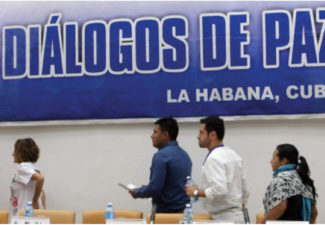
A common refrain in social media comments related to the peace process has been “we want peace without impunity,” implying that the current agreement does not deliver justice. However, how much of this is true?
Read MoreLaunch of “The Desired Peace”
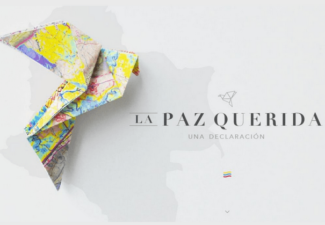
Today at 6pm a citizen initiative that supports the peace, “The Desired Peace”, will be launched at the Luis Ángel Arango.
Read MoreInternational Meeting: Land Restitution and Territorial Rights

The meeting, organized by the National University, Dejusticia, the Office for Restitution, and the Swiss Embassy, seeks to encourage exchanges of reflections and local, national, and international experiences about land restitution processes and territorial rights from the approaches of “Do No Harm” and Transitional Justice.
Read MoreIdeas for Putting the Peace Accords to a Popular Vote

Repairing Victims: Lessons Learned from a Study on Return
In recent days the National Univesity published a study titled “Challenges to the Integration of Returned Communities: Analysis of the Case of Las Palmas, Bolívar”. Although the study aimed to propose a tool that would allow monitoring and measurement of returned communities’ needs in terms of social capital, we will focus on the figures detailing inequality and the possible impact of these on the process of transformative reparations.
Read MoreThe Trouble Caused by Seeking to Replace the Higher Council of the Judiciary

Was the remedy worse than the disease? Infographic.
Read More