


Focal Points for a Global Conversation
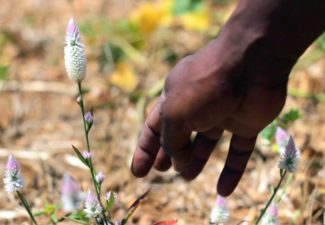
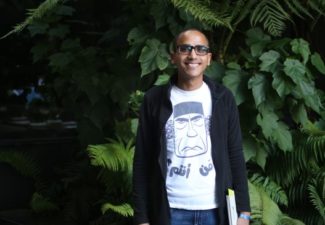
Currently, there is a lot of hope in promoting the common points of a global agenda of indigenous peoples, which combines questions and actions on identity, land, and development. Here are some insights from my conversations with over 50 indigenous leaders from around the world.
Read More“Today, even Chavistas are persecuted in Venezuela”: Rafael Uzcátegui
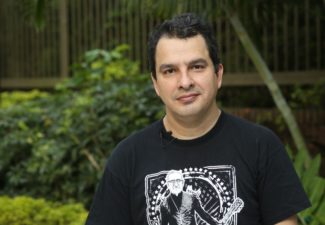
The director of the Venezuelan NGO, Provea, visiting Colombia on invitation from Dejustica, speaks about the escape of prosecutor Luisa Ortega and the possibility of a new wave of protests in principal cities around the country.
Read MoreThe dark side of conservation
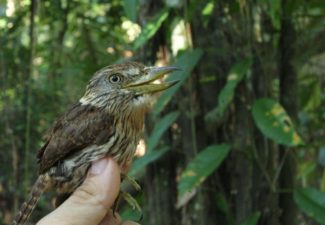
The conservation of nature and biodiversity is a legitimate goal, but what are the costs and power dynamics behind the traditional idea of “conservation”? Who is it benefiting and who is carrying the costs?
Read MoreThe civil rights of the families of missing persons need to be protected
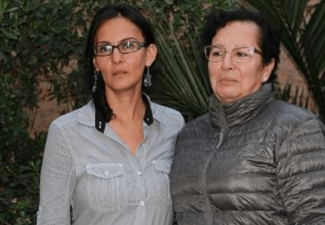
Gloria Mansilla and her daughters await the ruling of the Constitutional Court against a ruling that did not allow them to keep a property acquired through a loan, before her husband and father Miguel Angel Diaz disappeared.
Read MoreOsamah, the Yemeni activist who has not seen reconciliation
El Colombiano, a newspaper in Medellín, interviewed Osama Al Fakih, a human rights defender from Yemen, who was part of our 5th Global Workshop. The event, held in August in Cali and Bogotá, brought 15 activists from around the world who debated the need to reopen civil society spaces to defend human rights.
Read MoreLos Guáimaros resist being forgotten

August 30th marks the 15th anniversary of the massacre in the village of Los Guáimaros, in Montes de María. Despite the cruelty of those 15 deaths and their impact, their story remains untold and no one knows who did it.
Read MoreThe Persistent Sediments of Mercury

The Minamata Convention, aimed at protecting our health and the environment from the ravages of mercury pollution just entered into force, but if it is to make a difference at all, we must demand that its implementation be measured in terms of the quality of life and health conditions of those at risk of exposure.
Read MoreThe Agreements for the Substitution of Illicit Crops must have a gender perspective
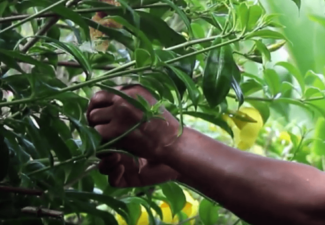
GPaz and Dejusticia presented contributions for the inclusion of the gender approach in the route to the formulation and implementation of Collective Agreements within the framework of the National Comprehensive Substitution Plan.
Read MoreMurat Çelikkan: When dissent becomes crime
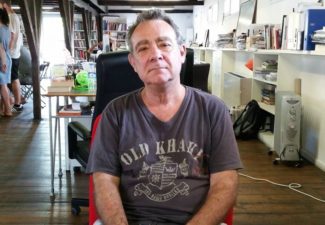
This weekend he was supposed to come to Colombia, to a forum on human rights in Cali. Today the Turkish activist is in jail for being editor of an opposition newspaper.
Read MoreDejusticia, ICAR and ECCJ release updated report on Assessments of Existing National Action Planson Business and HR

The International Corporate Accountability Roundtable (ICAR), the European Coalition for Corporate Justice (ECCJ), and the Center for the Study of Law, Justice, and Society (Dejusticia) are pleased to release an updated report on Assessments of Existing National Action Plans (NAPs) on Business and Human Rights.
Read MoreFor a stable peace, a sensible opposition
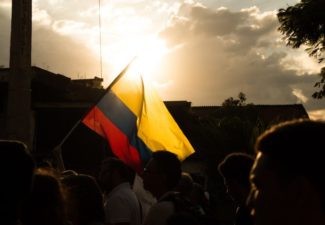
One of the most difficult wounds to heal from the armed conflict is closely related to the democratic debate. In the post-conflict period, democracies tend to be at their weakest point. Hence why a sensible dialogue between political forces is a condition for the prosperity of peace.
Read MoreJudicial impartiality
By not recusing himself from voting on a fast track ruling, Justice Bernal violated his judicial duties and placed the Court and the country in a difficult situation: the possibility of revoking the sentence increases legal uncertainty and political polarization.
Read MoreThe debts we owe to female coca growers
Although women growers face particular contexts of discrimination, poverty and workload, the decree creating the Program for the Substitution of illicit crops did not include a gender approach.
Read MoreThe easy case of Justice Bernal
The case of Justice Bernal, who would be unable to vote in a fast track ruling, is easy: it should lead to the nullity of that sentence.
Read MoreThe Salamanca frog
Instead of contemplating the greatness of disarmament, which opens the door to peace, many critics have stubbornly sought out the “frog” and say that the process was all a farce. Even if it received UN verification.
Read MoreA hint of cosmopolitanism
Perhaps the next great revolution in the history of mankind will no longer happen in a country (as in Russia in 1917 or in France in 1789), but throughout the world and be the result of the coordination of actions of millions of people.
Read MoreThe luck of prohibition: Bloomsday
The history of art is plagued with censorship. Ulysses, by the Irish author James Joyce, was banned for more than ten years and went to trial three times for being considered obscene.
Read MoreDangerous arbitration
The investment treaty with France, which provides clauses of arbitration and indirect expropriation, was approved during a third debate in Congress. The treaty could be approved in the next few days without much analysis or discussion. And it should not be so because the risk of these treaties is enormous.
Read MoreDangers without a warning
There are high risks with minimal concerns, like when you fall in the bathroom, and low risks with high concerns, like a terrorist attack. In Colombia there is a very high danger accompanied by a minimal concern: every year, accidents on public roads take the lives of 5,000 bystanders.
Read More“Ask the President …”
Accountability and transparency, a requirement to avoid corruption, is an activity of daily openness that every official must fulfill. Even when it comes to giving answers that are not worthy of a public entity, let alone the one responsible for ensuring transparency, such as the Office of Procurator-General.
Read More