


Irrational political animals
Either humans lost their reason or there is a serious problem with our concept of reason. I understand those who are convinced of the first thing: millions of humans – self-defining rationals – are reluctant to believe in the benefits of vaccines, believe in the most implausible lies through social media, are destroying the planet where they live, and choosing egotists populist against their own interests.
Read MoreThe pressures that advocates for healthy food face
It is no secret that health activists, particularly those taking on the tobacco industry, have faced aggressive, illegal and corrupt tactics deployed by the industries that these activists battle.
Read MoreFor a vital minimum in La Guajira
The crisis in Guajira is the expression of all the failures of Colombian politics.
Read MorePopulism and imprisonment in the Americas
A noxious trend has been embedded in the region for years. It consists in believing that jail is the only way to combat crime and in stigmatizing certain populations as “criminals.”
Read MorePopulation and stigmatization
The growing polarization of peace is further eroding debate and democratic coexistence, due to stigmatizations against those who defend certain positions, as has happened to me in the debate on the so-called “command”responsibility.”
Read MorePeace without indigenous or Afro-Colombian people
Through the fast-track in Congress, the implementation of the peace agreement is leaving out ethnic peoples. Long before there was a table in Havana, the peace labs were the territories of the Nasa in Cauca, the Wiwa’s Sierra or the black communities of the Pacific, who refused to take arms or left in the middle of guerrilla and paramilitary violence and state stigmatization.
Read MoreGoing to school hungry in La Guajira
In Bogotá, there are two images of La Guajira. For some, its is a touristic paradise. For the majority of people, it is synonymous with institutional crisis.
Read MoreThe State seems to negotiate with a dagger under the tablecloth
The drugs section of the peace agreement mentions strategies for the substitution of illicit crops, strengthening the fight against illegal finances and drug trafficking groups, paying attention to consumption and the promotion of an international debate on drug policy. However, it fell short in providing a comprehensive solution for communities associated with coca leaf cultivation.
Read MoreHealthy Food Activists: Old Tactics, New Victims
For no one is a secret that health activists have had to face tactical, illegal and corrupt agencies from the industries they fight. However, no one will suspect that food activists would also have to face these tactics. The infiltration of communications and censorship have become recurrent forms to stop their work in Latin America
Read More“Fast” but not “fat track”
The government seems to seek to convert the so-called fast track (“fast track”), into a kind of fat track (a “thick track”). At least that is the impression that leaves this idea of using it to approve constitutional reforms, such as mandatory voting or closed election lists, which may be good, but do not have a clear link with the Peace Agreement.
Read MoreCivil’s society second report on the penitentiary and prison situation

The Civil Society Commission Tracking the Sentence T-388 that Dejusticia makes part of presented a second report before the Constitutional Court.
Read MoreThe State Council’s decision did NOT change the rules for safe and timely abortion services

The high court, which for the first time recognizes the voluntary interruption of pregnancy as a fundamental right, also did not authorize the objection of institutional conscience for clinics or hospitals.
Read MoreThe Constitutional Court confirms decision that allows mayors to veto mining projects
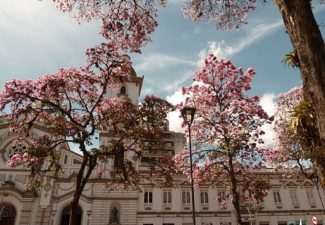
The Constitutional Court has confirmed the ruling that allows the country’s mayors to veto mining projects in their municipalities if they consider that they can affect the environment.
Dejusticia News 2016
Thank you for being with us this year. We will return to work on January 5th, 2017.
Read MoreFisherfolk file a tutela to save Santa Marta’s Ciénaga Grande
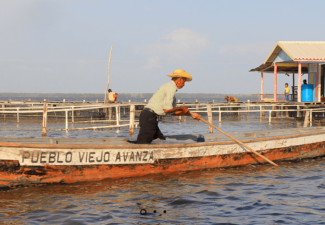
The environmental crisis of this ecosystem, which has caused massive fish deaths, inspired a group of citizens to engage in a judicial battle to claim the protection of their right to a healthy environment, decent life, and work.
Read MoreBojayá indigenous people claim their right to vote

Almost 70% of people from Bojayá did not vote on the peace plebiscite. A part of this group was composed by indigenous communities who claim that they were not able to reach the ballot box.
Read MoreExtractivism versus human rights: chronicles of the mined fields in the Global South
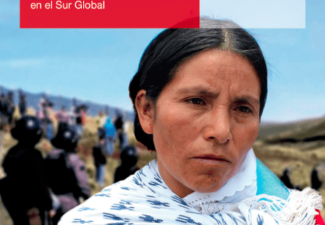
This book and Dejusticia’s initiative that originated it propose a new type of human rights approach that is characterized by three traits. First, it is about reflective writing whose authors are the very own activists that work directly in the organizations on the ground and stop to think about the potential, achievements and challenges of their knowledge and practice.
Read MoreColombia, Year Zero
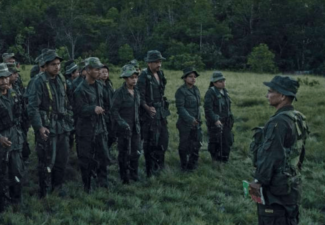
The Italian newspaper conducted a report on the Colombian peace process. For our director César Rodríguez, this accord “promotes conditions for a more inclusive society from a social, economic, and political point of view.”
Read MoreRodrigo Uprimny’s presentation in Senate hearing: endorsement and fast-track
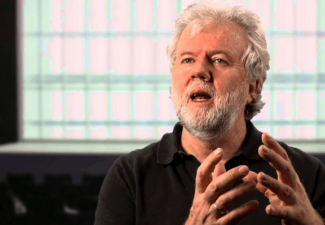
Rodrigo Umprimny’s participation in Senate hearing on November 29, 2016.
Read MoreSeminar: 5 years after the Law of Victims and Restitution of Collective Territories – Impact On Indigenous and Afro-Descendent Communities
5 years after the Victims’ and Collective Territories Restitution Law was passed a seminar evaluates its impact on indigenous and Afro-Descendent communities in Colombia.
Read More