


Permitted to Prohibit Mining
The question that everyone asks here in Salento, Quindío is the same I have heard from mayors and social leaders in many municipalities: can the mining titles given by the National Government supercede local decisions to privilege other activities, like tourism, agriculture, or the conservation of water sources.
Read MoreThe heroic act of guarding death
It was a sunny day in February and the entrance to the family’s house was decorated with a purple ribbon. In a room, Juanse’s photos and the paintings his friends had given him were visible. We talked for hours with his parents and sister, we got to know Juanse through his family. Two weeks ago, they had had to say goodbye to their 14 year-old son and brother.
Read MoreCulture and Its Intangible Benefits
We should take advantage of this moment when Colombia begins to question the role of culture in peace building to consider its contributions more broadly.
Read More5 Ideas to Improve the Peace Accords’ Popular Vote
This past Thursday, the Constitutional Court held a public hearing about the statutory bill that authorizes a plebiscite to put the peace accords to a popular vote.
Read MoreAlthough imperfect, peace should also arrive to rural areas
Throughout the 20th century, Colombia passed a series of agrarian laws that regulated ownership and exploitation of the land, one of the most important causes of armed conflict. The most important were Law 200 of 1936, Law 135 of 1961, Law 1 of 1968, and Law 160 of 1994. All were ambitious proposals. Nonetheless, the implementation of these laws has been a failure.
Read MoreKidnapping and Peace
There are ways of fighting that are so atrocious that there is no ideal, no matter how noble it may be, that can justify them. Kidnapping of civilians is one of them and for this reason it is almost unanimously condemned by all Colombians. These kidnappings are also war crimes in international law, and, if they are committed in a generalized or systematic way, are also a crime against humanity.
Read MoreThe Country’s Map
In Colombia we lie to ourselves a lot, but perhaps the most candid of all is to believe that we have a country as big as our national map suggests.
Read MoreSantos and IACHR’s Bankrupcy
It is known, because the news traveled like wildfire, that the Inter-American Commission on Human Rights (IACHR) is in financial crisis.
Read MoreThe Political Map of IACHR’s Crisis
Two days after that media and social networks go viral with IACHR’s crisis, we started to learn OAS member states’ reactions.
Read MoreThe Peace that Excludes Afro-Colombians
To not support the negotiations it not a viable option, because the real cost of this alternative could be disastrous for Black communities; but to accept a peace without participation isn’t an optimal situation either.
Read MoreInjustices and Wars
Injustices cause wars but wars, in turn, also cause injustices. In Colombia, for example, injustice derives from the high inequality in agrarian land ownership, which was used by the guerrillas as a justification for their armed uprising.
Read MoreThe Government’s Legal Arguments in the Palace of Justice Case Re-victimizes the Victims
The government’s legal defense in the Palace of Justice case took an important turn toward decency when the lawyer Nieto Loaiza was taken off the case.
Read MoreThinking of the Issue of Drugs Alongside the Peace Process
Now that the different peaces and post-conflict scenarios in Colombia are being discussed, it is crucial to include the problem of illicit drug prosecutions in the debate. From what perspectives should we approach this problem so that we don’t make the same mistakes of the past?
Read MoreSecond Attempt at Judicial Reform: What is Essential?
After the last failure, we are still waiting for a proposal that will allow us to overcome the three main problems in the judicial system. A key issue is to reform the Superior Council of the Judiciary, which has brought so much discredit to the judicial branch.
Read MoreThe Inspector General´s Ecological Bullying
Piedras, Tolima. In this remote rice region of the country, it is clear that the Inspector General’s crusade against the rights of the citizens is more ambitious and ubiquitous than what it appears from Bogotá.
Read MoreThe Ways of Democracy
Once again, the Constitutional Court announced a decision that shook up the political power in Colombia and it positioned itself, again, as the arbitrator of political positions on a highly controversial issue that is fundamental to Colombian institutions.
Read MoreA Surgical Judicial Reform?
The recent scandals about corruption in the Judicial branch are serious and they add to other deficiencies of the judicial system, like it’s slowness in certain areas. Some, therefore, propose a total reformation of the judicial system, as if it had collapsed.
Read MoreThe Legal System has More than Just Defects
Criticism of the legal system has resumed with force. Many are well-founded, since the judicial system suffers from a series of problems such as slowness, lack of access and transparency, and corruption.
Read MoreMain Difficulties for Human Rights Advocates in the Global South
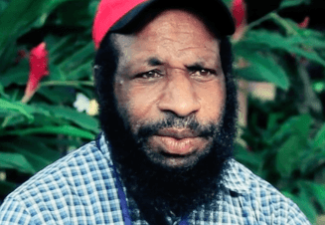
Dejusticia asked Global Action-Research Workshop participants what the biggest difficulties are for human rights advocates.
Read MoreYoung Human Rights Activists Reflect on their Work
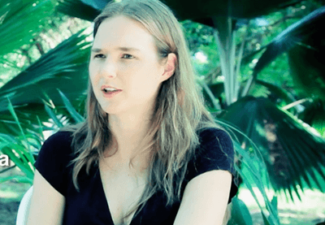
Dejusticia asked participants of the First Global Action-Research Workshop to reflect on their human rights work.
Read More