


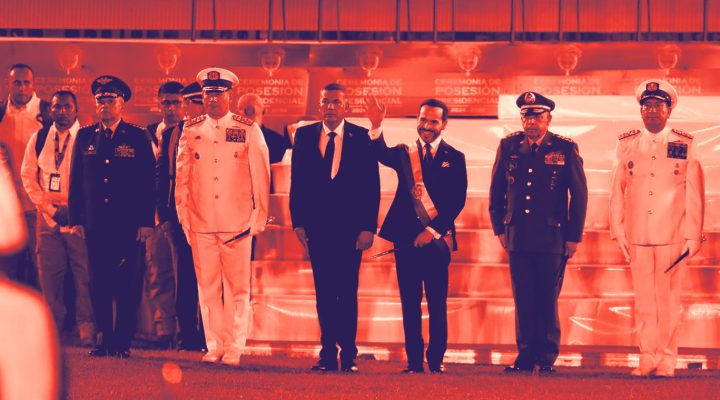
Colombia Changes Course: How Might the New Government Redefine Colombian Foreign Policy and the Political Balance in Latin America?
The transition from the Gustavo Petro administration to that of Abelardo de la Espriella marks a redefinition of Colombia’s development model. This analysis explores the diplomatic shift toward the U.S. and Israel, the move away from multilateral agendas, and the democratic implications of the reconfiguration of Latin America.
By Christy Crouse, Sofia Forero Alba | | Abelardo De La Espriella, Colombia-U.S. Relations, Colombian Foreign Policy, Latin American Geopolitics, Omar Bula Escobar, Political Transition in Colombia

Colombia’s Foreign Policy After Its Change of Course
Abelardo de la Espriella's victory marks a change of course in Colombia. We analyze how his administration may redefine foreign policy, multilateralism, and democratic balances in Latin America in the face of human rights challenges.
By Christy Crouse | | 2026 Colombian Elections, Abelardo De La Espriella, América Latina, Colombia, Colombian Foreign Policy, Democracy and human rights, Latin American Politics, Política Exterior, Right-Wing Populism
News
Search in News

Three Borders, One Life: The Struggle of Three Trans Migrant Women in Colombia
By Lina Arroyave, Néstor Hernández | | LGBTIQ+ rights, migration colombia-venezuela, migratory controls, trans women
Leaving behind who they’re supposed to be, their family, their hometown, and even the life others decided for them—this is the story of many trans women who flee to save ...
Lea más 
Between Dependency and Diversification: Agrarian Reform in Colombia and the Shift in International Cooperation
By Carlos Quesada, José Ignacio de la Torre | | Agrarian reform, Belt and Road, Colombia-China Relations, Foreign Investment, International cooperation, Paz territorial, Paz territorial, Territorial Peace, USAID
Since 2023, Colombia and China have announced bilateral agreements in which China committed to providing commercial support for agrarian reform. Colombia’s accession to the Belt and Road Initiative in 2025 ...
Lea más 
What’s the Point of an International Conference on Agrarian Reform?
By Carlos Olaya | | 2026 Cartagena Conference, Agrarian reform, Movimientos sociales, Political Density, Rural Development, Social Movements, Soft Law, UNDROP
The International Conferences on Agrarian Reform—the 2006 conference in Porto Alegre and the one recently held in Cartagena in 2026—may seem like largely ineffective events. Through these conferences, several governments ...
Lea más 
Farmers and Agrarian Reform: the Invisible Protagonists of a Global Debate?
By Carlos Quesada | | Agrarian reform, Agrobiodiversity, Campesinado, Derechos Humanos, ICARRD+20, International cooperation, Smallholder Farmers
“Nor is my invisibility exactly a matter of biochemical accident to my epidermis. That invisibility to which I refer occurs because of a peculiar disposition of the eyes of those ...
Lea más 
Intimately Political Conversations on Feminisms
By Margarita Martínez Osorio, Anyer Lorena Mosquera, Myriam Pérez Gallo | | Feminisms, racial inequality, Womens Rights
This text emerged from a conversation among three women who identify as feminists. We took a break from our daily rush and sat down to discuss a question that resonates ...
Lea más 
International justice: as fragile as it is necessary
By Paula Andrea Valencia Cortés | | Human Rights, ICC, Impunity, Inter-American System, International Criminal Court, International Justice, Multilateralism Crisis.
In different parts of the world, there are people who keep files and testimonies for years, clinging to the hope that one day there will be justice. When the courts ...
Lea más Search in Opinion
I don’t care if they call me a dictator.
By Nina Chaparro González | | bukele, Democracy, Dictadura, El Salvador, Program for strengthening - Others
During his six years in office, Bukele has consolidated his power, paving the way to become the dictator he appears to be announcing himself as.
Lea más NGOs at risk of global extinction
By Nina Chaparro González | | financiación internacional, NGO, Program for strengthening - Others
How can non-governmental organizations transform themselves? What were they like when they did not depend on international funding?
Lea más Colombia: going back to the original balance of justice
By Paola Molano Ayala | | gorillaz, JEP, Transitional Justice, Victims
There is a crucial aspect of Colombia’s transitional justice model that is worrying: the current inability of the Special Jurisdiction for Peace (JEP) to offer legal security to those who participated in the conflict, including in human rights violations, and have not been identified as among the most responsible. And making sure they also contribute to the satisfaction of the rights of the victims. The JEP must avoid keep moving towards maximalist approaches and go back to the balance in the Peace Agreement.
Lea más
Stories
FromTheTerritory
We travel with 20 indigenous activists of the world to the heart of the Sierra Nevada de Santa Marta. Listen to this story about the Kankuama Resistance.
Dejusticia's
Documentaries
Discover some of the documentary pieces that we have made. Indigenous resistance, migration of Venezuelans to Colombia and stories of women coca growers, are some of our topics of interest.
