


Closure of spaces for civil society
The Hungarian Case and its Anti-NGO Laws
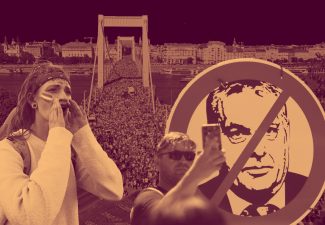
One of the most sustained targets is civic space. Orbán’s government has invoked transparency and national sovereignty to justify a series of laws designed to suffocate independent civil society.
Read MoreNGOs at risk of global extinction
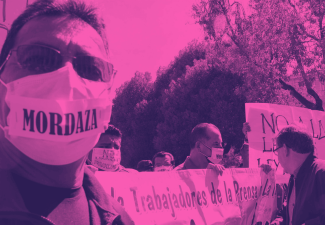
How can non-governmental organizations transform themselves? What were they like when they did not depend on international funding?
Read MoreStrategies to defend civil society against authoritarianism in Latin America
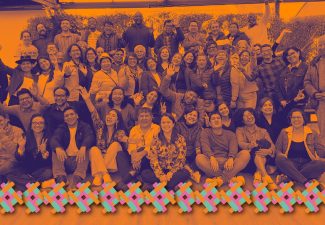
In a context of crisis for the social movement, the “Imaginar con Otros” (Imagining with Others) meeting brought together Latin American civil society to broaden our perspective and explore how other organizations from different countries have developed strategies to face the challenges of working amid different forms of authoritarianism.
Read MoreLet’s imagine with others to address the crisis of civil society in Latin America
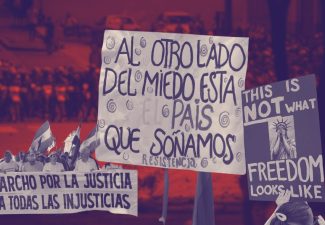
The current global context, in which we face a closure of civic space, requires us to improve our structures to find new forms of survival, resistance, and solidarity. For this reason, we held a dialogue with social organizations in Bogotá to exchange experiences and forge alliances that will allow us to overcome this crisis from different countries and realities.
Read MoreArgentina must protect social mobilization, not silence it
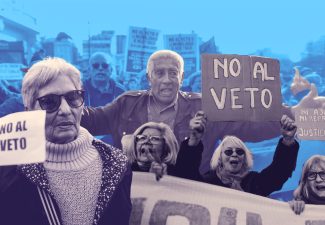
We express concern about the advance of authoritarianism in Argentina and its consequences for the entire region, and urge Latin American states to speak out in defense of democracy and the human rights of Latin American peoples.
Read MoreDemocracies in Crisis Bring Challenges for Civil Society
In this newsletter we show how the current decline of democracies goes hand in hand with strategies to weaken civil society. On the other hand, this double crisis can offer the human rights movement an opportunity to rethink and transform ourselves.
Read MorePeruvian democracy hangs in the balance; NGOs at risk
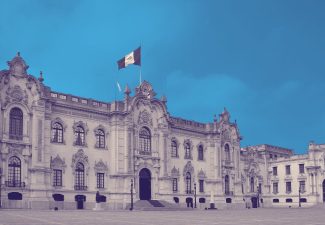
The Peruvian state, based on its commitments to international law, has an obligation to guarantee democracy and, within that framework, the right of civil society to associate and express itself. However, we are facing a serious situation in which civic space is being closed off, with various warning signs that urgently need to be addressed.
Read MoreMore than 400 international organizations reject the bill that seeks to stifle Venezuelan NGOs

We request that the bill be dismissed, including its reform or any other regulation that is similar in nature.
Read More#SOSPeru: The repeated script of repression in Latin America

The stigmatization of social protest by Peru’s interim government has put civil society and the media in demanding guarantees for a dialogue that allows for political transition without violence.
Read MoreThe immigration policy of the United States and its implications in Latin America

The United States has implemented different measures to prevent the entry of migrants and refugees into its territory, including extending its immigration policy to Latin American countries.
Read MoreNew Report: Misuse of Technologies in Emergency Responses

Three years after the begin of the Covid-19 pandemic, the ECNL, INCLO, and Privacy International published a report on how states use surveillance technologies to weaken Human Rights within their territories with the excuse of the fight against the virus.
Read MoreUnder Surveillance: (Mis)use of Technologies in Emergency Responses

Surveillance technologies exacerbated the impacts of Covid-19 emergency measures on civic space by allowing governments to collect fine-grained data about individuals while also working across large scales of information, in a way that has been unprecedented in the history of global pandemics.
Read MoreAre Human Rights Still Effective?

In 2018, we brought together activists from 11 Global South countries to reflect on the importance of human rights in contexts where their effectiveness has been questioned. Their conclusions were compiled in the book Reimagining the Future of Human Rights.
Read MoreWe stand in solidarity with palestinian human rights organizations
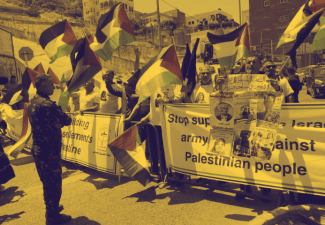
Israeli government declared palestinian human rights organizations as terrorist groups. INCLO members call Israel to desist from persecution campaign
Read MoreReimagining the Future of Human Rights
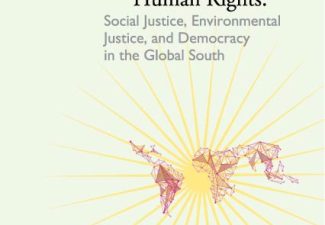
The chapters in this book offer a snapshot of the current state of Human Rights that can help guide our work as activists and researchers.
Read MoreFrom repression to migration: The case of Rufo Chacón
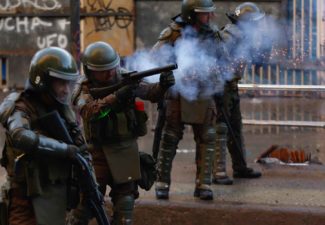
Rufo Chacón, in the company of his mother, is preparing to travel to Spain, where he will get the surgical intervention needed to improve his condition.
Read MoreTransnational Advocacy Networks
Activists, particularly those based in the global South, have accumulated a wealth of experience in dealing with a range of transnational networks operating in diverse issue areas. New theoretical understandings have reflected this accumulating experience.
Read MoreNavigating Human Rights in a War-Torn Yemen
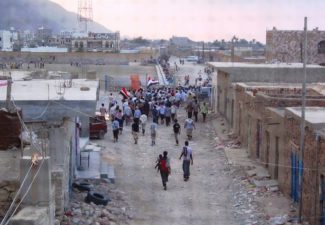
Despite immensely difficult circumstances in a war-torn and diminishing space for activism, Mwatana for Human Rights has remained steadfast in its mission to defend human rights.
Read MorePreventing Corporate Intimidation of Rightsholders
Unfavorable news, a negative opinion of an opinion leader, or even an unfounded rumor can affect companies whose value depends to a large extent on the confidence of their shareholders and the public in their good behavior and the possibilities of obtaining profits by investing in them.
Read MoreJustice through Transitions: Conflict, Peacemaking and Human Rights in the Global South
What does justice mean in times of transition? What kinds of possibilities and dissapointments emerge from processes of seeking justice through transition? How might we understand these processes through narrative?
Read MoreVenezuela in a spiral
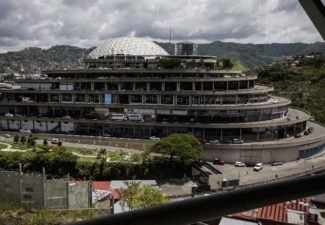
El Helicoide gets its name from the geometric shape of the building that houses the prison, which resembles a spiral. The crisis in the prison and the elections this Sunday could worsen the spiral of Maduro’s regime towards arbitrariness.
Read MoreRising to the Populist Challenge
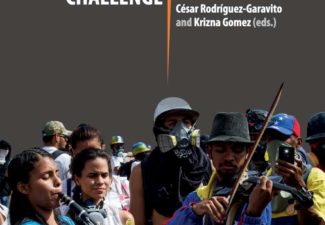
This book collects and analyzes a repertoire of responses by human rights organizations to the crackdown against civil society in the populist context.
Read MoreHow I gave a mother a cake because I couldn’t get her son out of jail
Certainly one does not need to be a human rights activist to be able to shake someone’s hand. But it’s only a truly caring and grounded advocate who can write a set of policy recommendations and at the same time keep giving hope to the people s/he works with to make sure that all this does not become pointless in the end.
Read MoreMaduro’s dictatorship
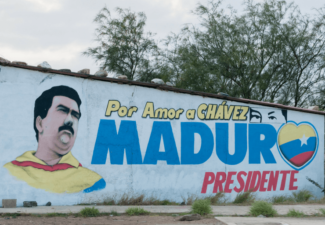
The sudden call for elections by Nicolás Maduro’s government could aggravate the humanitarian situation in Venezuela. In addition, it is another sign that in some countries democracy is weakening, with alarming results.
Read MoreWhy Venezuela is a dictatorship
The dismantling of democracy can be incremental, like it was in Venezuela. First, there was the co-option of the courts, then the persecution of the political opposition, and last year, the suspension of regional elections. And now, with the Constituent Assembly, Maduro leapt into the dark.
Read More