


Area-Global South & North Collaborations (Internationalization)
Workshop on creative activism Days of Hope is coming to Caquetá on the 21st of September
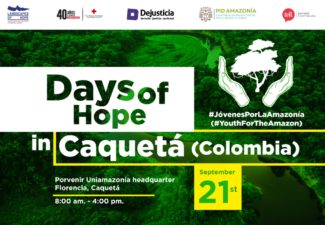
Dejusticia, PID Amazonía, the Red Cross Bogotá and Tell are getting together in Florencia to hold the first event of this international initiative that combines art and social mobilization.
Read MoreAttention! Job Opportunity at Dejusticia
Dejusticia is seeking a dynamic International Area Director who will both lead and work alongside the team to ensure the efficient functioning of the international area in its multiple tasks.
Read More“Cúcuta: Emergency Exit,” A Special Series at the Frontlines
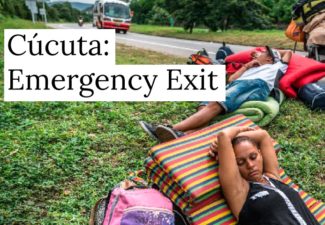
Dejusticia (Colombia) and Provea (Venezuela) brought together ten journalists from Venezuela and three from Colombia to tell, through seven heartbreaking stories of suffering, sacrifice and hope at the border between the two countries.
Read MoreDejusticia intervenes in defense of Venezuelan migrants’ right to health
The Constitutional Court invited Dejusticia to present their legal opinion on two cases concerning the right to health of people coming from Venezuela.
Read MoreRegistration open for course on ‘Business and human rights: doctrine, practice, and strategy’
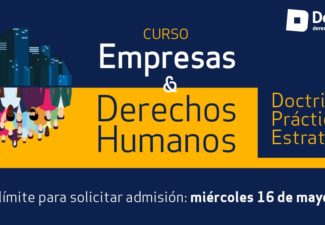
This course focuses on doctrine, practice and strategies for the implementation of human rights protections in the context of business activities. The course offers an intensive introduction to key concepts and emergent jurisprudence in the field.
Read MoreClimate Change and Future Generations Lawsuit in Colombia: Key Excerpts from the Supreme Court’s Decision
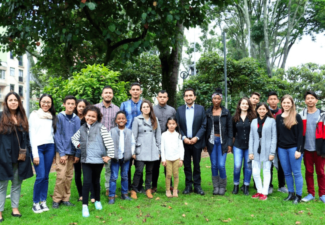
The Supreme Court of Justice ordered the protection of the Colombian Amazon from deforestation, ruling in favor of a group of 25 children and youth, who with the support of Dejusticia, sued the Colombian government for failing to protect their rights to life and a healthy environment. Here are key excerpts from the sentence.
Read MoreDejusticia launches groundbreaking playbook for the human rights field against populism
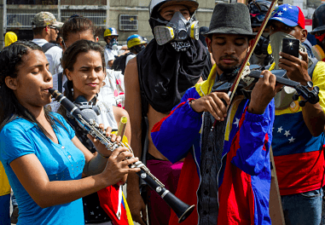
At the Defenders’ Days, during the international conference of human rights defenders organized by Civil Rights Defenders in Sweden, Dejusticia has launched the edited volume Rising to the Populist Challenge: A New Playbook for Human Rights Actors.
Read MoreJury Finds Former Bolivian President and Defense Minister Responsible for Extrajudicial Killings of Indigenous People
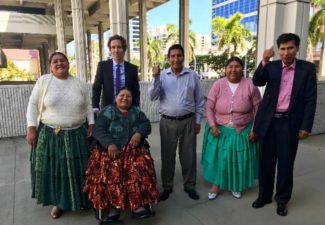
Gonzalo Sánchez de Lozada, and Carlos Sánchez Berzaín, ordered security forces in Bolivia to use deadly military force against unarmed civilians to suppress popular protests against government policies. In all, security forces slaughtered 58 citizens and injured more than 400, almost all from indigenous Aymara communities.
Read MoreDejusticia participates at IACHR hearing on business and human rights
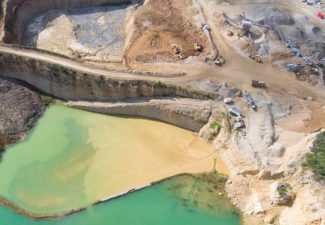
This Friday, March 2nd, Dejusticia and Conectas Human Rights (Brazil), will participate in a hearing organized by the Inter-American Commission on Human Rights (IACHR): “Businesses and human rights: inputs for the construction of inter-American guidelines.”
Read MoreFormer President of Bolivia Gonzalo Sánchez de Lozada will go to trial in the US for his role in the massacre of more than 50 citizens
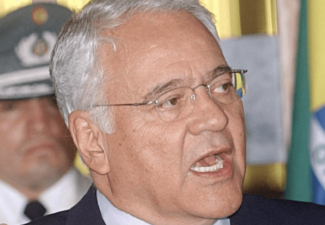
This Marks the First Time in U.S. History a Former Head of State Will Sit Before His Accusers in a Civil Human Rights Trial
Read MoreRights Without Borders
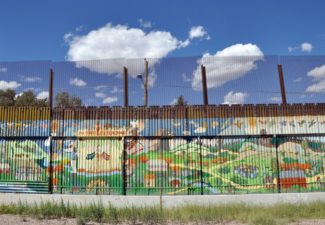
The tragedy of forced displacement violates the fundamental rights of those who must abandon their families, their homes and their jobs in order to survive. It is imperative that recipient countries have policies that guarantee the life, integrity and, family reunification of those who are victims of forced displacement.
Read MoreSilent persecutions: espionage, surveillance and democracy
Surveillance has become a mechanism of social control by governments. It has ceased to be an exclusive weapon of authoritarian states and has entered the democratic sphere.
Read MoreGentrification: Borders that amplify inequality
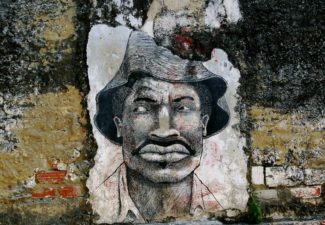
In Latin America, gentrification processes affecting social and cultural rights of economically vulnerable populations are becoming more common. In light of these scenarios, there is a clear need to demand the state to carry out urban transformations at the same time it protects memory, cultural expressions, and other elements that characterize our neighborhood.
Read MoreConstituting a black hole
The Constituent Assembly proposed by Venezuelan President Nicolás Maduro will consume what remains of democracy in Venezuela. It will also make Maduro a dictator who will control all the powers of the state. The international community must vigorously oppose it.
Read MoreInnovative approaches to the drug problem and imprisonment
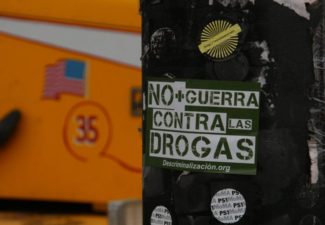
The experiences of Uruguay, Costa Rica and Ecuador show that it is possible and useful to apply innovative approaches to drug-related incarceration. However, they also highlight the limits of these programs and their failure to prevent further criminal activity.
Read MoreAsbestos: the unpunished killer

Latin American countries need to strengthen both their legislation and access to justice mechanisms, particularly those involving civil and consumer rights, in order to stop the use of asbestos and similarly harmful substances.
Read MoreHacked
Governments have taken advantage of a legal and informative vacuum to turn their critics’ cell phones into surveillance devices. It is essential to update the legislation and require government entities to disclose how they use electronic surveillance systems.
Read MoreFor a stable peace, a sensible opposition
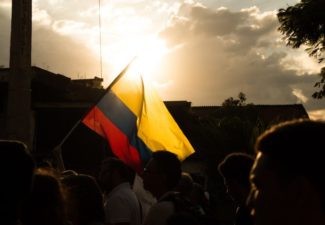
One of the most difficult wounds to heal from the armed conflict is closely related to the democratic debate. In the post-conflict period, democracies tend to be at their weakest point. Hence why a sensible dialogue between political forces is a condition for the prosperity of peace.
Read MoreThe luck of prohibition: Bloomsday
The history of art is plagued with censorship. Ulysses, by the Irish author James Joyce, was banned for more than ten years and went to trial three times for being considered obscene.
Read MoreAn immature Constituent Assembly
The Constituent Assembly convened by Maduro does not seek to forge a pact between opposing forces, but seeks to crush the opposition through an antidemocratic mechanism, which is also unconstitutional. The international community and even authentic Chavismo should oppose it.
Read MoreHuman Rights in Minefields
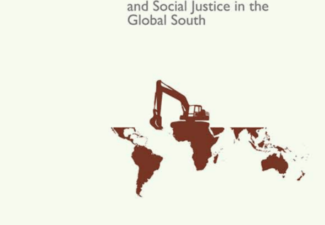
This book compiles accounts from sixteen action-researchers from the global South about different human rights issues in their respective countries. It is the result of the first Global Action-Research Workshop hosted and organized by Dejusticia.
Read MoreRecognition with Redistribution: Ethno-Racial Law and Justice in Latin America

This Dejusticia book presents an analytical framework and an empirical panorama of the reality of indigenous and afro-descendant rights throughout the region. To this end, it traces trends, advances and tensions in the regulation of cultural diversity and ethnic-racial justice through the analysis of four themes
Read MoreAmphibious Research: Action Research in a Multimedia World
Action research combines academic studies, participation in public debates, public policy advocacy, and the strengthening of institutions (for example, think tanks and nongovernmental organizations).
Read MoreThe Future of Human Rights: From Gatekeeping to Symbiosis
The international human rights movement faces a context of uncertainty due to: (i) the rise of a multipolar world with new emerging powers, (ii) the emergence of new actors and legal and political strategies, (iii) the challenges and opportunities presented by information and communication technologies, as well as (iv) the threat posed by extreme environmental degradation.
Read MoreBefore the Courts: Judicial Needs and Access to Justice in Colombia

This book aims to be the most comprehensive diagnosis of legal needs and access to justice conducted in Colombia.
Read MoreTransitional and Constitutional Justice
Chapter by Camilo Sánchez and Catalina Ibáñez Gutiérrez in the book “Transitional and Constitutional Justice” of the Konrad Adenauer Foundation.
Read MoreHuman Rights, Democracy, and Development
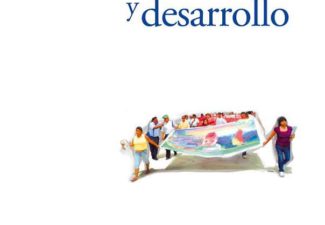
Human rights are undergoing a transformation. Around the world debates have proliferated regarding human rights discourses, practices, and studies to the point that some speak about “the end of human rights.” This context is unlike anything since the beginning of the international human rights system around the mid twentieth century.
Read MoreMaking Social Rights Real: Implementation Strategies for Courts, Decision Makers and Civil Society
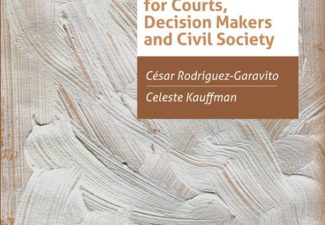
Given the disappointing implementation levels in various countries and across human rights systems, this guide seeks to contribute to the discussion regarding strategies for courts, international decision-makers, and civil society to increase the implementation of ESCR decisions.
Read MoreIn Search of Rights: Drug Users and Governments Response in Latin America
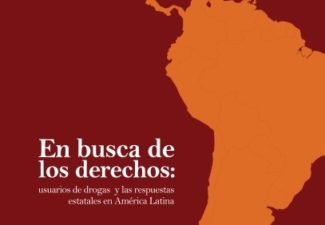
The Drugs and Rights Studies Collective published a new report that examines government responses to the consumption of illicit drugs in eight countries in Latin America: Mexico, Colombia, Peru, Ecuador, Brazil, Argentina, Uruguay and Bolivia.
Read MoreEthnicity.gov: Natural resources, Indigenous Peoples and the Right to Prior Consultation

This book analyzes the origins, practice, and effects of the right to prior consultation for indigenous peoples.
Read More