


Coca as seen by the WHO: will the error be corrected?

The prohibition of coca itself has created obstacles to the careful study of its uses and the nutritional benefits of the plant.
Read MoreThe cracks of a system in crisis and the coca leaf on the move

As a plant linked to indigenous cultural practices, it must be protected under international law.
Read More“Seville’s commitment” must not remain on paper
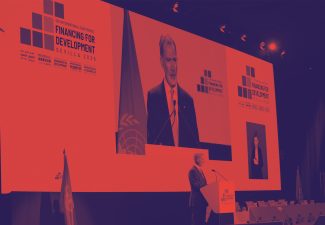
What we saw and heard in the previous forums—especially in the feminist and civil society space—made it clear to us that grassroots mobilization is key.
Read MoreClimate budgets
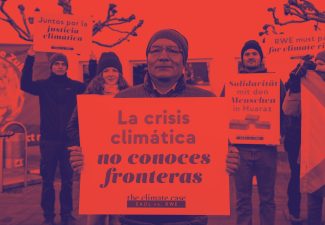
El presupuesto no es solo una hoja de cálculo. Es una herramienta política que define qué se protege y a quién se prioriza.
Read MoreTaxes and spending with a sense of social justice
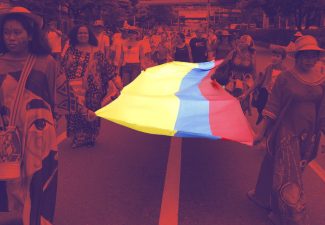
Talking about fiscal policy means talking about government revenue and spending, but above all about its power to transform lives and define the future we want to build.
Read MoreWhat’s in the shopping cart: the hidden history of “neutral” taxes

Consumption taxes hit low-income households hardest, where every penny counts.
Read MoreThe Hungarian Case and its Anti-NGO Laws
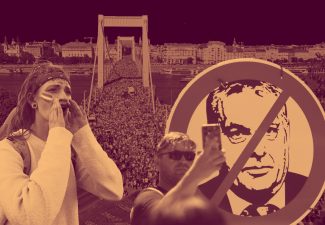
One of the most sustained targets is civic space. Orbán’s government has invoked transparency and national sovereignty to justify a series of laws designed to suffocate independent civil society.
Read MoreReclaiming multilateralism for a shared future
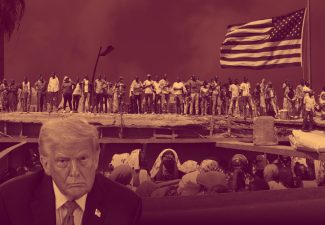
An alternative to the crisis of this model of cooperation is to create a new approach to multilateralism that makes collective bargaining conditions more favorable for the Global South.
Read MoreWhere will the solutions to a world in crisis come from?
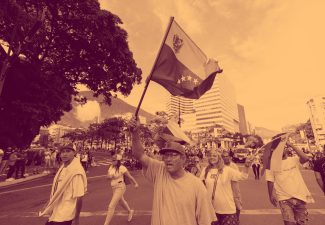
Debates on multilateralism, migration, and democracy are shaping 2025. From the Global South, we explore how these issues are redefining geopolitics and what lessons they offer for building a more just and sustainable future.
Read MoreHuman mobility under threat: How is Latin America responding?
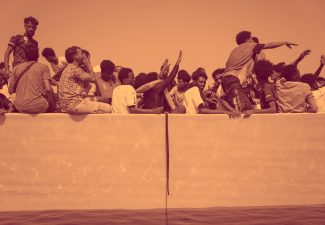
In 2025, migration policies from the Global North intensify securitization and externalization of control, undermining fundamental rights in Latin America. This blog examines how the region, despite setbacks, can sustain rights-based responses and build alternatives to the criminalization of human mobility.
Read MoreTwo fights in one: feminism and environmentalism
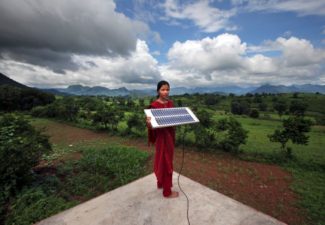
Only in as much as we coordinate the efforts will we be able to erradicate gender inequality and encounter a solution to the ecological crisis that we are experiencing.
Read MoreThe “Lock Him Up” Paradox

What if we treated criminal prosecution and sentencing as a question of how to rebuild society?
Read MoreThe Vienna Consensus is broken, and we’re not going to fix it
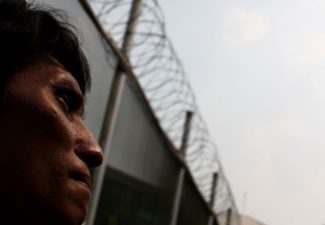
Continuing to strengthen the idea that people who grow, traffic, and use drugs are citizens and human beings like everyone else is the first substantial step in restoring rights to populations who have suffered the harm of prohibition.
Read MoreRuben

Birds face a variety of risks simply for coexisting with us, because we are a harmful species that grows egotistically and disproportionately.
Read MoreGender Ideology: Demagogy or Strategy to Roll Back Rights?
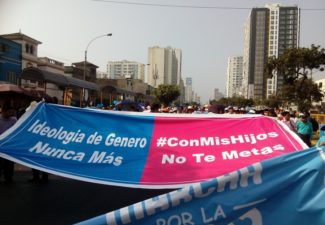
The weakening of rights has come in blows that are difficult to perceive, but which have a substantial impact in the lives of women and LGBT people.
Read MoreThe Cocalera Marches: An Expression of the Right to Demand Rights
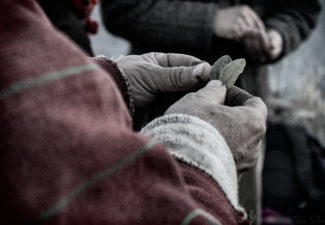
The cocalero movements have helped to create the right to have rights, to be citizens and to receive attention by the State beyond a war against drugs.
Read MoreFiscal Policy in the Service of Human Rights

How, exactly, is fiscal policy related to human rights?
Read More“Without us, the world would not turn”
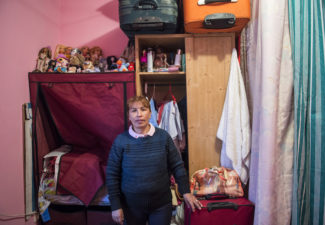
Understanding the reasons why certain women from certain regions end up doing certain work opens the door for critically approaching the fact that the majority of domestic workers are migrants in precarious situations.
Read MoreA Hop, Skip, and a Jungle Away: From the Global South to Sarayaku
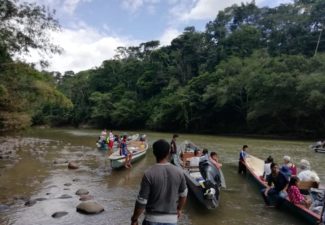
Nearly all of the indigenous leaders who joined us for the workshop had some troubles in transit, which is clearly not an accident.
Read MoreIs it valid for Colombia to demand that Cuba turn over ELN negotiators?

The crucial point is that Cuba is not harboring the ELN negotiators with the goal of supporting this organization in its armed fight; rather, Cuba is following a request by the Colombian government that was made and accepted by the Colombian State in order to advance a peace process.
Read MoreHuman Rights Due Diligence to Identify, Prevent and Account for Human Rights Impacts by Business Enterprises
The aim of this document is to present to the IACHR, as it develops a report with guidelines for Business and Human rights and as it engages more generally with human rights violations in the context of business activities, a summary of the main areas of concern with regard to human rights due diligence.
Read MoreRising to the Populist Challenge
This book collects and analyzes a repertoire of responses by human rights organizations to the crackdown against civil society in the populist context.
Read MoreExecutive Summary Decision T-543 of 2017
The Constitutional Court held that the Superintendency of Industry and Commerce censored the organization Educar Consumidores, and it cautioned the Superintendency that henceforth it could not exercise prior control over informational
contents.
BUSINESS AND HUMAN RIGHTS: SUBMISSION TO THE INTER-AMERICAN COMMISSION ON HUMAN RIGHTS AND THE SPECIAL RAPPORTEUR ON ECONOMIC, SOCIAL, CULTURAL AND ENVIRONMENTAL RIGHTS
This document focuses on implementation and access to effective remedies in the context of business activities. It also collects Inter-American standards that have an impact on the monitoring and on plans for the implementation of the Guiding Principles on Business and Human Rights. Moreover, it collects examples of practices that must improve in order to protect human rights in the context of business enterprises.
Read MoreWhat should not be told: Tensions between the right to privacy and the access to information in cases of the voluntary termination of pregnancy
This document attempts to illustrate and analyze some of the tensions that exist between the right to privacy and other relevant constitutional rights and duties, such as the right to information and the duty to report in the context of the partial decriminalization of abortion in Colombia.
Read MoreVictims and press after the war
The drive to conduct this research was born out of the tension that developed on May of 2017 in the context of the journalistic coverage of the exhumations of those who died in the Bojayá massacre.
Read MoreCompliance with self-regulation initiatives established by the industry on the promotion, advertising and sponsorship of ultra-processed foods aimed at children
Summary for civil society and policy makers.
Read MoreOverweight and counterweights

Through field work in twelve schools in Ciudad Bolívar in Bogotá, this document shows the need for the State to regulate and monitor the supply and advertising of ultra-processed food products in school environments.
Read MoreSobredosis carcelaria y política de drogas en América Latina
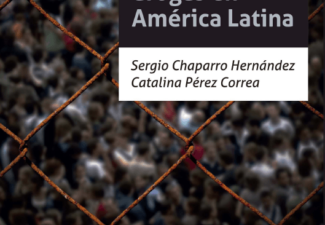
El CEDD publica su estudio sobre los impactos de las políticas de drogas en el sistema penitenciario de 10 países de América Latina. El uso excesivo del derecho penal y de sanciones privativas de libertad, tiene consecuencias sobre la vida de las personas en los sistemas penitenciarios de Argentina, Bolivia, Brasil, Colombia, Costa Rica, Ecuador, Estados Unidos, México, Perú y Uruguay.
Read MoreGlobalization and Human Rights Book Series
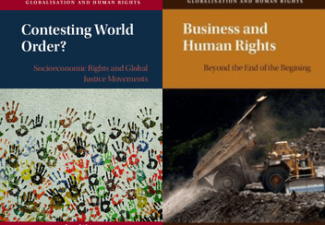
The series provides unique and multi-disciplinary perspectives on the interface of the global economy and human rights. It offers space for exploring the challenges of globalization, the role of human rights in framing and shaping regulation and politics and, more critically whether human rights are a mere product or legitimation of globalization.
Read MoreDejusticia presents on precautionary principle to the Constitutional Court in case of illicit crops fumigation with glyphosate

In a Constitutional Protection (tutela) case, Dejusticia argued for the precautionary principle to protect the rights to health, the environment, ethnic territories, peasant territoriality, and water resources in rural communities.
Read MoreDejusticia intervenes in lawsuit against Police Code in articles that regulate the right to protest

Congress acted unconstitutionally when it issued the new police code because it attempted to regulate social protest through the wrong legislative channels.
Read MoreWe presented a tutela in favor of the right consumers have to receive information on the amount of sugarpresent in the beverages we drink

Dejusticia and other organizations filed a tutela regarding the Industry and Commerce Oversight Agency ban of a commercial by Educating Consumers that addressed health effects of excessive sugary drinks consumption.
Read MoreDejusticia’s intervention on the prohibition of arbitrary detention and discriminatory conduct against women who engage in prostitution

Dejusticia conducted a citizen intervention before the Constitutional
Court regarding the tutela action interposed by two women who engage in
prostitution who were accompanied by Pairs in Action and Reaction Against
Social Exclusion (PARCES) and who asked for the protection of their right on
individual liberty and free circulation, to the vital minimum for subsistence, personal
integrity and work after being taken by police agents in the Butterfly Plaza in
San Victorino in Bogotá.
Dejusticia intervention regarding the invalidity requests of sentence T-445 of 2016 on the popular consultation to decide on mining Pijao
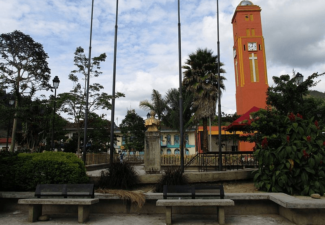
On November 11th, Dejusticia conducted a citizen intervention before the Constitutional Court regarding the invalidation request of sentences T-445 of 2016 presented by the National Mining Agency, the Ministry of Mines and Energy, ASOGRAVAS, the Tolima Miners and Hydrocarbons Association, and the Colombian Mining Association.
Read MorePolice Code Intervention in defense of informal vendors
Dejusticia conducted an intervention within the constitutionality process of Article 140 of the Police Code (Law 1801 of 2016) that establishes measures to regulate the public space, affecting informal vendors.
Read MoreDejusticia sues the Police Code over protest regulation

Dejusticia sues the Police Code over social protest regulation before the Constitutonal Court for several reasons that make Law 1801 of 2016 unconstitutional.
Read MoreIntervention on the granting of mining licenses in the Mining Code

Dejusticia intervened litigating the unconstitutionality of several articles in the Mining Code (Law 685 of 2001). The intervention focused on showing how the process to grant mining licenses violated several constitutional principles and rights.
Read MoreIntervention in Litigation against the Law of Zones of Interest of Rural, Social, and Economic Development (ZIDRES)
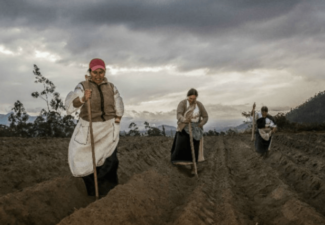
The intervention regards the constitutionality litigation of Law 1776 of 2016 (Law Zidres), which began due to different litigation that are currently being revised by the Constitutional Court.
Read MoreDejusticia and other organizations intervene in protection case on behalf of Wayúu children
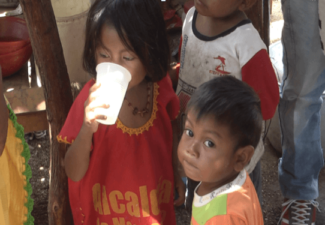
on 19 july, Dejusticia, along with the National Indigenous Organization of Colombia (ONIC), the Civic Committee for the Dignity of La Guajira, and the Committee of Support for Popular Communities (CODACOP), and several leaders of the Wayúu peoples, sent to the Supreme Court of Justice of Colombia a brief in support of the citizen-led protection case on behalf of Wayúu boys and girls, who are facing grave danger due to a widespread situation of hunger and lack of drinking water in the department of La Guajira.
Read More