



Colombia Changes Course: How Might the New Government Redefine Colombian Foreign Policy and the Political Balance in Latin America?
The transition from the Gustavo Petro administration to that of Abelardo de la Espriella marks a redefinition of Colombia’s development model. This analysis explores the diplomatic shift toward the U.S. and Israel, the move away from multilateral agendas, and the democratic implications of the reconfiguration of Latin America.
By Christy Crouse, Sofia Forero Alba | | Abelardo De La Espriella, Colombia-U.S. Relations, Colombian Foreign Policy, Latin American Geopolitics, Omar Bula Escobar, Political Transition in Colombia

Colombia’s Foreign Policy After Its Change of Course
Abelardo de la Espriella's victory marks a change of course in Colombia. We analyze how his administration may redefine foreign policy, multilateralism, and democratic balances in Latin America in the face of human rights challenges.
By Christy Crouse | | 2026 Colombian Elections, Abelardo De La Espriella, América Latina, Colombia, Colombian Foreign Policy, Democracy and human rights, Latin American Politics, Política Exterior, Right-Wing Populism
News
Search in News

The critical review of the coca leaf: an opportunity to reevaluate the agricultural product and its potential uses
By Isabel Pereira Arana | | ancestral knowledge, coca leaf, Colombia, uses of coca leaf
The prohibition of coca leaves (Erythroxylum spp.) originated a few years after the conquest began. In 1573, Philip II issued ordinances attempting to regulate production, improve workers' conditions, and exercise ...
Lea más 
Beyond critical review… What do we do with the coca leaf in Colombia?
By Sergio Pérez, Luis Felipe Cruz | | coca leaf, Colombia, Hoja de coca, medicinal plants, uses of the coca leaf
Reality moves ahead of the law, at least that is something you learn to live with when working on drug policy. Whether it is the regulation of cannabis for adult ...
Lea más 
What’s next for coca?
By Isabel Pereira Arana, Sergio Pérez | | Coca, coca leaf, declassification, Hoja de coca, Human Rights, Prohibition
On October 20, the Expert Committee on Drug Dependence (ECDD) held a public session, where they presented their draft report on the coca leaf. Fifty-seven countries participated, 27 written contributions ...
Lea más 
Coca as seen by the WHO: will the error be corrected?
By Isabel Pereira Arana, Sergio Pérez | | coca leaf, Hoja de coca, indigenous knowledge, Prohibition, WHOM
The discourse surrounding the coca leaf in the 20th century has been marked by contempt, promoted directly by the World Health Organization (WHO) and other United Nations agencies. In the ...
Lea más 
The cracks of a system in crisis and the coca leaf on the move
By Isabel Pereira Arana | | coca leaf, Drug policy, Hoja de coca, medical use, Política de drogas
The fact that global drug prohibition has failed is, in certain circles, a consensus and also a source of sad resignation. We observe increasingly lucrative and diverse drug markets that ...
Lea más 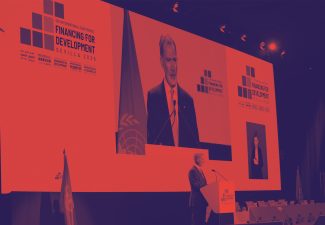
“Seville’s commitment” must not remain on paper
By Mariana Matamoros, Sergio Chaparro Hernández | | Desarrollo, Financing for Development, Human Rights, ONU
Just a few weeks ago, we were in Seville, Spain, where we had the privilege of participating in the Fourth United Nations International Conference on Financing for Development (FFD4). From ...
Lea más Search in Opinion
I don’t care if they call me a dictator.
By Nina Chaparro González | | bukele, Democracy, Dictadura, El Salvador, Program for strengthening - Others
During his six years in office, Bukele has consolidated his power, paving the way to become the dictator he appears to be announcing himself as.
Lea más NGOs at risk of global extinction
By Nina Chaparro González | | financiación internacional, NGO, Program for strengthening - Others
How can non-governmental organizations transform themselves? What were they like when they did not depend on international funding?
Lea más Colombia: going back to the original balance of justice
By Paola Molano Ayala | | gorillaz, JEP, Transitional Justice, Victims
There is a crucial aspect of Colombia’s transitional justice model that is worrying: the current inability of the Special Jurisdiction for Peace (JEP) to offer legal security to those who participated in the conflict, including in human rights violations, and have not been identified as among the most responsible. And making sure they also contribute to the satisfaction of the rights of the victims. The JEP must avoid keep moving towards maximalist approaches and go back to the balance in the Peace Agreement.
Lea más
Stories
FromTheTerritory
We travel with 20 indigenous activists of the world to the heart of the Sierra Nevada de Santa Marta. Listen to this story about the Kankuama Resistance.
Dejusticia's
Documentaries
Discover some of the documentary pieces that we have made. Indigenous resistance, migration of Venezuelans to Colombia and stories of women coca growers, are some of our topics of interest.
