



Colombia Changes Course: How Might the New Government Redefine Colombian Foreign Policy and the Political Balance in Latin America?
The transition from the Gustavo Petro administration to that of Abelardo de la Espriella marks a redefinition of Colombia’s development model. This analysis explores the diplomatic shift toward the U.S. and Israel, the move away from multilateral agendas, and the democratic implications of the reconfiguration of Latin America.
By Christy Crouse, Sofia Forero Alba | | Abelardo De La Espriella, Colombia-U.S. Relations, Colombian Foreign Policy, Latin American Geopolitics, Omar Bula Escobar, Political Transition in Colombia

Colombia’s Foreign Policy After Its Change of Course
Abelardo de la Espriella's victory marks a change of course in Colombia. We analyze how his administration may redefine foreign policy, multilateralism, and democratic balances in Latin America in the face of human rights challenges.
By Christy Crouse | | 2026 Colombian Elections, Abelardo De La Espriella, América Latina, Colombia, Colombian Foreign Policy, Democracy and human rights, Latin American Politics, Política Exterior, Right-Wing Populism
News
Search in News
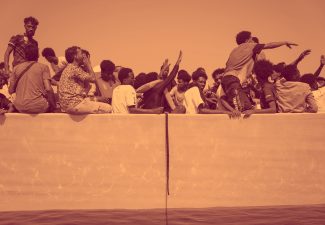
Human mobility under threat: How is Latin America responding?
By Lina Arroyave, Christy Crouse | | criminalización, Darién, EEUU, Human Rights, Migration, migration, Panamá
On February 15, 2025, the last of three flights carrying migrants expelled by the United States under an accelerated deportation scheme landed in Panama City. In just four days, 299 ...
Lea más 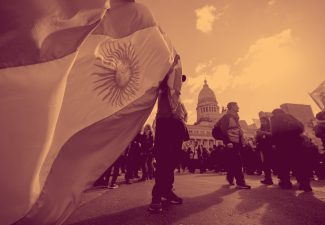
When spending and freedoms are restricted. Milei’s Argentina
By Sofia Forero Alba, Victoria Fernández Almeida | | Argentina, Human Rights, Milei, Represión
Since Javier Milei became president in December 2023, Argentina has been experiencing a paradox: while promoting drastic economic adjustment, it is simultaneously cutting back on the civil liberties necessary to ...
Lea más 
The Moment of the Global South: Seizing 2025 to Transform Multilateralism
By Sergio Chaparro Hernández | | climate justice, justicia climatica, Justicia social, multilateralism, Multilateralismo, social justice, south global, Sur Global
In a world fractured by geopolitical rivalries, where great powers are building walls and mistrust threatens to dismantle what remains of the global order, three events in 2025 emerge as ...
Lea más 
Strategies to defend civil society against authoritarianism in Latin America
By Dejusticia | | Autoritarismo, Civil Society, Enlaza, Program for strengthening, Social Organizations
Latin American civil society seems to be resting in a slow boil of restrictions and legislations that threaten its existence. The metaphor is clear: if a frog enters lukewarm water ...
Lea más 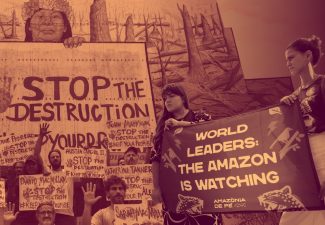
A guardian of the Amazon: Taxation for sustainability
By Mariana Matamoros, Diego Sardón Tupayachi |
The Amazon, which extends across nine countries and sustains the lives of more than 47 million people, is a fundamental pillar for global climate regulation and ecological balance. Each hectare ...
Lea más 
Thank You, Activists from the Global South! We have selected the new 2025 cohort of fellows
By Dejusticia | | activist, follows, Global South, human right defenders
On behalf of the Selection Committee of the Global South Fellowship Program at the Center for the Study of Law, Justice and Society — Dejusticia, we extend our warmest greetings ...
Lea más Search in Opinion
I don’t care if they call me a dictator.
By Nina Chaparro González | | bukele, Democracy, Dictadura, El Salvador, Program for strengthening - Others
During his six years in office, Bukele has consolidated his power, paving the way to become the dictator he appears to be announcing himself as.
Lea más NGOs at risk of global extinction
By Nina Chaparro González | | financiación internacional, NGO, Program for strengthening - Others
How can non-governmental organizations transform themselves? What were they like when they did not depend on international funding?
Lea más Colombia: going back to the original balance of justice
By Paola Molano Ayala | | gorillaz, JEP, Transitional Justice, Victims
There is a crucial aspect of Colombia’s transitional justice model that is worrying: the current inability of the Special Jurisdiction for Peace (JEP) to offer legal security to those who participated in the conflict, including in human rights violations, and have not been identified as among the most responsible. And making sure they also contribute to the satisfaction of the rights of the victims. The JEP must avoid keep moving towards maximalist approaches and go back to the balance in the Peace Agreement.
Lea más
Stories
FromTheTerritory
We travel with 20 indigenous activists of the world to the heart of the Sierra Nevada de Santa Marta. Listen to this story about the Kankuama Resistance.
Dejusticia's
Documentaries
Discover some of the documentary pieces that we have made. Indigenous resistance, migration of Venezuelans to Colombia and stories of women coca growers, are some of our topics of interest.
