



Colombia Changes Course: How Might the New Government Redefine Colombian Foreign Policy and the Political Balance in Latin America?
By Christy Crouse, Sofia Forero Alba | | Abelardo De La Espriella, Colombia-U.S. Relations, Colombian Foreign Policy, Latin American Geopolitics, Omar Bula Escobar, Political Transition in Colombia
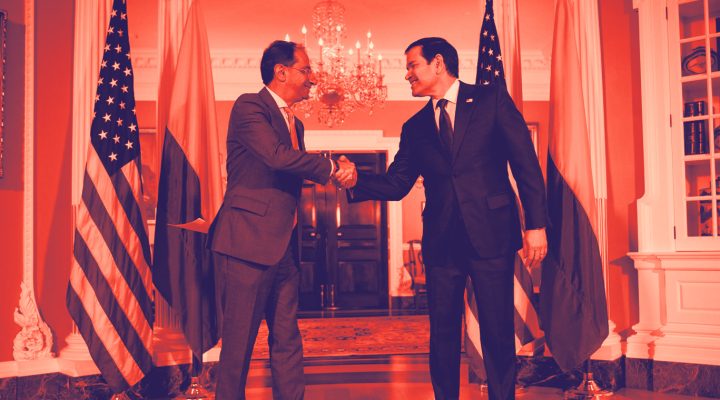
Colombia’s Foreign Policy After Its Change of Course
By Christy Crouse | | 2026 Colombian Elections, Abelardo De La Espriella, América Latina, Colombia, Colombian Foreign Policy, Democracy and human rights, Latin American Politics, Política Exterior, Right-Wing Populism
News
Search in News

Colombia Changes Course: How Might the New Government Redefine Colombian Foreign Policy and the Political Balance in Latin America?
By Christy Crouse, Sofia Forero Alba | | Abelardo De La Espriella, Colombia-U.S. Relations, Colombian Foreign Policy, Latin American Geopolitics, Omar Bula Escobar, Political Transition in Colombia

Colombia’s Foreign Policy After Its Change of Course
By Christy Crouse | | 2026 Colombian Elections, Abelardo De La Espriella, América Latina, Colombia, Colombian Foreign Policy, Democracy and human rights, Latin American Politics, Política Exterior, Right-Wing Populism

Defend the ICC: INCLO national human rights organizations call on states to protect international rule of law against United States attack
By Dejusticia | | Human Rights, ICC, International Criminal Court, International Justice, multilateralism, United States

Defending human rights around the world requires funding
By Mariana Matamoros | | CIDH, Derechos Humanos, Desigualdad, Global South, IACHR, Inequality, Justicia Fiscal, Public spending, Sustainable development., Tax cooperation, Tax justice, Tax policy

Who should collect taxes when services cross borders?
By Mariana Matamoros | | Digital economy, Digital taxes, International taxation, Justicia Fiscal, Sustainable development., Tax justice, Tributación internacional, United Nations

From Taxes to Rights
By Mariana Matamoros | | CIDH, Fiscal justice, fiscal policy, Human Rights, IACHR, Justicia Fiscal, Public budget, Public investment, Social inequality., Tax policy, taxes
Search in Opinion
In defense of the Constitution
By Nelson Camilo Sánchez León | | Proceso de paz
If those who see themselves as spokespeople of the NO campaign developed
their argument against the Havana accord because it "modified the
Constitution", they must honor their words and not make regressive
proposals on the Constitution they said to defend. But exactly the opposite is
happening with their arguments regarding what was agreed in terms of land
reform, under a supposed defense of private property.
Peace and the prisoner’s dilemma
By César Rodríguez-Garavito (Retired in 2019) | | peace
After a month of observing and participating in joint meeings between the speakers of the NO and YES, Ihave two conclusions and two mixed feelings.
Illicit Drug Sales in the Deep Web: Safer Trading for Whom?
By Isabel Pereira Arana | | Drogas
The creativity evidenced by drug traders and consumers reminds us that prohibition got it all wrong by making “a drug-free world” its main objective.
Stories
FromTheTerritory
We travel with 20 indigenous activists of the world to the heart of the Sierra Nevada de Santa Marta. Listen to this story about the Kankuama Resistance.
Dejusticia's
Documentaries
Discover some of the documentary pieces that we have made. Indigenous resistance, migration of Venezuelans to Colombia and stories of women coca growers, are some of our topics of interest.
