



Colombia Changes Course: How Might the New Government Redefine Colombian Foreign Policy and the Political Balance in Latin America?
By Christy Crouse, Sofia Forero Alba | | Abelardo De La Espriella, Colombia-U.S. Relations, Colombian Foreign Policy, Latin American Geopolitics, Omar Bula Escobar, Political Transition in Colombia
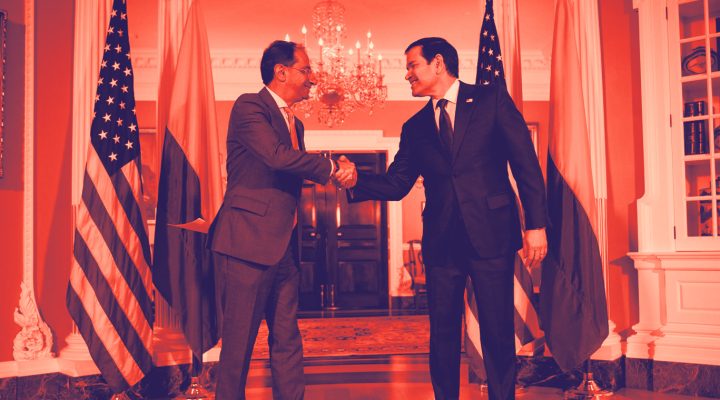
Colombia’s Foreign Policy After Its Change of Course
By Christy Crouse | | 2026 Colombian Elections, Abelardo De La Espriella, América Latina, Colombia, Colombian Foreign Policy, Democracy and human rights, Latin American Politics, Política Exterior, Right-Wing Populism
News
Search in News
Colombia Changes Course: How Might the New Government Redefine Colombian Foreign Policy and the Political Balance in Latin America?
By Christy Crouse, Sofia Forero Alba | | Abelardo De La Espriella, Colombia-U.S. Relations, Colombian Foreign Policy, Latin American Geopolitics, Omar Bula Escobar, Political Transition in Colombia
Colombia’s Foreign Policy After Its Change of Course
By Christy Crouse | | 2026 Colombian Elections, Abelardo De La Espriella, América Latina, Colombia, Colombian Foreign Policy, Democracy and human rights, Latin American Politics, Política Exterior, Right-Wing Populism

Defend the ICC: INCLO national human rights organizations call on states to protect international rule of law against United States attack
By Dejusticia | | Human Rights, ICC, International Criminal Court, International Justice, multilateralism, United States

Defending human rights around the world requires funding
By Mariana Matamoros | | CIDH, Derechos Humanos, Desigualdad, Global South, IACHR, Inequality, Justicia Fiscal, Public spending, Sustainable development., Tax cooperation, Tax justice, Tax policy

Who should collect taxes when services cross borders?
By Mariana Matamoros | | Digital economy, Digital taxes, International taxation, Justicia Fiscal, Sustainable development., Tax justice, Tributación internacional, United Nations

From Taxes to Rights
By Mariana Matamoros | | CIDH, Fiscal justice, fiscal policy, Human Rights, IACHR, Justicia Fiscal, Public budget, Public investment, Social inequality., Tax policy, taxes
Search in Opinion
Multi-door Courthouses: A Good Idea Badly Administered
By Carolina Villadiego Burbano, Mauricio García Villegas | | Colombia, Justicia, Rama Judicial
In the face of the crisis– and the stikes– in the judiciary, these alternative centers of attention become more important. What are they, what have they done, and how can they improve their services in Colombia.
Vote Thresholds and Participation (II)
By Rodrigo Uprimny Yepes | | Participación ciudadana, Participación ciudadana, Participación política, Referendo
In my past Op-ed I argued for reforming referendum and repeal voting processes to replace the current "participatory threshold" to an "approbatory threshold."
Montaigne, Five Centuries Later
By Mauricio García Villegas | | Animal Rights, Animal Rights, Animal Rights, Desigualdad, Desigualdad, Medio Ambiente, Medio Ambiente
Michel de Montaigne, the great French renaissance thinker, said that humans are not superior to animals and that the idea of evading our own animal condition is stupid and stubborn arrogance.
Stories
FromTheTerritory
We travel with 20 indigenous activists of the world to the heart of the Sierra Nevada de Santa Marta. Listen to this story about the Kankuama Resistance.
Dejusticia's
Documentaries
Discover some of the documentary pieces that we have made. Indigenous resistance, migration of Venezuelans to Colombia and stories of women coca growers, are some of our topics of interest.
