


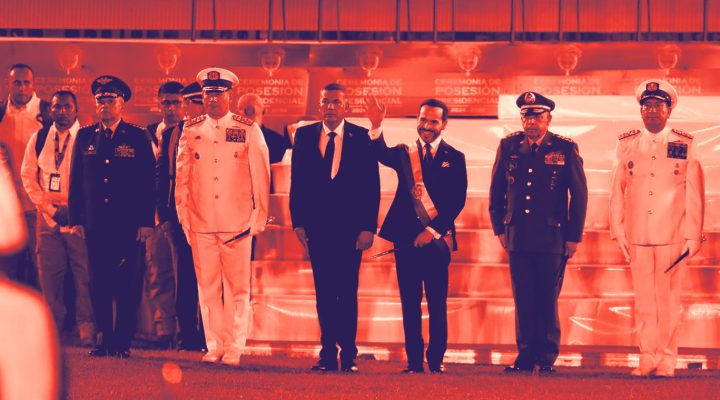
Colombia Changes Course: How Might the New Government Redefine Colombian Foreign Policy and the Political Balance in Latin America?
The transition from the Gustavo Petro administration to that of Abelardo de la Espriella marks a redefinition of Colombia’s development model. This analysis explores the diplomatic shift toward the U.S. and Israel, the move away from multilateral agendas, and the democratic implications of the reconfiguration of Latin America.
By Christy Crouse, Sofia Forero Alba | | Abelardo De La Espriella, Colombia-U.S. Relations, Colombian Foreign Policy, Latin American Geopolitics, Omar Bula Escobar, Political Transition in Colombia
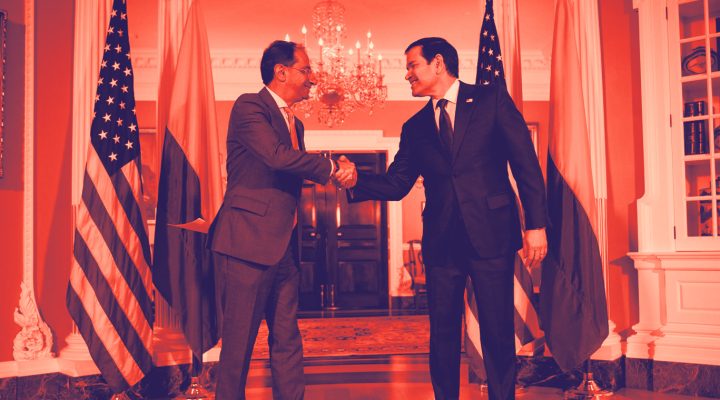
Colombia’s Foreign Policy After Its Change of Course
Abelardo de la Espriella's victory marks a change of course in Colombia. We analyze how his administration may redefine foreign policy, multilateralism, and democratic balances in Latin America in the face of human rights challenges.
By Christy Crouse | | 2026 Colombian Elections, Abelardo De La Espriella, América Latina, Colombia, Colombian Foreign Policy, Democracy and human rights, Latin American Politics, Política Exterior, Right-Wing Populism
News
Search in News
Colombia Changes Course: How Might the New Government Redefine Colombian Foreign Policy and the Political Balance in Latin America?
By Christy Crouse, Sofia Forero Alba | | Abelardo De La Espriella, Colombia-U.S. Relations, Colombian Foreign Policy, Latin American Geopolitics, Omar Bula Escobar, Political Transition in Colombia
The arrival of the new Colombian government is not merely a democratic transition. It represents a redefinition of the political project and the role Colombia seeks to play on the ...
Lea más 
Colombia’s Foreign Policy After Its Change of Course
By Christy Crouse | | 2026 Colombian Elections, Abelardo De La Espriella, América Latina, Colombia, Colombian Foreign Policy, Democracy and human rights, Latin American Politics, Política Exterior, Right-Wing Populism
June 25, 2026 in Colombia felt very similar to November 8, 2016 in the United States. On both of those dates, the results of presidential elections were announced in which ...
Lea más 
Defend the ICC: INCLO national human rights organizations call on states to protect international rule of law against United States attack
By Dejusticia | | Human Rights, ICC, International Criminal Court, International Justice, multilateralism, United States
As national human rights organizations working across every region of the globe, we are alarmed by the campaign announced by the United States Department of State to “dismantle” the International ...
Lea más 
Defending human rights around the world requires funding
By Mariana Matamoros | | CIDH, Derechos Humanos, Desigualdad, Global South, IACHR, Inequality, Justicia Fiscal, Public spending, Sustainable development., Tax cooperation, Tax justice, Tax policy
We live in a time when major global challenges—inequality, the climate crisis, and technological transformations, among others—require governments to have greater capacity to guarantee rights and promote the well-being of ...
Lea más 
Who should collect taxes when services cross borders?
By Mariana Matamoros | | Digital economy, Digital taxes, International taxation, Justicia Fiscal, Sustainable development., Tax justice, Tributación internacional, United Nations
For decades, international tax rules were designed for an economy very different from today’s. In that world, companies produced physical goods and had factories and offices in the countries where ...
Lea más 
From Taxes to Rights
By Mariana Matamoros | | CIDH, Fiscal justice, fiscal policy, Human Rights, IACHR, Justicia Fiscal, Public budget, Public investment, Social inequality., Tax policy, taxes
Let’s imagine for a moment a public school in a rural area, a hospital that treats hundreds of people every day, or a drinking water system that serves a community ...
Lea más Search in Opinion
All the Weight on the Combatants?
By Sergio Chaparro Hernández | | Justicia transicional, Justicia transicional, Paramilitary, Verdad
To definitively end a war one must create a balance of responsibilities. The sentence against Salvatore Mancuso and a recent book provide clues to understand why some try to place all of the blame on combatants, exonerating the war's makers.
Lea más “The Private Sector Should Face Climate Change”
By César Rodríguez-Garavito (Retired in 2019) | | Medio Ambiente, Perú, Recursos naturales, Recursos naturales
Dejusticia interviews Adriana Soto, ex-Vice Minister of Environment and Director of The Nature Conservancy for Colombia, Costa Rica, Ecuador, Peru, and Venezuela.
Lea más False Positives and the Military Court
By Rodrigo Uprimny Yepes | | Human Rights, Military Jurisdiction, Human Rights, Military Justice
The Constitutional Reform proposal that aims to expand the military's court jurisdiction, driven by the Government and supported by almost all political forces, probably would imply that many of the so-called false positives, which today the civilian judiciary processes, will pass to the military, with huge risk that they remain in impunity.
Lea más
Stories
FromTheTerritory
We travel with 20 indigenous activists of the world to the heart of the Sierra Nevada de Santa Marta. Listen to this story about the Kankuama Resistance.
Dejusticia's
Documentaries
Discover some of the documentary pieces that we have made. Indigenous resistance, migration of Venezuelans to Colombia and stories of women coca growers, are some of our topics of interest.
