


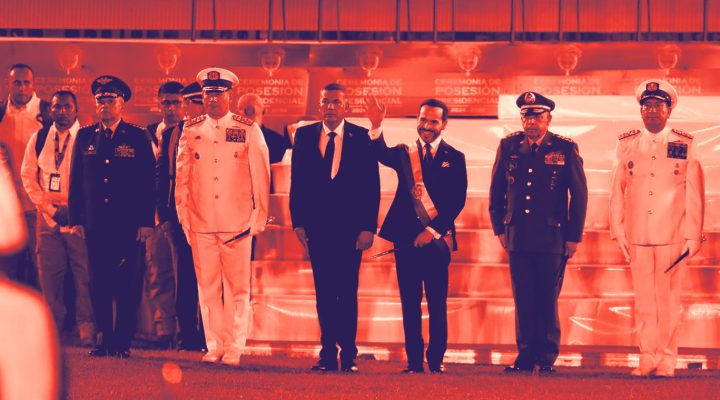
Colombia Changes Course: How Might the New Government Redefine Colombian Foreign Policy and the Political Balance in Latin America?
The transition from the Gustavo Petro administration to that of Abelardo de la Espriella marks a redefinition of Colombia’s development model. This analysis explores the diplomatic shift toward the U.S. and Israel, the move away from multilateral agendas, and the democratic implications of the reconfiguration of Latin America.
By Christy Crouse, Sofia Forero Alba | | Abelardo De La Espriella, Colombia-U.S. Relations, Colombian Foreign Policy, Latin American Geopolitics, Omar Bula Escobar, Political Transition in Colombia
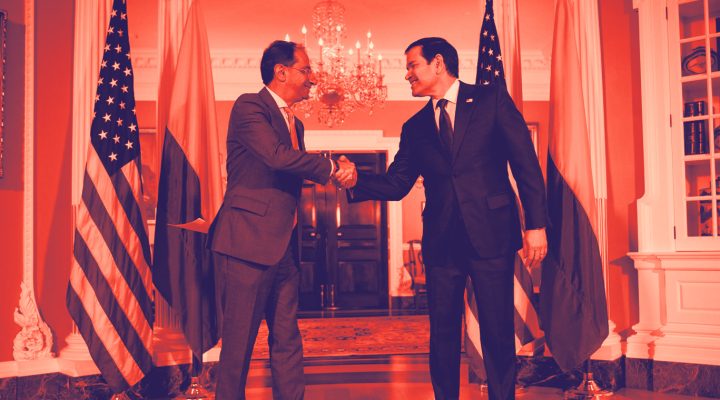
Colombia’s Foreign Policy After Its Change of Course
Abelardo de la Espriella's victory marks a change of course in Colombia. We analyze how his administration may redefine foreign policy, multilateralism, and democratic balances in Latin America in the face of human rights challenges.
By Christy Crouse | | 2026 Colombian Elections, Abelardo De La Espriella, América Latina, Colombia, Colombian Foreign Policy, Democracy and human rights, Latin American Politics, Política Exterior, Right-Wing Populism
News
Search in News
Colombia Changes Course: How Might the New Government Redefine Colombian Foreign Policy and the Political Balance in Latin America?
By Christy Crouse, Sofia Forero Alba | | Abelardo De La Espriella, Colombia-U.S. Relations, Colombian Foreign Policy, Latin American Geopolitics, Omar Bula Escobar, Political Transition in Colombia
The arrival of the new Colombian government is not merely a democratic transition. It represents a redefinition of the political project and the role Colombia seeks to play on the ...
Lea más 
Colombia’s Foreign Policy After Its Change of Course
By Christy Crouse | | 2026 Colombian Elections, Abelardo De La Espriella, América Latina, Colombia, Colombian Foreign Policy, Democracy and human rights, Latin American Politics, Política Exterior, Right-Wing Populism
June 25, 2026 in Colombia felt very similar to November 8, 2016 in the United States. On both of those dates, the results of presidential elections were announced in which ...
Lea más 
Defend the ICC: INCLO national human rights organizations call on states to protect international rule of law against United States attack
By Dejusticia | | Human Rights, ICC, International Criminal Court, International Justice, multilateralism, United States
As national human rights organizations working across every region of the globe, we are alarmed by the campaign announced by the United States Department of State to “dismantle” the International ...
Lea más 
Defending human rights around the world requires funding
By Mariana Matamoros | | CIDH, Derechos Humanos, Desigualdad, Global South, IACHR, Inequality, Justicia Fiscal, Public spending, Sustainable development., Tax cooperation, Tax justice, Tax policy
We live in a time when major global challenges—inequality, the climate crisis, and technological transformations, among others—require governments to have greater capacity to guarantee rights and promote the well-being of ...
Lea más 
Who should collect taxes when services cross borders?
By Mariana Matamoros | | Digital economy, Digital taxes, International taxation, Justicia Fiscal, Sustainable development., Tax justice, Tributación internacional, United Nations
For decades, international tax rules were designed for an economy very different from today’s. In that world, companies produced physical goods and had factories and offices in the countries where ...
Lea más 
From Taxes to Rights
By Mariana Matamoros | | CIDH, Fiscal justice, fiscal policy, Human Rights, IACHR, Justicia Fiscal, Public budget, Public investment, Social inequality., Tax policy, taxes
Let’s imagine for a moment a public school in a rural area, a hospital that treats hundreds of people every day, or a drinking water system that serves a community ...
Lea más Search in Opinion
There was no trick
By Rodrigo Uprimny Yepes | | Acuerdo de paz, Implementación del Acuerdo, Plebiscito
There was no trick because there was no intention to evade the popular will. In a very difficult and volatile context, the government opted for the representative of the people, which is Congress, to interpret and decide whether or not the new agreement met the popular mandate of the plebiscite.
Lea más Peace without State
By Mauricio García Villegas | | Estado de Derecho, Tumaco
What happened in Tumaco in recent weeks is proof that violence not only depends on peace agreements, but also on strengthening the local state.
Lea más The need for collective leadership
By César Rodríguez-Garavito (Retired in 2019) | | Premio liderazgo colectivo, revista semana
We received the 2017 Collective Leadership Award, awarded by Semana Magazine, the Leadership and Democracy Foundation and Telefónica. These are the words of our Director.
Lea más
Stories
FromTheTerritory
We travel with 20 indigenous activists of the world to the heart of the Sierra Nevada de Santa Marta. Listen to this story about the Kankuama Resistance.
Dejusticia's
Documentaries
Discover some of the documentary pieces that we have made. Indigenous resistance, migration of Venezuelans to Colombia and stories of women coca growers, are some of our topics of interest.
