


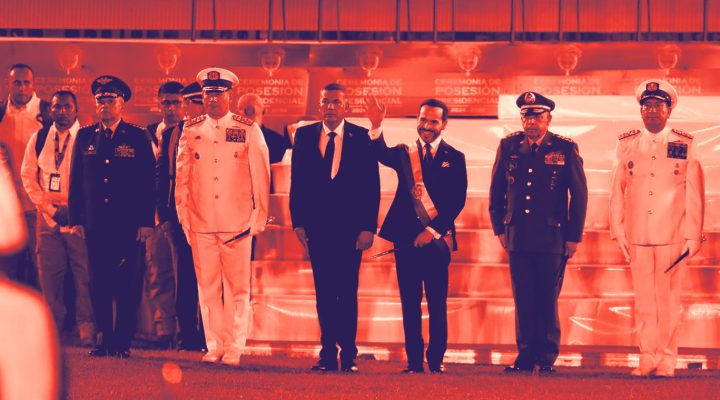
Colombia Changes Course: How Might the New Government Redefine Colombian Foreign Policy and the Political Balance in Latin America?
The transition from the Gustavo Petro administration to that of Abelardo de la Espriella marks a redefinition of Colombia’s development model. This analysis explores the diplomatic shift toward the U.S. and Israel, the move away from multilateral agendas, and the democratic implications of the reconfiguration of Latin America.
By Christy Crouse, Sofia Forero Alba | | Abelardo De La Espriella, Colombia-U.S. Relations, Colombian Foreign Policy, Latin American Geopolitics, Omar Bula Escobar, Political Transition in Colombia

Colombia’s Foreign Policy After Its Change of Course
Abelardo de la Espriella's victory marks a change of course in Colombia. We analyze how his administration may redefine foreign policy, multilateralism, and democratic balances in Latin America in the face of human rights challenges.
By Christy Crouse | | 2026 Colombian Elections, Abelardo De La Espriella, América Latina, Colombia, Colombian Foreign Policy, Democracy and human rights, Latin American Politics, Política Exterior, Right-Wing Populism
News
Search in News
Santos and gender equality
By Rodrigo Uprimny Yepes |
La celebración del Día de la mujer, el pasado viernes, es una buena oportunidad para reflexionar sobre las políticas del actual gobierno para erradicar la discriminación contra las mujeres. El ...
Lea más Steping toes in the healthcare reform
By César Rodríguez-Garavito (Retired in 2019) |
La anunciada reforma a la salud indica que el Gobierno está dispuesto a pisar los poderosos callos de los responsables de la crisis del sistema. Hay que esperar los detalles ...
Lea más The strategy of Colombia before the Interamerican Court of Human Rights in the case of the Palace of Justice: ¿poor or malintentioned?
By Rodrigo Uprimny Yepes |
En la anterior entrada mostré, sin pretensiones de exhaustividad, algunos errores y contradicciones puntuales pero protuberantes del escrito de defensa de Colombia ante la Corte IDH por el caso del ...
Lea más Our debts to Angélica
By Diana Esther Guzmán Rodríguez |
A Angélica Bello y a las víctimas del conflicto todavía les debemos reconocimiento y garantía de derechos. Hace dos semanas falleció Angélica Bello. Una mujer valiente que sufrió la crueldad ...
Lea más They are still disappeared
By Rodrigo Uprimny Yepes |
Colombia sostiene ante la CIDH que no puede ser condenada por las desapariciones del Palacio de Justicia, pues no hay pruebas que muestren que las 12 personas salieron vivas del ...
Lea más Woman can have it all?
By César Rodríguez-Garavito (Retired in 2019) |
¿Por qué hay tan pocas mujeres en cargos directivos? ¿Se debe a reglas de juego que las discriminan, o a decisiones de las mismas mujeres que las relegan a los ...
Lea más Search in Opinion
I don’t care if they call me a dictator.
By Nina Chaparro González | | bukele, Democracy, Dictadura, El Salvador, Program for strengthening - Others
During his six years in office, Bukele has consolidated his power, paving the way to become the dictator he appears to be announcing himself as.
Lea más NGOs at risk of global extinction
By Nina Chaparro González | | financiación internacional, NGO, Program for strengthening - Others
How can non-governmental organizations transform themselves? What were they like when they did not depend on international funding?
Lea más Colombia: going back to the original balance of justice
By Paola Molano Ayala | | gorillaz, JEP, Transitional Justice, Victims
There is a crucial aspect of Colombia’s transitional justice model that is worrying: the current inability of the Special Jurisdiction for Peace (JEP) to offer legal security to those who participated in the conflict, including in human rights violations, and have not been identified as among the most responsible. And making sure they also contribute to the satisfaction of the rights of the victims. The JEP must avoid keep moving towards maximalist approaches and go back to the balance in the Peace Agreement.
Lea más
Stories
FromTheTerritory
We travel with 20 indigenous activists of the world to the heart of the Sierra Nevada de Santa Marta. Listen to this story about the Kankuama Resistance.
Dejusticia's
Documentaries
Discover some of the documentary pieces that we have made. Indigenous resistance, migration of Venezuelans to Colombia and stories of women coca growers, are some of our topics of interest.
