


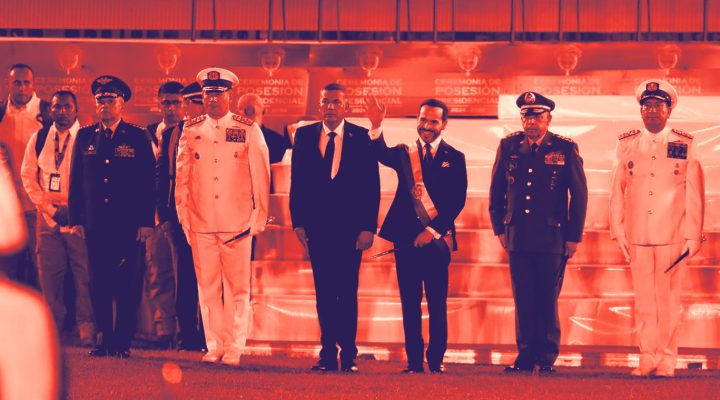
Colombia Changes Course: How Might the New Government Redefine Colombian Foreign Policy and the Political Balance in Latin America?
The transition from the Gustavo Petro administration to that of Abelardo de la Espriella marks a redefinition of Colombia’s development model. This analysis explores the diplomatic shift toward the U.S. and Israel, the move away from multilateral agendas, and the democratic implications of the reconfiguration of Latin America.
By Christy Crouse, Sofia Forero Alba | | Abelardo De La Espriella, Colombia-U.S. Relations, Colombian Foreign Policy, Latin American Geopolitics, Omar Bula Escobar, Political Transition in Colombia

Colombia’s Foreign Policy After Its Change of Course
Abelardo de la Espriella's victory marks a change of course in Colombia. We analyze how his administration may redefine foreign policy, multilateralism, and democratic balances in Latin America in the face of human rights challenges.
By Christy Crouse | | 2026 Colombian Elections, Abelardo De La Espriella, América Latina, Colombia, Colombian Foreign Policy, Democracy and human rights, Latin American Politics, Política Exterior, Right-Wing Populism
News
Search in News
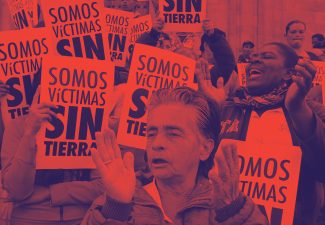
Peasant rights: the recognition of an excluded actor
By Rodrigo Uprimny Yepes | | Campesinado, Derecho a la tierra, El sur global, Víctimas
The struggle of the Colombian peasantry is relevant for international debates, both because of the injustices and violence peasants have faced and because of the progress this group has made ...
Lea más 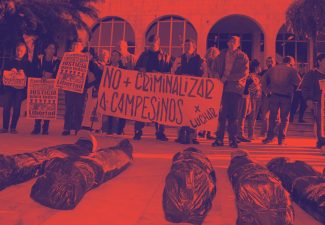
The Right to Defend Rights in Colombia and Latin America
By Maryluz Barragán, Sindy Castro | | Defensores, Derecho a defender derechos, El sur global, Líderes sociales
On April 21, Narciso Beleño, a peasant leader and human rights defender who worked for more than three decades for the restitution of land and the sustainable exploitation of natural ...
Lea más 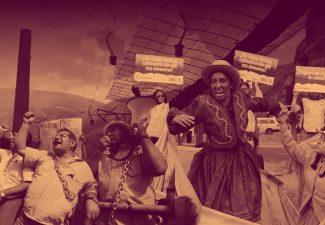
La Oroya: Lessons for litigation on air quality and public health in Latin America
By Diana Guarnizo | | Human Rights, La Oroya
La Oroya is a town in the department of Junín located in the central Sierra of Peru. Since the 1920s, a mining and metallurgical complex has been installed there, extracting ...
Lea más 
Coordinated solutions to complex problems: the Enlaza programs
By Daniela Correa Agudelo, Isabel de Brigard | | Enlaza program, Global South, Human Rights
In the current context, the challenges shared by communities and people in seemingly distinct contexts are increasingly evident. The implications of the environmental emergency, the closing of civil society spaces, ...
Lea más 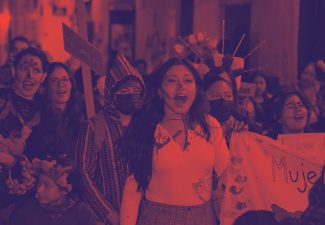
Hosting as Solidarity: Our Fellowship Program for Activists and Human Rights Defenders from the Global South
By Isabel de Brigard, Christy Crouse | | Fellowships, Global South, Human Rights
Our work as part of the human rights movement has always been carried out alongside individuals and partner organizations with whom we have collaborated to advance various agendas. The value ...
Lea más 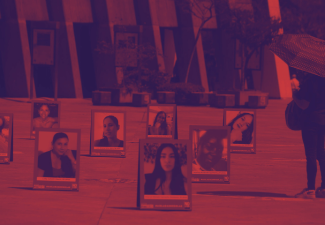
An Amphibious Approach to Solidarity in the Field of Human Rights
By Isabel de Brigard | | Global South, Human Rights, Solidarity
For those of us who work in defense of human rights, issues related to solidarity are both theoretical questions and constant practical concerns. It is in the nature of our ...
Lea más Search in Opinion
I don’t care if they call me a dictator.
By Nina Chaparro González | | bukele, Democracy, Dictadura, El Salvador, Program for strengthening - Others
During his six years in office, Bukele has consolidated his power, paving the way to become the dictator he appears to be announcing himself as.
Lea más NGOs at risk of global extinction
By Nina Chaparro González | | financiación internacional, NGO, Program for strengthening - Others
How can non-governmental organizations transform themselves? What were they like when they did not depend on international funding?
Lea más Colombia: going back to the original balance of justice
By Paola Molano Ayala | | gorillaz, JEP, Transitional Justice, Victims
There is a crucial aspect of Colombia’s transitional justice model that is worrying: the current inability of the Special Jurisdiction for Peace (JEP) to offer legal security to those who participated in the conflict, including in human rights violations, and have not been identified as among the most responsible. And making sure they also contribute to the satisfaction of the rights of the victims. The JEP must avoid keep moving towards maximalist approaches and go back to the balance in the Peace Agreement.
Lea más
Stories
FromTheTerritory
We travel with 20 indigenous activists of the world to the heart of the Sierra Nevada de Santa Marta. Listen to this story about the Kankuama Resistance.
Dejusticia's
Documentaries
Discover some of the documentary pieces that we have made. Indigenous resistance, migration of Venezuelans to Colombia and stories of women coca growers, are some of our topics of interest.
