


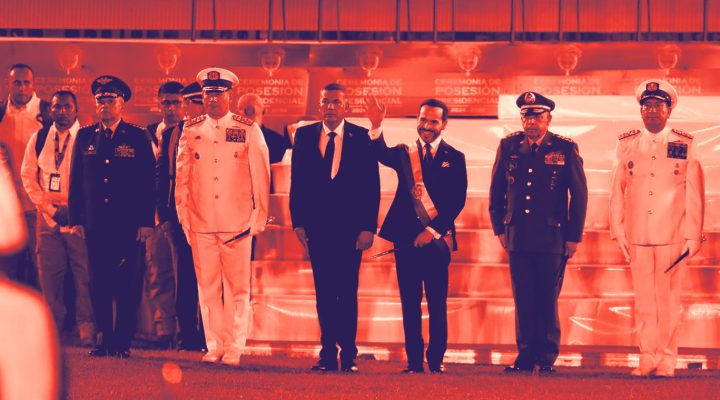
Colombia Changes Course: How Might the New Government Redefine Colombian Foreign Policy and the Political Balance in Latin America?
The transition from the Gustavo Petro administration to that of Abelardo de la Espriella marks a redefinition of Colombia’s development model. This analysis explores the diplomatic shift toward the U.S. and Israel, the move away from multilateral agendas, and the democratic implications of the reconfiguration of Latin America.
By Christy Crouse, Sofia Forero Alba | | Abelardo De La Espriella, Colombia-U.S. Relations, Colombian Foreign Policy, Latin American Geopolitics, Omar Bula Escobar, Political Transition in Colombia

Colombia’s Foreign Policy After Its Change of Course
Abelardo de la Espriella's victory marks a change of course in Colombia. We analyze how his administration may redefine foreign policy, multilateralism, and democratic balances in Latin America in the face of human rights challenges.
By Christy Crouse | | 2026 Colombian Elections, Abelardo De La Espriella, América Latina, Colombia, Colombian Foreign Policy, Democracy and human rights, Latin American Politics, Política Exterior, Right-Wing Populism
News
Search in News

Resolution for inclusive tax cooperation will have its most important discussion at the UN today
By Dejusticia | | Fiscal justice, Human Rights, Tax cooperation, UN
In the upcoming United Nations General Assembly scheduled for this week, a discussion and potential vote will take place in the Second Committee, responsible for international economic cooperation matters, regarding ...
Lea más 
Police abuse with less lethal weapons in protests: our complaint before the Inter-American Commission on Human Rights
By Dejusticia | | Human Rights, Less lethal weapons, mobilizations, police abuse, Social Protests
Twenty-three international organizations have come together to condemn state violence amid the increasing use of less lethal weapons in public demonstrations and the violation of human rights by security forces. ...
Lea más 
From disarmament to inclusive reintegration: lessons from Colombia and El Salvador
By Paola Molano Ayala | | Armed Conflict, Peace, Reitegration, Transitional Justice, Womens Rights
The aftermath of a conflict or an authoritative regime can be a tenuous time. One of the key questions to address during this period is how to avoid the recurrence ...
Lea más 
5 urgent actions to solve the serious humanitarian crisis in Palestine
By Dejusticia | | Derecho a la paz, gaza, Israel
A group of 185 organizations and other international civil society actors, including Dejusticia, signed a letter led by the Landscapes of Hope initiative in which we call on senior officials ...
Lea más 
Global drug policy: the transition from “crime and punishment” to safeguarding human rights
By Diego Zambrano Benavides | | Global drug policy, OHCHR, United Nations
The past wednesday, September 20, 2023, could be considered a historic day for global drug policy. The Office of the High Commission for Human Rights (OHCHR), which has remained relatively ...
Lea más 
Is it impossible to pay reparations? The case of the reparations policy for survivors of sexual violence and victims of the armed conflict in Colombia
By Dejusticia | | Armed Conflict, Colombia, Reparations, Sexual Violence, Victims Rights
Reparations for serious human rights violations is a right that generates broad consensus when it comes to law. There are multiple international standards on the subject and the literature coincides ...
Lea más Search in Opinion
I don’t care if they call me a dictator.
By Nina Chaparro González | | bukele, Democracy, Dictadura, El Salvador, Program for strengthening - Others
During his six years in office, Bukele has consolidated his power, paving the way to become the dictator he appears to be announcing himself as.
Lea más NGOs at risk of global extinction
By Nina Chaparro González | | financiación internacional, NGO, Program for strengthening - Others
How can non-governmental organizations transform themselves? What were they like when they did not depend on international funding?
Lea más Colombia: going back to the original balance of justice
By Paola Molano Ayala | | gorillaz, JEP, Transitional Justice, Victims
There is a crucial aspect of Colombia’s transitional justice model that is worrying: the current inability of the Special Jurisdiction for Peace (JEP) to offer legal security to those who participated in the conflict, including in human rights violations, and have not been identified as among the most responsible. And making sure they also contribute to the satisfaction of the rights of the victims. The JEP must avoid keep moving towards maximalist approaches and go back to the balance in the Peace Agreement.
Lea más
Stories
FromTheTerritory
We travel with 20 indigenous activists of the world to the heart of the Sierra Nevada de Santa Marta. Listen to this story about the Kankuama Resistance.
Dejusticia's
Documentaries
Discover some of the documentary pieces that we have made. Indigenous resistance, migration of Venezuelans to Colombia and stories of women coca growers, are some of our topics of interest.
