


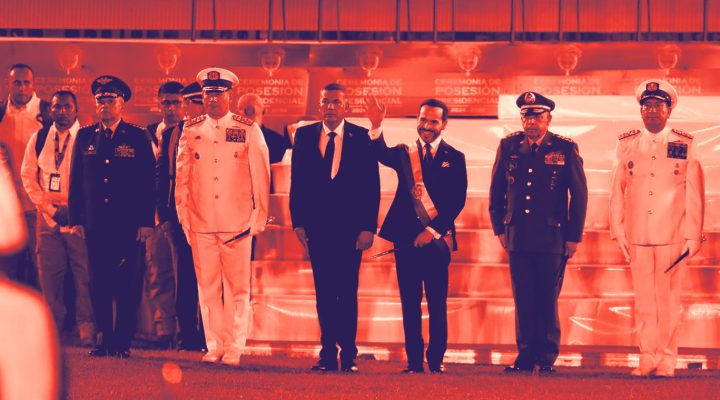
Colombia Changes Course: How Might the New Government Redefine Colombian Foreign Policy and the Political Balance in Latin America?
The transition from the Gustavo Petro administration to that of Abelardo de la Espriella marks a redefinition of Colombia’s development model. This analysis explores the diplomatic shift toward the U.S. and Israel, the move away from multilateral agendas, and the democratic implications of the reconfiguration of Latin America.
By Christy Crouse, Sofia Forero Alba | | Abelardo De La Espriella, Colombia-U.S. Relations, Colombian Foreign Policy, Latin American Geopolitics, Omar Bula Escobar, Political Transition in Colombia

Colombia’s Foreign Policy After Its Change of Course
Abelardo de la Espriella's victory marks a change of course in Colombia. We analyze how his administration may redefine foreign policy, multilateralism, and democratic balances in Latin America in the face of human rights challenges.
By Christy Crouse | | 2026 Colombian Elections, Abelardo De La Espriella, América Latina, Colombia, Colombian Foreign Policy, Democracy and human rights, Latin American Politics, Política Exterior, Right-Wing Populism
News
Search in News
Ingrid as a symbol and as a reality
By Rodrigo Uprimny Yepes |
La carta de Íngrid Betancourt a su madre es un texto que en una primera lectura conmueve y provoca rabia e indignación; sus palabras expresan el dolor, la desesperanza y ...
Lea más Gifts, the act of giving
By Mauricio García Villegas |
Muchos sirven más para incrementar la hipocresía colectiva de la generosidad que para alimentar el afecto. Marcel Mauss escribió su célebre ensayo sobre las donaciones por allá en 1925. Desde ...
Lea más Navigation letters
By Danilo Rojas (Retired in 2019) |
La planificación no persiste tanto por lo que consigue como por lo que simboliza: racionalidad Oskar Oszlak Lo primero que deberán hacer los próximos 1096 alcaldes y 32 gobernadores una ...
Lea más Yielding for liberation to the kidnapped?
By Mauricio García Villegas |
¿Bajo qué circunstancias una persona puede considerar que tiene derecho a causarle una pena o un castigo a otra? Me hago esta pregunta -quizás la más importante de la teoría ...
Lea más Dejusticia and IDEP launch two books about education and human rights
By Dejusticia |
El Centro de Estudios de Derecho, Justicia y Sociedad, Dejusticia y el Instituto para la Investigación Educativa y el Desarrollo Pedagógico, IDEP, lanzan sus dos investigaciones más recientes sobre derecho ...
Lea más The value of caution
By Rodrigo Uprimny Yepes |
Alguna vez, Bertrand Russell dijo que apelar a la razón ?era de una importancia suprema no sólo en las épocas en que ésta fácilmente prevalecía, sino también, y sobre todo, ...
Lea más Search in Opinion
I don’t care if they call me a dictator.
By Nina Chaparro González | | bukele, Democracy, Dictadura, El Salvador, Program for strengthening - Others
During his six years in office, Bukele has consolidated his power, paving the way to become the dictator he appears to be announcing himself as.
Lea más NGOs at risk of global extinction
By Nina Chaparro González | | financiación internacional, NGO, Program for strengthening - Others
How can non-governmental organizations transform themselves? What were they like when they did not depend on international funding?
Lea más Colombia: going back to the original balance of justice
By Paola Molano Ayala | | gorillaz, JEP, Transitional Justice, Victims
There is a crucial aspect of Colombia’s transitional justice model that is worrying: the current inability of the Special Jurisdiction for Peace (JEP) to offer legal security to those who participated in the conflict, including in human rights violations, and have not been identified as among the most responsible. And making sure they also contribute to the satisfaction of the rights of the victims. The JEP must avoid keep moving towards maximalist approaches and go back to the balance in the Peace Agreement.
Lea más
Stories
FromTheTerritory
We travel with 20 indigenous activists of the world to the heart of the Sierra Nevada de Santa Marta. Listen to this story about the Kankuama Resistance.
Dejusticia's
Documentaries
Discover some of the documentary pieces that we have made. Indigenous resistance, migration of Venezuelans to Colombia and stories of women coca growers, are some of our topics of interest.
