


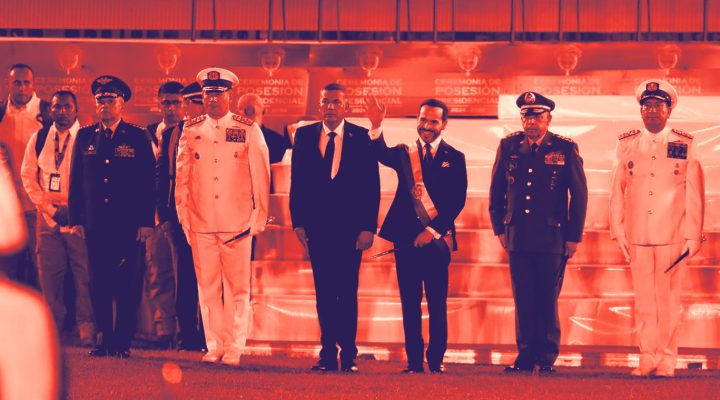
Colombia Changes Course: How Might the New Government Redefine Colombian Foreign Policy and the Political Balance in Latin America?
The transition from the Gustavo Petro administration to that of Abelardo de la Espriella marks a redefinition of Colombia’s development model. This analysis explores the diplomatic shift toward the U.S. and Israel, the move away from multilateral agendas, and the democratic implications of the reconfiguration of Latin America.
By Christy Crouse, Sofia Forero Alba | | Abelardo De La Espriella, Colombia-U.S. Relations, Colombian Foreign Policy, Latin American Geopolitics, Omar Bula Escobar, Political Transition in Colombia

Colombia’s Foreign Policy After Its Change of Course
Abelardo de la Espriella's victory marks a change of course in Colombia. We analyze how his administration may redefine foreign policy, multilateralism, and democratic balances in Latin America in the face of human rights challenges.
By Christy Crouse | | 2026 Colombian Elections, Abelardo De La Espriella, América Latina, Colombia, Colombian Foreign Policy, Democracy and human rights, Latin American Politics, Política Exterior, Right-Wing Populism
News
Search in News
Repeat not the horror
By Juan Fernando Jaramillo (Deceased) |
Los colombianos hemos vivido un verdadero horror en las últimas décadas. Esto es lo que percibimos cuando oímos las declaraciones de antiguos paramilitares acerca de las barbaridades cometidas o cuando ...
Lea más Is the Free Trade Agreement Constitutional?
By César Rodríguez-Garavito (Retired in 2019), Diana Rodríguez Franco |
Tanto en la discusión del TLC en el Congreso Nacional como en su eventual revisión por la Corte Constitucional, una de las preguntas fundamentales es si el tratado se ajusta ...
Lea más Learning of the tragedies
By Mauricio García Villegas |
Algunas sociedades -como algunas personas- logran convertir sus tragedias en oportunidades para reponerse, incluso para fortalecerse. Otras, en cambio, no aprenden nada de ellas; sólo las reproducen. Los colombianos hacemos ...
Lea más Justice for all, among the 50 best
By Dejusticia |
La revista Piedepagina realizó una selección entre las publicaciones del año pasado para encontrar los 50 mejores libros colombianos del 2006. Y un libro de Dejusticia, publicado por Norma, ocupa ...
Lea más The executive of lands
By Danilo Rojas (Retired in 2019) |
El pasado 26 de marzo sesionó por primera vez en Bogotá la mesa de tierras. En su instalación formal el 30 de agosto de 2006, el Procurador General de la ...
Lea más Inequality and gender
By Helena Alviar García (Retired in 2019) |
Actualmente en el Congreso de la República se está debatiendo un proyecto de ley por medio del cual se adoptan normas cuyo objetivo es: ?garantizar para todas las mujeres una ...
Lea más Search in Opinion
I don’t care if they call me a dictator.
By Nina Chaparro González | | bukele, Democracy, Dictadura, El Salvador, Program for strengthening - Others
During his six years in office, Bukele has consolidated his power, paving the way to become the dictator he appears to be announcing himself as.
Lea más NGOs at risk of global extinction
By Nina Chaparro González | | financiación internacional, NGO, Program for strengthening - Others
How can non-governmental organizations transform themselves? What were they like when they did not depend on international funding?
Lea más Colombia: going back to the original balance of justice
By Paola Molano Ayala | | gorillaz, JEP, Transitional Justice, Victims
There is a crucial aspect of Colombia’s transitional justice model that is worrying: the current inability of the Special Jurisdiction for Peace (JEP) to offer legal security to those who participated in the conflict, including in human rights violations, and have not been identified as among the most responsible. And making sure they also contribute to the satisfaction of the rights of the victims. The JEP must avoid keep moving towards maximalist approaches and go back to the balance in the Peace Agreement.
Lea más
Stories
FromTheTerritory
We travel with 20 indigenous activists of the world to the heart of the Sierra Nevada de Santa Marta. Listen to this story about the Kankuama Resistance.
Dejusticia's
Documentaries
Discover some of the documentary pieces that we have made. Indigenous resistance, migration of Venezuelans to Colombia and stories of women coca growers, are some of our topics of interest.
