


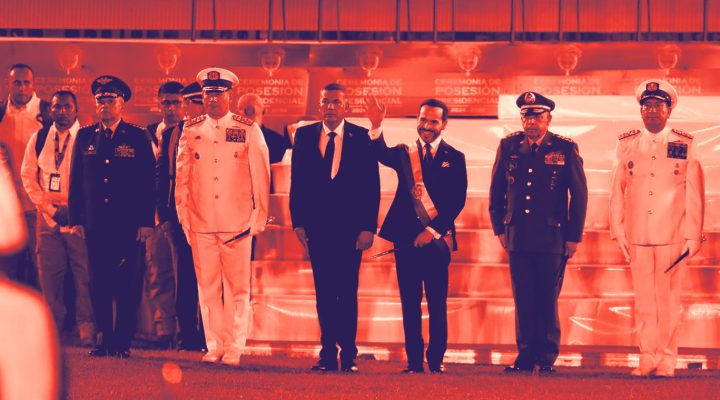
Colombia Changes Course: How Might the New Government Redefine Colombian Foreign Policy and the Political Balance in Latin America?
The transition from the Gustavo Petro administration to that of Abelardo de la Espriella marks a redefinition of Colombia’s development model. This analysis explores the diplomatic shift toward the U.S. and Israel, the move away from multilateral agendas, and the democratic implications of the reconfiguration of Latin America.
By Christy Crouse, Sofia Forero Alba | | Abelardo De La Espriella, Colombia-U.S. Relations, Colombian Foreign Policy, Latin American Geopolitics, Omar Bula Escobar, Political Transition in Colombia

Colombia’s Foreign Policy After Its Change of Course
Abelardo de la Espriella's victory marks a change of course in Colombia. We analyze how his administration may redefine foreign policy, multilateralism, and democratic balances in Latin America in the face of human rights challenges.
By Christy Crouse | | 2026 Colombian Elections, Abelardo De La Espriella, América Latina, Colombia, Colombian Foreign Policy, Democracy and human rights, Latin American Politics, Política Exterior, Right-Wing Populism
News
Search in News
Guaranteeing Access to Free Primary Education
By Rodrigo Uprimny Yepes |
I. El significado de la gratuidad del derecho a la educación El derecho a la educación puede ser visto desde distintas dimensiones y desde diversos puntos de vista. Asi, con ...
Lea más Is it Possible to Prevent Regression? A focus on Colombian constitutional jurisprudence
By Rodrigo Uprimny Yepes |
Existe un cierto acuerdo doctrinario en que una de las consecuencias importantes del principio de progresividad en materia de derechos sociales es la llamada prohibición de retroceso o principio de ...
Lea más Judicial Presentations on Prisons
By Rodrigo Uprimny Yepes, Juan Fernando Jaramillo (Deceased) |
Este artículo busca evaluar la intervención de la Corte Constitucional en las cárceles colombianas, con especial énfasis en el tema del hacinamiento carcelario, a fin de establecer los avances, límites ...
Lea más The End of the Law of Justice and Peace? The law of 975 to 2006 after the Failure of the Constitutional Court
By Rodrigo Uprimny Yepes, María Paula Saffon Sanín |
El 18 de mayo de 2006 la Corte Constitucional decidió declarar la ley 975 de 2005, también llamada ley de justicia y paz, ajustada a la Constitución Política, con excepción ...
Lea más Referees and Television
By Mauricio García Villegas |
La incertidumbre debería provenir de la competencia, no de errores del árbitro. El miércoles de la semana pasada los argentinos conmemoraron ? y con ellos la prensa global? veinte años ...
Lea más Tardiness, without social reproach
By Mauricio García Villegas |
Según una investigación publicada el jueves de la semana pasada en EL TIEMPO, el 60 por ciento de los concejales de la ciudad de Bogotá llega tarde a las sesiones ...
Lea más Search in Opinion
I don’t care if they call me a dictator.
By Nina Chaparro González | | bukele, Democracy, Dictadura, El Salvador, Program for strengthening - Others
During his six years in office, Bukele has consolidated his power, paving the way to become the dictator he appears to be announcing himself as.
Lea más NGOs at risk of global extinction
By Nina Chaparro González | | financiación internacional, NGO, Program for strengthening - Others
How can non-governmental organizations transform themselves? What were they like when they did not depend on international funding?
Lea más Colombia: going back to the original balance of justice
By Paola Molano Ayala | | gorillaz, JEP, Transitional Justice, Victims
There is a crucial aspect of Colombia’s transitional justice model that is worrying: the current inability of the Special Jurisdiction for Peace (JEP) to offer legal security to those who participated in the conflict, including in human rights violations, and have not been identified as among the most responsible. And making sure they also contribute to the satisfaction of the rights of the victims. The JEP must avoid keep moving towards maximalist approaches and go back to the balance in the Peace Agreement.
Lea más
Stories
FromTheTerritory
We travel with 20 indigenous activists of the world to the heart of the Sierra Nevada de Santa Marta. Listen to this story about the Kankuama Resistance.
Dejusticia's
Documentaries
Discover some of the documentary pieces that we have made. Indigenous resistance, migration of Venezuelans to Colombia and stories of women coca growers, are some of our topics of interest.
