


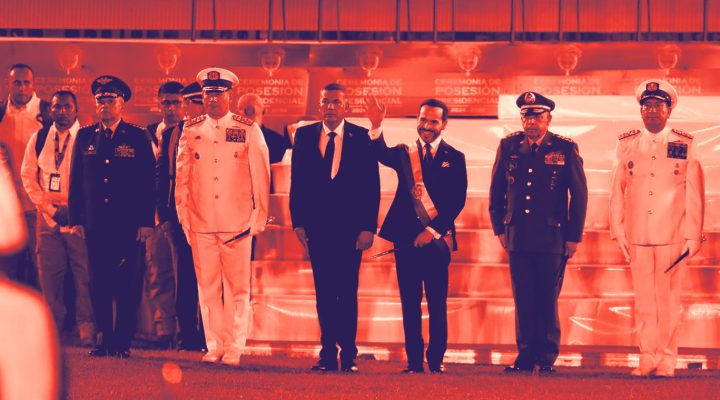
Colombia Changes Course: How Might the New Government Redefine Colombian Foreign Policy and the Political Balance in Latin America?
The transition from the Gustavo Petro administration to that of Abelardo de la Espriella marks a redefinition of Colombia’s development model. This analysis explores the diplomatic shift toward the U.S. and Israel, the move away from multilateral agendas, and the democratic implications of the reconfiguration of Latin America.
By Christy Crouse, Sofia Forero Alba | | Abelardo De La Espriella, Colombia-U.S. Relations, Colombian Foreign Policy, Latin American Geopolitics, Omar Bula Escobar, Political Transition in Colombia
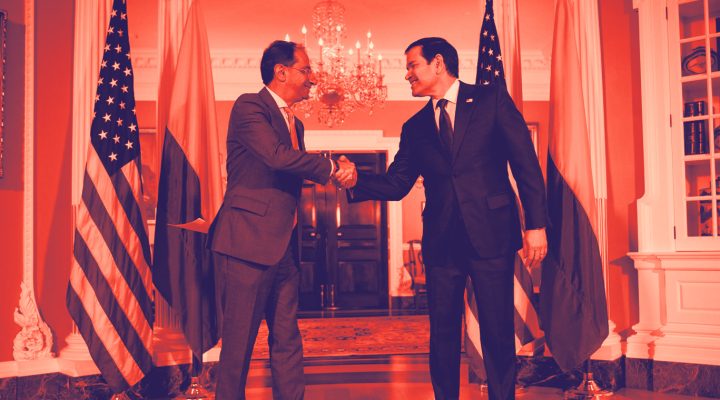
Colombia’s Foreign Policy After Its Change of Course
Abelardo de la Espriella's victory marks a change of course in Colombia. We analyze how his administration may redefine foreign policy, multilateralism, and democratic balances in Latin America in the face of human rights challenges.
By Christy Crouse | | 2026 Colombian Elections, Abelardo De La Espriella, América Latina, Colombia, Colombian Foreign Policy, Democracy and human rights, Latin American Politics, Política Exterior, Right-Wing Populism
News
Search in News
Get involved! Our fellowship program for human rights defenders from the Global South is now open!
By Dejusticia | | Becas, Fellowship, Sur Global
The closure of civic spaces has strengthened the need for international human rights actors to support one another’s work and amplify each one’s voice in the global arena. In solidarity ...
Lea más 
Digital technologies and political campaigns: a risk for the 2022 elections?
By Dejusticia | | 2022 elections, Data protection, Presidential campaing, Technology and human rights
The documentary The Great Hack drew attention on how the alliance with Cambridge Analytica and the combination of microtargeting in social media and fake news would end up giving Donald ...
Lea más 
The ABCs of the Social Protest and Human Rights Crisis in Colombia
By Daniela Jiménez González, Diana Esther Guzmán Rodríguez | | Colombia, Estados Unidos, Policía, Protesta, Violencia
Since April 28, when various sectors of society went on strike, Colombia has been caught in the middle of repression by law enforcement, a stigmatizing response by the national government, ...
Lea más 
Protests in Colombia: 650 civil society organizations call for urgent action from IACHR
By Mariana Escobar Roldán |
Given the fragile institutional situation and the seriousness of human rights violations in Colombia, a group of 650 organizations, including Dejusticia, made a joint call to the Inter-American Commission on ...
Lea más 
We condemn violence and call for respect for the right to protest in Colombia
By Dejusticia | | Iván Duque, Policía, Protesta
Diverse social sectors took to the colombians streets since last Wednesday, April 28, in response to a call for a national strike, mainly due to the filing of a tax ...
Lea más 
New Research Report: “The Defense of Human Rights in Venezuela”
By Dejusticia | | Civil Society, Derechos Humanos, Program for strengthening - Venezuela, Venezuela
Civil society organizations in Venezuela have found themselves greatly weakened by the complex humanitarian emergency and the restriction of democratic spaces. For more than 17 years, the state has adopted ...
Lea más Search in Opinion
I don’t care if they call me a dictator.
By Nina Chaparro González | | bukele, Democracy, Dictadura, El Salvador, Program for strengthening - Others
During his six years in office, Bukele has consolidated his power, paving the way to become the dictator he appears to be announcing himself as.
Lea más NGOs at risk of global extinction
By Nina Chaparro González | | financiación internacional, NGO, Program for strengthening - Others
How can non-governmental organizations transform themselves? What were they like when they did not depend on international funding?
Lea más Colombia: going back to the original balance of justice
By Paola Molano Ayala | | gorillaz, JEP, Transitional Justice, Victims
There is a crucial aspect of Colombia’s transitional justice model that is worrying: the current inability of the Special Jurisdiction for Peace (JEP) to offer legal security to those who participated in the conflict, including in human rights violations, and have not been identified as among the most responsible. And making sure they also contribute to the satisfaction of the rights of the victims. The JEP must avoid keep moving towards maximalist approaches and go back to the balance in the Peace Agreement.
Lea más
Stories
FromTheTerritory
We travel with 20 indigenous activists of the world to the heart of the Sierra Nevada de Santa Marta. Listen to this story about the Kankuama Resistance.
Dejusticia's
Documentaries
Discover some of the documentary pieces that we have made. Indigenous resistance, migration of Venezuelans to Colombia and stories of women coca growers, are some of our topics of interest.
