



Colombia Changes Course: How Might the New Government Redefine Colombian Foreign Policy and the Political Balance in Latin America?
The transition from the Gustavo Petro administration to that of Abelardo de la Espriella marks a redefinition of Colombia’s development model. This analysis explores the diplomatic shift toward the U.S. and Israel, the move away from multilateral agendas, and the democratic implications of the reconfiguration of Latin America.
By Christy Crouse, Sofia Forero Alba | | Abelardo De La Espriella, Colombia-U.S. Relations, Colombian Foreign Policy, Latin American Geopolitics, Omar Bula Escobar, Political Transition in Colombia
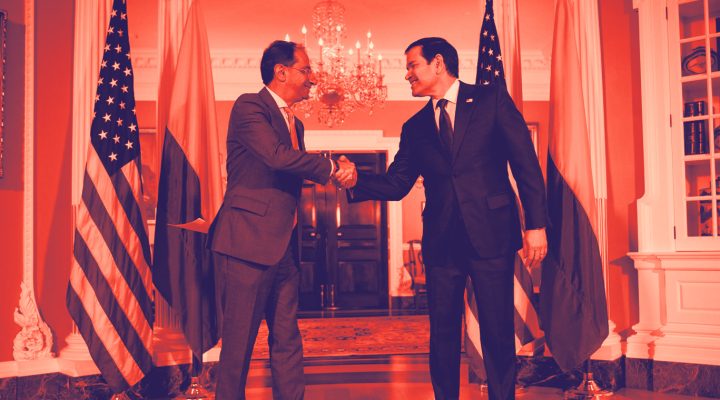
Colombia’s Foreign Policy After Its Change of Course
Abelardo de la Espriella's victory marks a change of course in Colombia. We analyze how his administration may redefine foreign policy, multilateralism, and democratic balances in Latin America in the face of human rights challenges.
By Christy Crouse | | 2026 Colombian Elections, Abelardo De La Espriella, América Latina, Colombia, Colombian Foreign Policy, Democracy and human rights, Latin American Politics, Política Exterior, Right-Wing Populism
News
Search in News

The Inspector General’s Office intervened to support our legal action on climate change
By Dejusticia | | Generaciones futuras, Primera Tutela Cambio Climático, Tutela Cambio Climático
"There is no control over deforestation" ... "Deforestation in the Amazon directly affects global warming" ... "The depredation of vegetative species puts at risk and violates fundamental rights such as ...
Lea más 
Victims and press after the war
By Vivian Newman Pont, Maria Paula Ángel, María Ximena Dávila | | Derechos de las víctimas, Libertad de expresión, Libertad de prensa
Thus, this document has the purpose of asking and answering, from a socio-legal perspective, the following question: How can the events related to the armed conflict and to the transition ...
Lea más 
Venezuela Must Respect the People’s Right to Free and Fair Elections
By Dejusticia | | Nicolás Maduro, Venezuela
On January 23, Venezuela’s National Constituent Assembly (ANC) approved a decree that calls for presidential elections to be held by April 30, 2018. As organizations devoted to advancing human rights ...
Lea más 
Eight key points of the first Latin American lawsuit on the rights of future generations and climate change
By Dejusticia | | Boletín, Generaciones futuras
1. What is the problem? At the 2015 climate change negotiations, Colombia reaffirmed its commitment to reach zero-net deforestation in the Colombian Amazon by the year 2020. Two years before ...
Lea más 
Dejusticia and more than 70 international organizations request urgent attention for people who inject themselves with drugs in Colombia
By Dejusticia | | Drogas, Heroína, PID, Política de drogas
President of the Republic of Colombia, Juan Manuel Santos Minister of Health and Social Protection, Alejandro Gaviria Minister of Justice and Law, Enrique Gil Botero Minister of Foreign Affairs, María ...
Lea más 
Coca: the plant that takes a toll
By Carolina Gutiérrez Torres | | Coca, Mujeres cocaleras, Putumayo, Sustitución de cultivos
In Colombia about 115,000 families plant coca. Almost all cultivate less than one hectare and live off selling the fresh leaf and whatever other crops they have in their plot. ...
Lea más Search in Opinion
I don’t care if they call me a dictator.
By Nina Chaparro González | | bukele, Democracy, Dictadura, El Salvador, Program for strengthening - Others
During his six years in office, Bukele has consolidated his power, paving the way to become the dictator he appears to be announcing himself as.
Lea más NGOs at risk of global extinction
By Nina Chaparro González | | financiación internacional, NGO, Program for strengthening - Others
How can non-governmental organizations transform themselves? What were they like when they did not depend on international funding?
Lea más Colombia: going back to the original balance of justice
By Paola Molano Ayala | | gorillaz, JEP, Transitional Justice, Victims
There is a crucial aspect of Colombia’s transitional justice model that is worrying: the current inability of the Special Jurisdiction for Peace (JEP) to offer legal security to those who participated in the conflict, including in human rights violations, and have not been identified as among the most responsible. And making sure they also contribute to the satisfaction of the rights of the victims. The JEP must avoid keep moving towards maximalist approaches and go back to the balance in the Peace Agreement.
Lea más
Stories
FromTheTerritory
We travel with 20 indigenous activists of the world to the heart of the Sierra Nevada de Santa Marta. Listen to this story about the Kankuama Resistance.
Dejusticia's
Documentaries
Discover some of the documentary pieces that we have made. Indigenous resistance, migration of Venezuelans to Colombia and stories of women coca growers, are some of our topics of interest.
