



Colombia Changes Course: How Might the New Government Redefine Colombian Foreign Policy and the Political Balance in Latin America?
By Christy Crouse, Sofia Forero Alba | | Abelardo De La Espriella, Colombia-U.S. Relations, Colombian Foreign Policy, Latin American Geopolitics, Omar Bula Escobar, Political Transition in Colombia
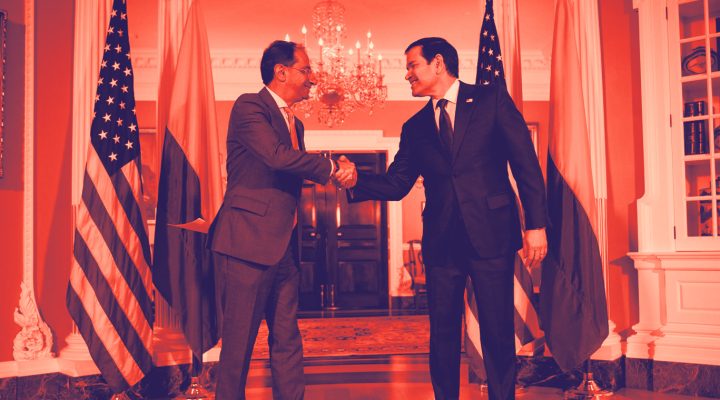
Colombia’s Foreign Policy After Its Change of Course
By Christy Crouse | | 2026 Colombian Elections, Abelardo De La Espriella, América Latina, Colombia, Colombian Foreign Policy, Democracy and human rights, Latin American Politics, Política Exterior, Right-Wing Populism
News
Search in News

Colombia Changes Course: How Might the New Government Redefine Colombian Foreign Policy and the Political Balance in Latin America?
By Christy Crouse, Sofia Forero Alba | | Abelardo De La Espriella, Colombia-U.S. Relations, Colombian Foreign Policy, Latin American Geopolitics, Omar Bula Escobar, Political Transition in Colombia

Colombia’s Foreign Policy After Its Change of Course
By Christy Crouse | | 2026 Colombian Elections, Abelardo De La Espriella, América Latina, Colombia, Colombian Foreign Policy, Democracy and human rights, Latin American Politics, Política Exterior, Right-Wing Populism

Defend the ICC: INCLO national human rights organizations call on states to protect international rule of law against United States attack
By Dejusticia | | Human Rights, ICC, International Criminal Court, International Justice, multilateralism, United States

Defending human rights around the world requires funding
By Mariana Matamoros | | CIDH, Derechos Humanos, Desigualdad, Global South, IACHR, Inequality, Justicia Fiscal, Public spending, Sustainable development., Tax cooperation, Tax justice, Tax policy

Who should collect taxes when services cross borders?
By Mariana Matamoros | | Digital economy, Digital taxes, International taxation, Justicia Fiscal, Sustainable development., Tax justice, Tributación internacional, United Nations

From Taxes to Rights
By Mariana Matamoros | | CIDH, Fiscal justice, fiscal policy, Human Rights, IACHR, Justicia Fiscal, Public budget, Public investment, Social inequality., Tax policy, taxes
Search in Opinion
We presented a tutela in favor of the right consumers have to receive information on the amount of sugarpresent in the beverages we drink
By César Rodríguez-Garavito (Retired in 2019), Diana Guarnizo, Gabriela Eslava, Maria Paula Ángel, Mauricio Albarracín, Vivian Newman Pont | | Derecho a la información, Impuesto a las bebidas azucaradas
Toxic Injustice
By Helena Durán | | Derecho a un ambiente sano
Toxis are everywhere. They are in pesticides that end up in our food and our water; they are in plastics, electronics, toys, clothes, decorative paints, mattresses and in the chemicals used in gold mining and fracking.
The déjà vu of untitled lands: the Constitutional Court can prevent us from returning a century
By Ana Jimena Bautista, Diana Isabel Güiza Gómez | | Agro-industry, Agro-industry, Constitutional Transitions, Land Use, Transiciones Constitucionales, Zidres, Zidres
"A large proportion of the untitled land concessions between 1849-1872 was for the extraction of cinchona bark (…) Among the merchants of the bark who obtained concessions were persons with significant fortunes, and others who had been high officials of the State or had ties to the government. Among them there were also foreign investors. Other export products such as tobacco, rubber, indigo and coffee had a similar fate (...)
Stories
FromTheTerritory
We travel with 20 indigenous activists of the world to the heart of the Sierra Nevada de Santa Marta. Listen to this story about the Kankuama Resistance.
Dejusticia's
Documentaries
Discover some of the documentary pieces that we have made. Indigenous resistance, migration of Venezuelans to Colombia and stories of women coca growers, are some of our topics of interest.
