


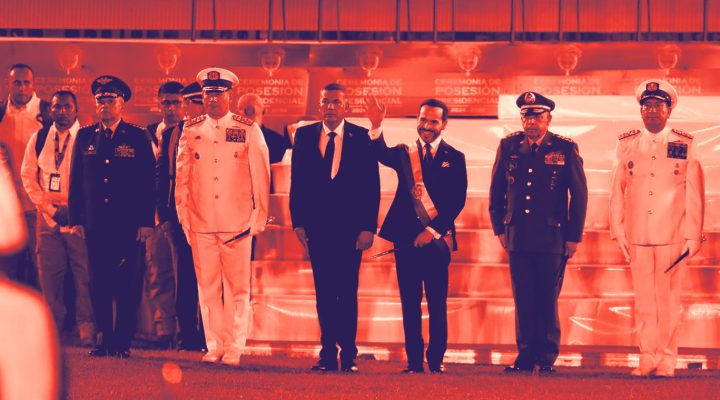
Colombia Changes Course: How Might the New Government Redefine Colombian Foreign Policy and the Political Balance in Latin America?
By Christy Crouse, Sofia Forero Alba | | Abelardo De La Espriella, Colombia-U.S. Relations, Colombian Foreign Policy, Latin American Geopolitics, Omar Bula Escobar, Political Transition in Colombia
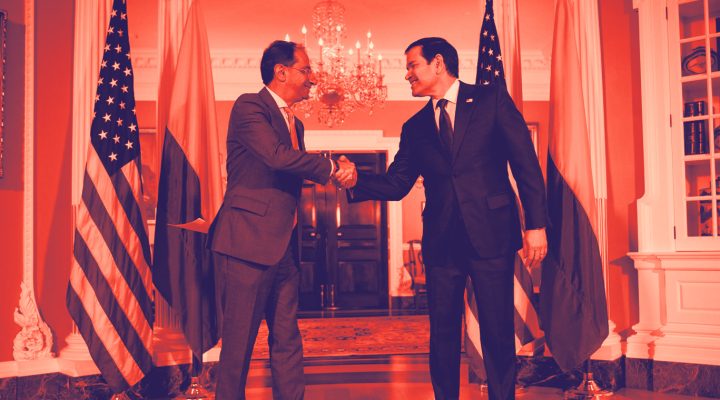
Colombia’s Foreign Policy After Its Change of Course
By Christy Crouse | | 2026 Colombian Elections, Abelardo De La Espriella, América Latina, Colombia, Colombian Foreign Policy, Democracy and human rights, Latin American Politics, Política Exterior, Right-Wing Populism
News
Search in News
Colombia Changes Course: How Might the New Government Redefine Colombian Foreign Policy and the Political Balance in Latin America?
By Christy Crouse, Sofia Forero Alba | | Abelardo De La Espriella, Colombia-U.S. Relations, Colombian Foreign Policy, Latin American Geopolitics, Omar Bula Escobar, Political Transition in Colombia

Colombia’s Foreign Policy After Its Change of Course
By Christy Crouse | | 2026 Colombian Elections, Abelardo De La Espriella, América Latina, Colombia, Colombian Foreign Policy, Democracy and human rights, Latin American Politics, Política Exterior, Right-Wing Populism

Defend the ICC: INCLO national human rights organizations call on states to protect international rule of law against United States attack
By Dejusticia | | Human Rights, ICC, International Criminal Court, International Justice, multilateralism, United States

Defending human rights around the world requires funding
By Mariana Matamoros | | CIDH, Derechos Humanos, Desigualdad, Global South, IACHR, Inequality, Justicia Fiscal, Public spending, Sustainable development., Tax cooperation, Tax justice, Tax policy

Who should collect taxes when services cross borders?
By Mariana Matamoros | | Digital economy, Digital taxes, International taxation, Justicia Fiscal, Sustainable development., Tax justice, Tributación internacional, United Nations

From Taxes to Rights
By Mariana Matamoros | | CIDH, Fiscal justice, fiscal policy, Human Rights, IACHR, Justicia Fiscal, Public budget, Public investment, Social inequality., Tax policy, taxes
Search in Opinion
Culture and Its Intangible Benefits
By Carolina Mila Torres | | sociales-y-culturales-desc
We should take advantage of this moment when Colombia begins to question the role of culture in peace building to consider its contributions more broadly.
Although imperfect, peace should also arrive to rural areas
By Angie Paola Botero Giraldo | | Land Restitution
Throughout the 20th century, Colombia passed a series of agrarian laws that regulated ownership and exploitation of the land, one of the most important causes of armed conflict. The most important were Law 200 of 1936, Law 135 of 1961, Law 1 of 1968, and Law 160 of 1994. All were ambitious proposals. Nonetheless, the implementation of these laws has been a failure.
Kidnapping and Peace
By Rodrigo Uprimny Yepes | | kidnaping
There are ways of fighting that are so atrocious that there is no ideal, no matter how noble it may be, that can justify them. Kidnapping of civilians is one of them and for this reason it is almost unanimously condemned by all Colombians. These kidnappings are also war crimes in international law, and, if they are committed in a generalized or systematic way, are also a crime against humanity.
Stories
FromTheTerritory
We travel with 20 indigenous activists of the world to the heart of the Sierra Nevada de Santa Marta. Listen to this story about the Kankuama Resistance.
Dejusticia's
Documentaries
Discover some of the documentary pieces that we have made. Indigenous resistance, migration of Venezuelans to Colombia and stories of women coca growers, are some of our topics of interest.
