


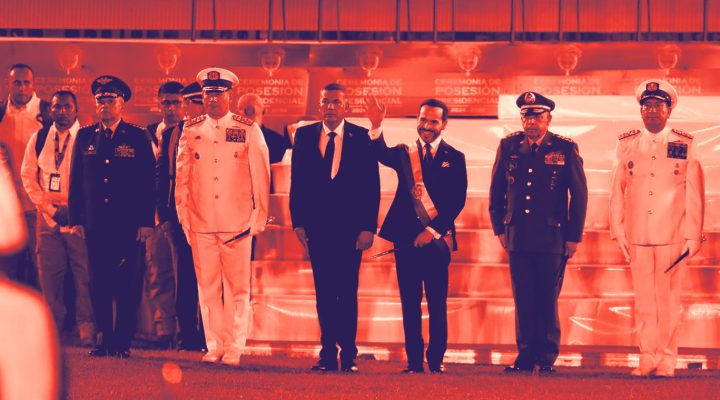
Colombia Changes Course: How Might the New Government Redefine Colombian Foreign Policy and the Political Balance in Latin America?
The transition from the Gustavo Petro administration to that of Abelardo de la Espriella marks a redefinition of Colombia’s development model. This analysis explores the diplomatic shift toward the U.S. and Israel, the move away from multilateral agendas, and the democratic implications of the reconfiguration of Latin America.
By Christy Crouse, Sofia Forero Alba | | Abelardo De La Espriella, Colombia-U.S. Relations, Colombian Foreign Policy, Latin American Geopolitics, Omar Bula Escobar, Political Transition in Colombia
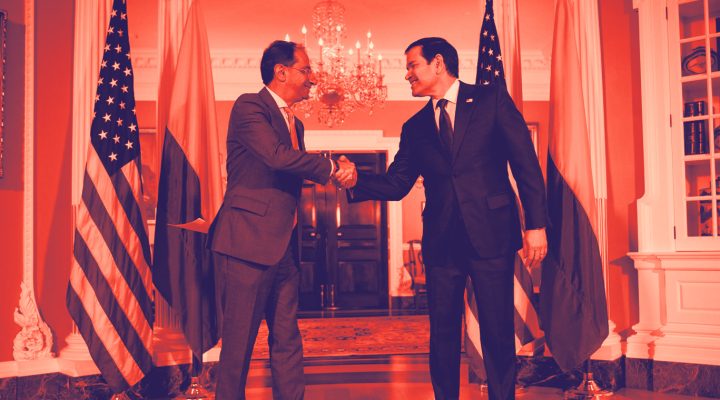
Colombia’s Foreign Policy After Its Change of Course
Abelardo de la Espriella's victory marks a change of course in Colombia. We analyze how his administration may redefine foreign policy, multilateralism, and democratic balances in Latin America in the face of human rights challenges.
By Christy Crouse | | 2026 Colombian Elections, Abelardo De La Espriella, América Latina, Colombia, Colombian Foreign Policy, Democracy and human rights, Latin American Politics, Política Exterior, Right-Wing Populism
News
Search in News
Colombia Changes Course: How Might the New Government Redefine Colombian Foreign Policy and the Political Balance in Latin America?
By Christy Crouse, Sofia Forero Alba | | Abelardo De La Espriella, Colombia-U.S. Relations, Colombian Foreign Policy, Latin American Geopolitics, Omar Bula Escobar, Political Transition in Colombia
The arrival of the new Colombian government is not merely a democratic transition. It represents a redefinition of the political project and the role Colombia seeks to play on the ...
Lea más 
Colombia’s Foreign Policy After Its Change of Course
By Christy Crouse | | 2026 Colombian Elections, Abelardo De La Espriella, América Latina, Colombia, Colombian Foreign Policy, Democracy and human rights, Latin American Politics, Política Exterior, Right-Wing Populism
June 25, 2026 in Colombia felt very similar to November 8, 2016 in the United States. On both of those dates, the results of presidential elections were announced in which ...
Lea más 
Defend the ICC: INCLO national human rights organizations call on states to protect international rule of law against United States attack
By Dejusticia | | Human Rights, ICC, International Criminal Court, International Justice, multilateralism, United States
As national human rights organizations working across every region of the globe, we are alarmed by the campaign announced by the United States Department of State to “dismantle” the International ...
Lea más 
Defending human rights around the world requires funding
By Mariana Matamoros | | CIDH, Derechos Humanos, Desigualdad, Global South, IACHR, Inequality, Justicia Fiscal, Public spending, Sustainable development., Tax cooperation, Tax justice, Tax policy
We live in a time when major global challenges—inequality, the climate crisis, and technological transformations, among others—require governments to have greater capacity to guarantee rights and promote the well-being of ...
Lea más 
Who should collect taxes when services cross borders?
By Mariana Matamoros | | Digital economy, Digital taxes, International taxation, Justicia Fiscal, Sustainable development., Tax justice, Tributación internacional, United Nations
For decades, international tax rules were designed for an economy very different from today’s. In that world, companies produced physical goods and had factories and offices in the countries where ...
Lea más 
From Taxes to Rights
By Mariana Matamoros | | CIDH, Fiscal justice, fiscal policy, Human Rights, IACHR, Justicia Fiscal, Public budget, Public investment, Social inequality., Tax policy, taxes
Let’s imagine for a moment a public school in a rural area, a hospital that treats hundreds of people every day, or a drinking water system that serves a community ...
Lea más Search in Opinion
Dangerous populations
By Mauricio García Villegas |
One of the most hateful practices of the authoritarian regimes it of punishing someone for the simple fat of belonging to a social group considered dangerous for the regime. Students in military dictatorships, homosexuals in islamic theocracies or the black in the Apartheid are only some of the most visible examples. This practice is founded in an ideology that is known as penal peligrosism, prescribed since the beginnings of the XIXth century, but that we are still far away from having banished from the occidental democracies, as the social composition of the prison population shows.
Here, I want to speak about about a type of peligrosism that is rarely mentioned, but that still persists and progresses. I mean the discriminatory way how countries treat immigrants when they enter and leave their frontiers.
Lea más Words and violence
By Mauricio García Villegas |
Fernando Savater once said that wars live over all on words and that, therefore, adding words to war is like adding fuel to the fire.
Lea más Intervention before the IACtHR regarding Costa Rica’s prohibition of invitro fertilization
By Annika Dalén, Diana Esther Guzmán Rodríguez, Paola Molano Ayala, Paula Rangel Garzón, Rodrigo Uprimny Yepes | | Discriminación, Human Rights
Dejusticia presented an amicus before the Inter-American Court of Human Rights regarding Costa Rica's prohibition of in vitro fertilization.
Lea más
Stories
FromTheTerritory
We travel with 20 indigenous activists of the world to the heart of the Sierra Nevada de Santa Marta. Listen to this story about the Kankuama Resistance.
Dejusticia's
Documentaries
Discover some of the documentary pieces that we have made. Indigenous resistance, migration of Venezuelans to Colombia and stories of women coca growers, are some of our topics of interest.
