


Home_Internacional
Colombia Changes Course: How Might the New Government Redefine Colombian Foreign Policy and the Political Balance in Latin America?
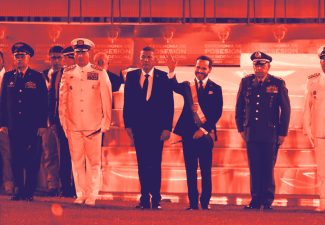
The transition from the Gustavo Petro administration to that of Abelardo de la Espriella marks a redefinition of Colombia’s development model. This analysis explores the diplomatic shift toward the U.S. and Israel, the move away from multilateral agendas, and the democratic implications of the reconfiguration of Latin America.
Read MoreColombia’s Foreign Policy After Its Change of Course

Abelardo de la Espriella’s victory marks a change of course in Colombia. We analyze how his administration may redefine foreign policy, multilateralism, and democratic balances in Latin America in the face of human rights challenges.
Read MoreDefend the ICC: INCLO national human rights organizations call on states to protect international rule of law against United States attack

If left unanswered, it will set a precedent that will go beyond the ICC itself: that any country with sufficient power can threaten the institutions and individuals responsible for enforcing international law.
Read MoreDefending human rights around the world requires funding

Fiscal policy is no longer a purely economic issue; it has become the cornerstone of sustainable development.
Read MoreWho should collect taxes when services cross borders?

Digital platforms and artificial intelligence operate without borders, but tax rules remain stuck in the past. The UN Framework Convention seeks to revolutionize the taxation of cross-border services.
Read MoreFrom Taxes to Rights

Behind every hospital, school, or social program lie a country’s budgetary and tax decisions. This article explores how taxes and public spending determine the effective guarantee of human rights.
Read MoreThree Borders, One Life: The Struggle of Three Trans Migrant Women in Colombia

Transphobia, irregular migration status, and structural discrimination overlap in the lives of transgender migrant women, shutting them out of access to healthcare, work, housing, and legal protection.
Read MoreBetween Dependency and Diversification: Agrarian Reform in Colombia and the Shift in International Cooperation

As U.S. cooperation is drastically reduced, Colombia is opening its doors to China’s market and investment to support agrarian reform. However, the Asian model—focused on infrastructure and commercial pragmatism—raises serious questions about whether it can fill the gaps in human rights, territorial peace, and humanitarian assistance.
Read MoreWhat’s the Point of an International Conference on Agrarian Reform?

Agrarian Reform Conferences may seem ineffective in a world where everything is stacked against them, but they are worth it. They are breeding grounds for “soft law” that inspires national legislation and serve as a key space for generating the “political density” that keeps peasant struggles alive.
Read MoreFarmers and Agrarian Reform: the Invisible Protagonists of a Global Debate?

For decades, small farmers and agrarian reform were marginalized in global discussions. This newsletter analyzes the limitations, challenges, and urgency of placing the agrarian issue at the center of the international agenda.
Read MoreColombia: going back to the original balance of justice

There is a crucial aspect of Colombia’s transitional justice model that is worrying: the current inability of the Special Jurisdiction for Peace (JEP) to offer legal security to those who participated in the conflict, including in human rights violations, and have not been identified as among the most responsible. And making sure they also contribute to the satisfaction of the rights of the victims. The JEP must avoid keep moving towards maximalist approaches and go back to the balance in the Peace Agreement.
Read MorePeruvian democracy hangs in the balance; NGOs at risk
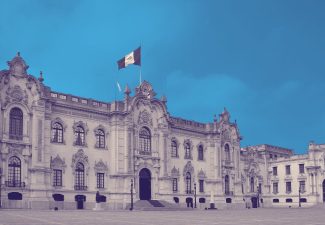
The Peruvian state, based on its commitments to international law, has an obligation to guarantee democracy and, within that framework, the right of civil society to associate and express itself. However, we are facing a serious situation in which civic space is being closed off, with various warning signs that urgently need to be addressed.
Read MoreLeft, democracy, and Venezuela
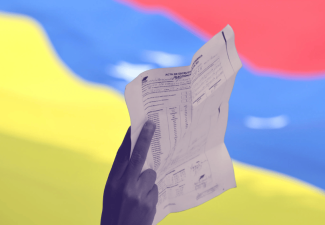
Colombia must demand an end to human rights violations and the immediate publication of the results and recount, with international verification to ensure credibility and prevent further violence and repression.
Read MoreBukele: the savior? (II)

Bukele’s immense popularity does not legitimize his assault on the rule of law, as he is destroying the foundations of democracy, just as similar assaults by Viktor Orbán in Hungary, Daniel Ortega in Nicaragua, and Chavismo in Venezuela have not been legitimized.
Read MoreBukele: the savior?

This saga involving Bukele deserves to be known in Colombia because there are certain sectors, especially on the right, that rightly criticize similar processes of destruction of the rule of law by Ortega in Nicaragua or Maduro in Venezuela, but remain silent in the face of this assault on democracy in El Salvador.
Read MoreThe immigration policy of the United States and its implications in Latin America

The United States has implemented different measures to prevent the entry of migrants and refugees into its territory, including extending its immigration policy to Latin American countries.
Read MoreThe binationality of the Wayuu people: the pending debt of Venezuela and Colombia

The Wayuu arrive in Colombia to seek refuge but crashes with a wall that prevents them from accessing social services and fundamental rights: the Colombian State has not recognized the binationality of the Wayuu people in practice.
Read MoreThe binationality of the Wayuu people: the vision from their cosmology

The Wayuu people have demanded the recognition of their binationality, appealing to the legal and political link that unites them with Colombia and Venezuela, which should translate into a full guarantee of rights and citizenship in both countries.
Read MoreUnder Surveillance: (Mis)use of Technologies in Emergency Responses

Surveillance technologies exacerbated the impacts of Covid-19 emergency measures on civic space by allowing governments to collect fine-grained data about individuals while also working across large scales of information, in a way that has been unprecedented in the history of global pandemics.
Read MoreEnergy transition and human rights in the Global South

The lack of a human rights and energy policy feeds the growing conflict in the territories. It will be hard to end all forms of violence associated with our reliance on fossil fuels at any cost until we decide to retrace our steps by focusing on a just transition.
Read MoreReimagining the Future of Human Rights
The chapters in this book offer a snapshot of the current state of Human Rights that can help guide our work as activists and researchers.
Read MoreResisting authoritarian tendencies in Latin America
Although the fight against authoritarian tendencies cannot be addressed simply with rights and the people who defend them, we believe that these types of strategies, insofar as they articulate different social sectors, contribute to the deepening of democratic practices.
Read MoreMigration and Decent Work: Challenges for the Global South
This book seeks to strenghten the Human Rights movement through collaboration and the sharing of experiences. The diversity of voices featured here offers a look at migration based on and geared toward the Global South.
Read MoreCivil Resistance Against 21st Century Athoritarianism
Thorugh various narratives, the authors seek to recognize new spaces for struggle —such as political activism— to develop action-research tools in a context of crisis.
Read MorePandemic Inequality: Civil Society Narratives from the Global South
The contributors to this book, writing from different perspectives, invite us to consider what we can learn from the interplay between the pandemic and inequality in order to spur a creative reorientation of collective mobilization and advocacy toward the future.
Read MoreIN FOCUS: Facial Recognition Tech Stories and Rights Harms from around the World

The indiscriminate use of Facial Recognition Technology (FRT) globally by law enforcement and other government agencies is dangerously normalising surveillance. The full harmful impacts and effects of this technology on people’s lives are only beginning to emerge. A new INCLO report showcasing FRT stories from around the world flags the risk of creating societies where…
Read MoreProtecting Human Rights on the Ground
During the investigation, the presence of OHCHR completed its first six months in Venezuela, so a consultation with human rights defenders in the country was included to assess this experience. Being the first comparative research in this field, its findings are equally of interest to other audiences beyond Venezuela.
Read MoreEngaging with Big Business: Seeking Accountability for the Human Rights Impacts of Corporate Activities
A course on Business and Human Rights organized by Dejusticia
Read MoreTax justice as an opportunity
Es momento de que los Estados apliquen políticas fiscales expansivas con un enfoque progresivo y de derechos humanos, que logren garantizar los DESC de los hogares más vulnerables, y, al mismo tiempo, estimular la economía protegiendo el empleo y la liquidez de las pequeñas y medianas empresas.
Read MoreTransnational Advocacy Networks

Activists, particularly those based in the global South, have accumulated a wealth of experience in dealing with a range of transnational networks operating in diverse issue areas. New theoretical understandings have reflected this accumulating experience.
Read MoreColombia must obtain resources to guarantee the right to health of Venezuelan migrants: Constitutional Court
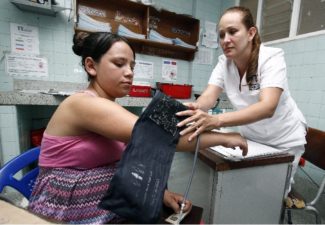
The high court protected the right to health of two undocumented Venezuelans and requested the government to advance as “expeditiously and effectively as possible” towards the full realization of migrants’ right to health, regardless of their immigration status. Dejusticia intervened in the case.
Read More