


Colombia Changes Course: How Might the New Government Redefine Colombian Foreign Policy and the Political Balance in Latin America?
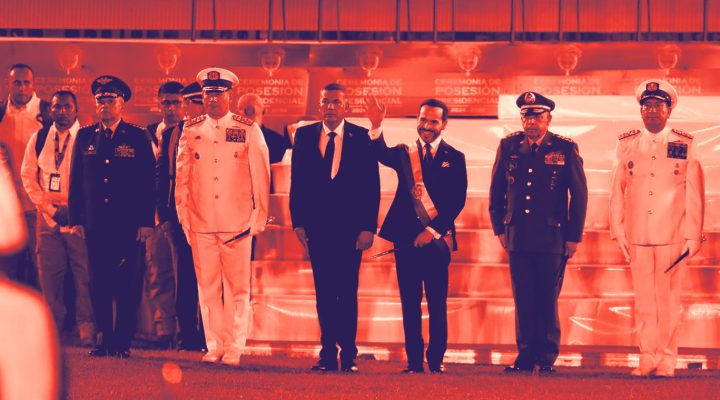
The transition from the Gustavo Petro administration to that of Abelardo de la Espriella marks a redefinition of Colombia’s development model. This analysis explores the diplomatic shift toward the U.S. and Israel, the move away from multilateral agendas, and the democratic implications of the reconfiguration of Latin America.
By Christy Crouse, Sofia Forero Alba | | Abelardo De La Espriella, Colombia-U.S. Relations, Colombian Foreign Policy, Latin American Geopolitics, Omar Bula Escobar, Political Transition in Colombia
Colombia’s Foreign Policy After Its Change of Course
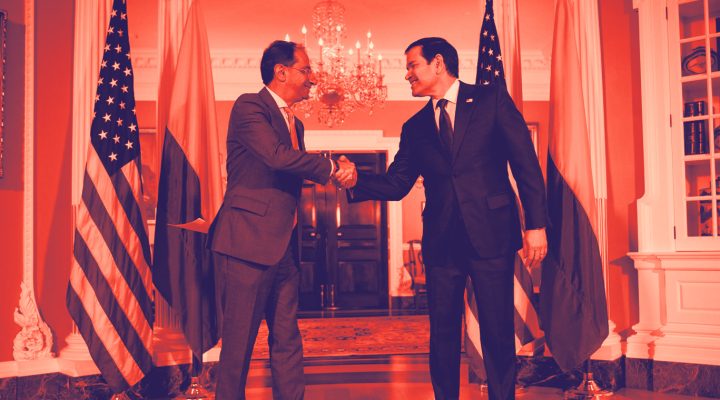
Abelardo de la Espriella's victory marks a change of course in Colombia. We analyze how his administration may redefine foreign policy, multilateralism, and democratic balances in Latin America in the face of human rights challenges.
By Christy Crouse | | 2026 Colombian Elections, Abelardo De La Espriella, América Latina, Colombia, Colombian Foreign Policy, Democracy and human rights, Latin American Politics, Política Exterior, Right-Wing Populism
News
Search in News

Cosmopolitan human rights
By Mauricio García Villegas | | Derechos
1. Love of country is often a very strong emotion, stronger than love of humanity. Waving the flags of the group is often a more overwhelming passion than the abstract ...
Lea más 
Justice in Tension: the Role of the ICC in Venezuela’s Repression
By Paola Molano Ayala, Paula Andrea Valencia Cortés |
Repression in Venezuela during the Chavismo era is not a new phenomenon. It has occurred repeatedly in response to anti-government protests, provoking the exile of opponents and limiting—if not suppressing—democratic ...
Lea más 
Justice, crisis and reforms
By Diana Esther Guzmán Rodríguez | | Colombia
We are living in difficult times in which justice is losing ground, even in people's imaginations. We are in the midst of a confluence of multiple crises of global dimensions. ...
Lea más 
The “terrorist” with the toy gun: teenagers detained in Venezuela and the lines that should not be crossed
By Diana Esther Guzmán Rodríguez, Daniel Tovar | | Global blog, Human Rights, Teenagers, Terrorism, Venezuela
August 2 will always be in Yanire's memory. On that day, her dream of seeing her son graduate from high school turned into the nightmare of seeing him be graduated ...
Lea más 
5 key points from COP16 that will set the course for the rest of the conference
By Dejusticia | | biodiversity, Cali, Colombia, COP16, Human Rights
COP16, the Conference of the Parties (COP) to the Convention on Biological Diversity (CBD), is approaching its final stretch amid pressures for funding and a dizzying agenda of discussions related, ...
Lea más 
Ten urgent actions to protect the Amazon promoted by colombian civil society organizations for COP16
By Dejusticia | | Amazon, biodiversity, Climate change, climate justice, Nature
The Colombian Amazon, vital for the hydroclimatic balance of both the country and the planet, as well as for supporting the well-being of its local residents, faces severe risks due ...
Lea más Search in Opinion
I don’t care if they call me a dictator.
By Nina Chaparro González | | bukele, Democracy, Dictadura, El Salvador, Program for strengthening - Others
During his six years in office, Bukele has consolidated his power, paving the way to become the dictator he appears to be announcing himself as.
Lea más NGOs at risk of global extinction
By Nina Chaparro González | | financiación internacional, NGO, Program for strengthening - Others
How can non-governmental organizations transform themselves? What were they like when they did not depend on international funding?
Lea más Colombia: going back to the original balance of justice
By Paola Molano Ayala | | gorillaz, JEP, Transitional Justice, Victims
There is a crucial aspect of Colombia’s transitional justice model that is worrying: the current inability of the Special Jurisdiction for Peace (JEP) to offer legal security to those who participated in the conflict, including in human rights violations, and have not been identified as among the most responsible. And making sure they also contribute to the satisfaction of the rights of the victims. The JEP must avoid keep moving towards maximalist approaches and go back to the balance in the Peace Agreement.
Lea más
Stories
FromTheTerritory
We travel with 20 indigenous activists of the world to the heart of the Sierra Nevada de Santa Marta. Listen to this story about the Kankuama Resistance.
Dejusticia's
Documentaries
Discover some of the documentary pieces that we have made. Indigenous resistance, migration of Venezuelans to Colombia and stories of women coca growers, are some of our topics of interest.
