


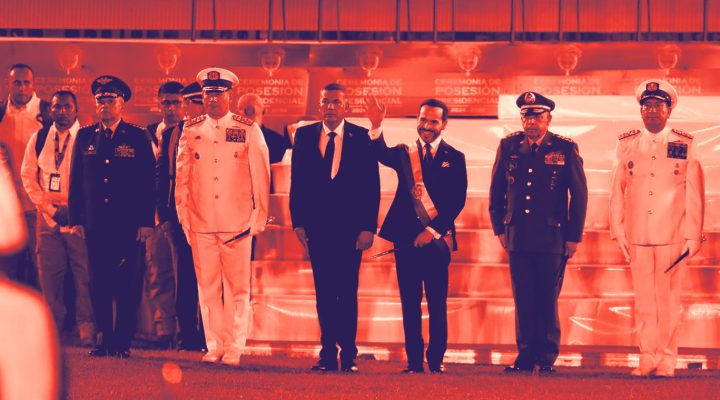
Colombia Changes Course: How Might the New Government Redefine Colombian Foreign Policy and the Political Balance in Latin America?
The transition from the Gustavo Petro administration to that of Abelardo de la Espriella marks a redefinition of Colombia’s development model. This analysis explores the diplomatic shift toward the U.S. and Israel, the move away from multilateral agendas, and the democratic implications of the reconfiguration of Latin America.
By Christy Crouse, Sofia Forero Alba | | Abelardo De La Espriella, Colombia-U.S. Relations, Colombian Foreign Policy, Latin American Geopolitics, Omar Bula Escobar, Political Transition in Colombia

Colombia’s Foreign Policy After Its Change of Course
Abelardo de la Espriella's victory marks a change of course in Colombia. We analyze how his administration may redefine foreign policy, multilateralism, and democratic balances in Latin America in the face of human rights challenges.
By Christy Crouse | | 2026 Colombian Elections, Abelardo De La Espriella, América Latina, Colombia, Colombian Foreign Policy, Democracy and human rights, Latin American Politics, Política Exterior, Right-Wing Populism
News
Search in News
Open call for Global North fellowships 2025
By Dejusticia | | Fellowships for 2025, Global North, Human Rights
If you are passionate about working for human rights, want to gain experience in this field, and be part of a collaborative and creative team consisting of academic-activists from Colombia ...
Lea más 
We have fellowships for defenders from the Global South: Be part of the 2025 cohort!
By Dejusticia | | Dejusticia, Fellowships for 2025, Global South, Human Rights
Are you a human rights defender from a country in the Global South, working in an emergency or high-risk context? Our fellowship program could offer you a peaceful and secure ...
Lea más 
Justice for victims of the armed conflict in Peru, again at risk
By Betsy Zavaleta Amaya, Isabel de Brigard | | Armed Conflict, Fujimori, Perú, Victims Rights
Last October 22, the families of Pativilca community members were finally able, after twenty-two years, to bury their six murdered relatives. Their lifeless bodies were discovered in a cane field ...
Lea más 
The Darien route: a journey of survival that calls for more humane migration policies
By Maryluz Barragán, Nathalia Samhil Gonzalez | | Darién, migration, Venezuela
"We walked like you wouldn't believe. One night I had an anxiety attack and couldn't stop crying. I kept asking my husband over and over again how he could have ...
Lea más 
Expansion of the Technological Frontier: Connectivity and Community in Rural and Indigenous Areas of Colombia and Brazil
By Vivian Newman Pont, Vanessa López, Juliana Fonteles da Silveira | | Brasil, Colombia, Internet access
In one of the most isolated areas of Brazil, 300 km from the city of São Luis, the Bairro Novo palenque in Penalva was able to connect to the internet ...
Lea más 
Strengthening civil society as an avenue for environmental governance
By Andrea Forero, Nina Chaparro González | | Civil Society, COP16, Environmental Justice, Program for strengthening - Others
The past Conference of the Parties to the Convention on Biological Diversity had one of the largest levels of civil society participation in the green zone. This space, which has ...
Lea más Search in Opinion
I don’t care if they call me a dictator.
By Nina Chaparro González | | bukele, Democracy, Dictadura, El Salvador, Program for strengthening - Others
During his six years in office, Bukele has consolidated his power, paving the way to become the dictator he appears to be announcing himself as.
Lea más NGOs at risk of global extinction
By Nina Chaparro González | | financiación internacional, NGO, Program for strengthening - Others
How can non-governmental organizations transform themselves? What were they like when they did not depend on international funding?
Lea más Colombia: going back to the original balance of justice
By Paola Molano Ayala | | gorillaz, JEP, Transitional Justice, Victims
There is a crucial aspect of Colombia’s transitional justice model that is worrying: the current inability of the Special Jurisdiction for Peace (JEP) to offer legal security to those who participated in the conflict, including in human rights violations, and have not been identified as among the most responsible. And making sure they also contribute to the satisfaction of the rights of the victims. The JEP must avoid keep moving towards maximalist approaches and go back to the balance in the Peace Agreement.
Lea más
Stories
FromTheTerritory
We travel with 20 indigenous activists of the world to the heart of the Sierra Nevada de Santa Marta. Listen to this story about the Kankuama Resistance.
Dejusticia's
Documentaries
Discover some of the documentary pieces that we have made. Indigenous resistance, migration of Venezuelans to Colombia and stories of women coca growers, are some of our topics of interest.
