



Colombia Changes Course: How Might the New Government Redefine Colombian Foreign Policy and the Political Balance in Latin America?
The transition from the Gustavo Petro administration to that of Abelardo de la Espriella marks a redefinition of Colombia’s development model. This analysis explores the diplomatic shift toward the U.S. and Israel, the move away from multilateral agendas, and the democratic implications of the reconfiguration of Latin America.
By Christy Crouse, Sofia Forero Alba | | Abelardo De La Espriella, Colombia-U.S. Relations, Colombian Foreign Policy, Latin American Geopolitics, Omar Bula Escobar, Political Transition in Colombia
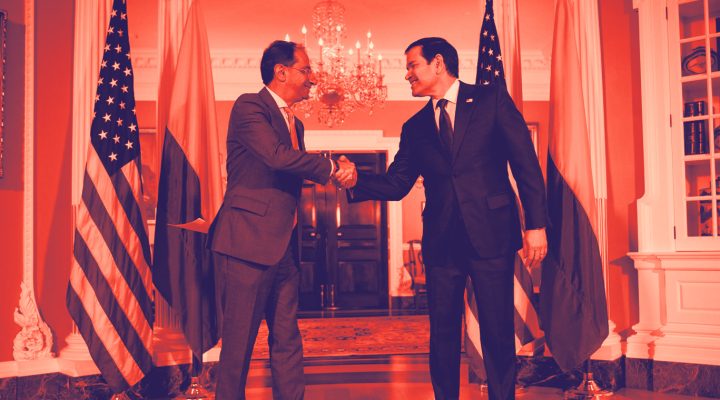
Colombia’s Foreign Policy After Its Change of Course
Abelardo de la Espriella's victory marks a change of course in Colombia. We analyze how his administration may redefine foreign policy, multilateralism, and democratic balances in Latin America in the face of human rights challenges.
By Christy Crouse | | 2026 Colombian Elections, Abelardo De La Espriella, América Latina, Colombia, Colombian Foreign Policy, Democracy and human rights, Latin American Politics, Política Exterior, Right-Wing Populism
News
Search in News

New Book Collating Nutrition Labeling Experiences in Latin America Launched
By Dejusticia | | Nutrition Labeling, World Health Organization, World Trade Organization
A new book, co-edited by Dejusticia, Universidad de los Andes and the Global Health Advocacy Incubator, Latin American activists and researchers share their experience promoting front of package warning label ...
Lea más 
Gender identity and migration in South Africa: a layered experience
By Muyenga Bobo Mugerwa-Sekawabe | | Identidad de género, lgbtiq, Sudáfrica
LGBTQIA+ identities are criminalised in 38 of 54 African countries. This includes Malawi, the southern African nation where, in 2010, Tiwonge Chimbalanga was imprisoned two days after celebrating her engagement ...
Lea más 
Trafficked migrant and refugee women in Latin America: State responses and challenges
By Lucía Ramírez Bolívar | | Crisis en Venezuela, Migración Colombia-Venezuela, trata de personas
Yolanda arrived in Colombia with her two daughters and husband because of a job offer to sell red wine and other hot beverages. The offer included payment for transportation, food ...
Lea más 
Borders, forced migration and differential approaches
By Lucía Ramírez Bolívar, Margarita Martínez Osorio, Carmen Mestizo Castillo | | Discriminación de género, Fronteras, migración forzada, Pueblos indígenas
Borders are human creations that seek to establish unions but, above all, boundaries. What does it mean to be an indigenous nation living in a territory divided by a border? ...
Lea más 
From Indonesia to Peru: The Experiences of Our Fellows from the Global South
By Dejusticia | | Global South
The call for our next cohort of Global South fellows closes on January 31. If you are a human rights defender from a country in emergency and want to build ...
Lea más 
Local stories of justice and reparation in the face of extractivism in Latin America
By Julián Gutiérrez Martínez, Victoria Fernández Almeida | | Argentina, Colombia, Extractivism, Indigenous Peoples
Latin America coexists in a fragile tension between extractivism and territories, where geographies and business activities may vary but the effects on communities show common patterns. In El Aguilar in ...
Lea más Search in Opinion
I don’t care if they call me a dictator.
By Nina Chaparro González | | bukele, Democracy, Dictadura, El Salvador, Program for strengthening - Others
During his six years in office, Bukele has consolidated his power, paving the way to become the dictator he appears to be announcing himself as.
Lea más NGOs at risk of global extinction
By Nina Chaparro González | | financiación internacional, NGO, Program for strengthening - Others
How can non-governmental organizations transform themselves? What were they like when they did not depend on international funding?
Lea más Colombia: going back to the original balance of justice
By Paola Molano Ayala | | gorillaz, JEP, Transitional Justice, Victims
There is a crucial aspect of Colombia’s transitional justice model that is worrying: the current inability of the Special Jurisdiction for Peace (JEP) to offer legal security to those who participated in the conflict, including in human rights violations, and have not been identified as among the most responsible. And making sure they also contribute to the satisfaction of the rights of the victims. The JEP must avoid keep moving towards maximalist approaches and go back to the balance in the Peace Agreement.
Lea más
Stories
FromTheTerritory
We travel with 20 indigenous activists of the world to the heart of the Sierra Nevada de Santa Marta. Listen to this story about the Kankuama Resistance.
Dejusticia's
Documentaries
Discover some of the documentary pieces that we have made. Indigenous resistance, migration of Venezuelans to Colombia and stories of women coca growers, are some of our topics of interest.
