


Colombia Changes Course: How Might the New Government Redefine Colombian Foreign Policy and the Political Balance in Latin America?
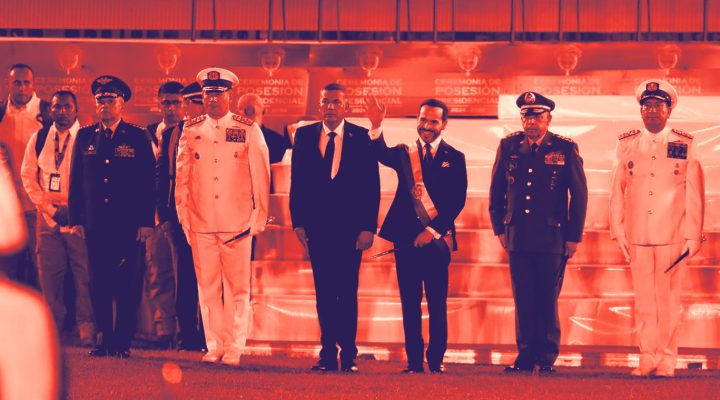
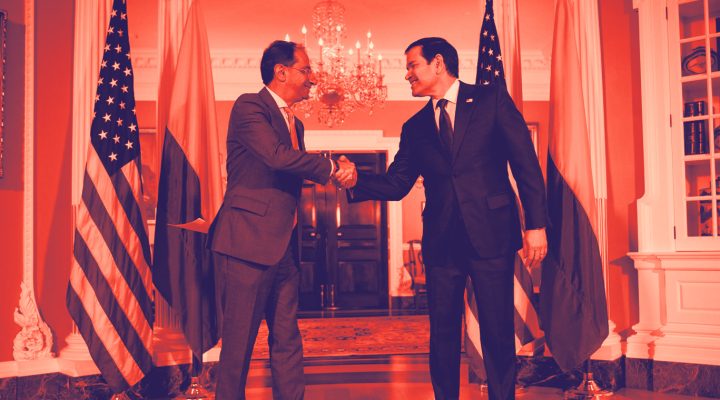
The transition from the Gustavo Petro administration to that of Abelardo de la Espriella marks a redefinition of Colombia’s development model. This analysis explores the diplomatic shift toward the U.S. and Israel, the move away from multilateral agendas, and the democratic implications of the reconfiguration of Latin America.
By Christy Crouse, Sofia Forero Alba | | Abelardo De La Espriella, Colombia-U.S. Relations, Colombian Foreign Policy, Latin American Geopolitics, Omar Bula Escobar, Political Transition in Colombia
Colombia’s Foreign Policy After Its Change of Course
Abelardo de la Espriella's victory marks a change of course in Colombia. We analyze how his administration may redefine foreign policy, multilateralism, and democratic balances in Latin America in the face of human rights challenges.
By Christy Crouse | | 2026 Colombian Elections, Abelardo De La Espriella, América Latina, Colombia, Colombian Foreign Policy, Democracy and human rights, Latin American Politics, Política Exterior, Right-Wing Populism
News
Search in News

Uma Kiwe Mother Earth: a commitment to caring for water and life in Mocoa
By Natalia Katixa Escobar Viasus | | Amazon, Mocoa, Program for strengthening - Colombia, Putumayo
To get to Mocoa, I left Bogotá for the Tres de Mayo airport in Puerto Asís. I am ready for a two-hour road trip. It's early, but that 'scorching' humidity ...
Lea más 
A narrative laboratory for healing
By Adriana Abramovits | | Program for strengthening - Colombia, salud mental
On the slopes of La Popa hill, being a child is difficult. The neighborhoods of Pablo VI, Los Comuneros, and La María, with their narrow alleys and crowded houses, are ...
Lea más 
The resistance of the black people of the Pacific coast of Cauca
By Paloma Cobo, Daniel Ospina Celis | | Program for strengthening - Colombia
We agreed to meet early at the pier. Tall wooden posts stand out on the surface of the water, where hundreds of rickety boats rest. The pier comes to life ...
Lea más 
The struggle of Afro-Colombian women in northern Cauca is told in songs
By Mariana Escobar Roldán | | Program for strengthening - Colombia
If Eunice and Nancy Vergara could tell their story in songs, they would. They would tune the guitars, beat the rhythm with their palms and sing, the first as a ...
Lea más 
A feminist commitment from northern Cauca
By Dejusticia | | Program for strengthening - Colombia
Andrea Carolina Forero Hernández* “A las ancestras creativas que en la memoria llevo yo, a las que perdieron la vida por querer alzar su voz. A las mujeres nos dicen ...
Lea más 
An island with heart
By Vivian Newman Pont | | Program for strengthening - Colombia, Pueblos étnicos
They're just "daring" kids, as the ombudsman once called them, recognizing their great drive at a young age. Five young people in their twenties and a couple who are barely ...
Lea más Search in Opinion
I don’t care if they call me a dictator.
By Nina Chaparro González | | bukele, Democracy, Dictadura, El Salvador, Program for strengthening - Others
During his six years in office, Bukele has consolidated his power, paving the way to become the dictator he appears to be announcing himself as.
Lea más NGOs at risk of global extinction
By Nina Chaparro González | | financiación internacional, NGO, Program for strengthening - Others
How can non-governmental organizations transform themselves? What were they like when they did not depend on international funding?
Lea más Colombia: going back to the original balance of justice
By Paola Molano Ayala | | gorillaz, JEP, Transitional Justice, Victims
There is a crucial aspect of Colombia’s transitional justice model that is worrying: the current inability of the Special Jurisdiction for Peace (JEP) to offer legal security to those who participated in the conflict, including in human rights violations, and have not been identified as among the most responsible. And making sure they also contribute to the satisfaction of the rights of the victims. The JEP must avoid keep moving towards maximalist approaches and go back to the balance in the Peace Agreement.
Lea más
Stories
FromTheTerritory
We travel with 20 indigenous activists of the world to the heart of the Sierra Nevada de Santa Marta. Listen to this story about the Kankuama Resistance.
Dejusticia's
Documentaries
Discover some of the documentary pieces that we have made. Indigenous resistance, migration of Venezuelans to Colombia and stories of women coca growers, are some of our topics of interest.
