


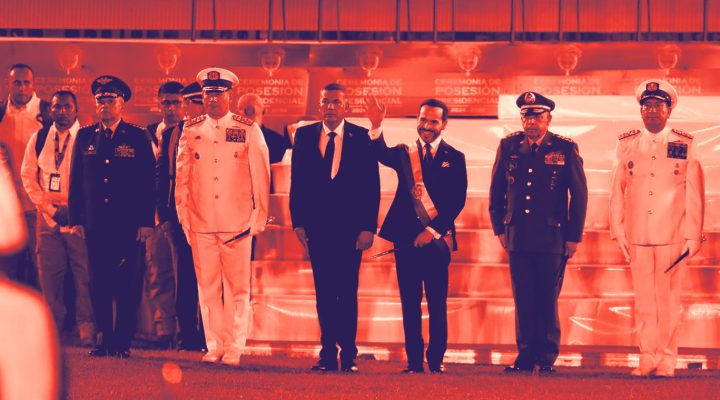
Colombia Changes Course: How Might the New Government Redefine Colombian Foreign Policy and the Political Balance in Latin America?
The transition from the Gustavo Petro administration to that of Abelardo de la Espriella marks a redefinition of Colombia’s development model. This analysis explores the diplomatic shift toward the U.S. and Israel, the move away from multilateral agendas, and the democratic implications of the reconfiguration of Latin America.
By Christy Crouse, Sofia Forero Alba | | Abelardo De La Espriella, Colombia-U.S. Relations, Colombian Foreign Policy, Latin American Geopolitics, Omar Bula Escobar, Political Transition in Colombia
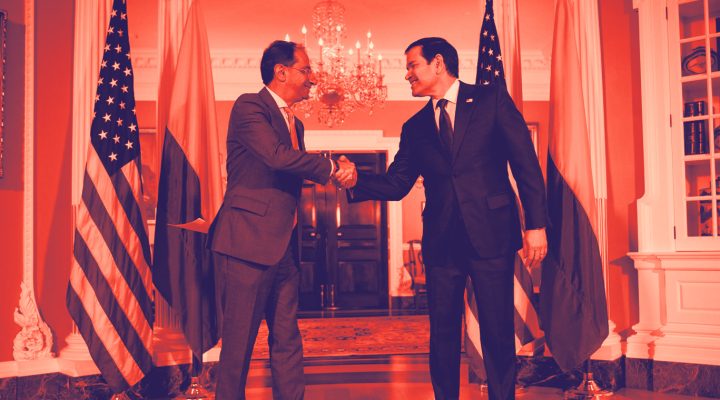
Colombia’s Foreign Policy After Its Change of Course
Abelardo de la Espriella's victory marks a change of course in Colombia. We analyze how his administration may redefine foreign policy, multilateralism, and democratic balances in Latin America in the face of human rights challenges.
By Christy Crouse | | 2026 Colombian Elections, Abelardo De La Espriella, América Latina, Colombia, Colombian Foreign Policy, Democracy and human rights, Latin American Politics, Política Exterior, Right-Wing Populism
News
Search in News

The space that decentralizes peace from the Montes de María
By Ivonne Elena Díaz | | Montes de María, Program for strengthening - Colombia
At the monthly meetings of the Montes de María Regional Peacebuilding Space, held sacredly on the first Saturday of each month, one breathes a sense of freshness emanating from the ...
Lea más 
The struggle of Colombian farmers to be recognized and counted
By Dejusticia | | Campesinado, Program for strengthening - Colombia
José Darío Puentes Ramos* The final photo of those who drafted the 1991 Constitution, one of the milestones in Colombian politics, was incomplete. While there was participation from various communities ...
Lea más 
The center is the periphery: a circle of words at the FUCAI Foundation
By Paloma Cobo | | Program for strengthening - Colombia
Ruth Chaparro, whom they call mother, grandmother, or teacher, is the one who begins the speaking. She has a serene gaze and salt-and-pepper hair. I am with about fifteen members ...
Lea más 
“A person with autism does not live in their own world”: 13 years breaking down stigmas
By Sofia Forero Alba | | Program for strengthening - Colombia
Sebastián Villarraga describes himself as a calm and kind person, always willing to support others. He studied agricultural business management at SENA. He also likes music, animals, literature, video games, ...
Lea más 
Being a feminist organization is quite a challenge in Riohacha
By Dejusticia | | Program for strengthening - Colombia
By: María Mercedes Acosta (*) Ana Teresa Puente, an economist, was born and raised in Riohacha, the capital of La Guajira. One of the memories that comes to mind most ...
Lea más 
Pintadillo con primitivo: women who preserve black tradition in Caquetá
By Paloma Cobo | | Mujeres, Program for strengthening - Colombia
The hands of professors Mireya Emperatriz, Eyda, and María Hilda shred a pintadillo to make a bacalao desmechado (shredded codfish) dish. In Chocó, where the recipe originates, it's made with ...
Lea más Search in Opinion
I don’t care if they call me a dictator.
By Nina Chaparro González | | bukele, Democracy, Dictadura, El Salvador, Program for strengthening - Others
During his six years in office, Bukele has consolidated his power, paving the way to become the dictator he appears to be announcing himself as.
Lea más NGOs at risk of global extinction
By Nina Chaparro González | | financiación internacional, NGO, Program for strengthening - Others
How can non-governmental organizations transform themselves? What were they like when they did not depend on international funding?
Lea más Colombia: going back to the original balance of justice
By Paola Molano Ayala | | gorillaz, JEP, Transitional Justice, Victims
There is a crucial aspect of Colombia’s transitional justice model that is worrying: the current inability of the Special Jurisdiction for Peace (JEP) to offer legal security to those who participated in the conflict, including in human rights violations, and have not been identified as among the most responsible. And making sure they also contribute to the satisfaction of the rights of the victims. The JEP must avoid keep moving towards maximalist approaches and go back to the balance in the Peace Agreement.
Lea más
Stories
FromTheTerritory
We travel with 20 indigenous activists of the world to the heart of the Sierra Nevada de Santa Marta. Listen to this story about the Kankuama Resistance.
Dejusticia's
Documentaries
Discover some of the documentary pieces that we have made. Indigenous resistance, migration of Venezuelans to Colombia and stories of women coca growers, are some of our topics of interest.
