


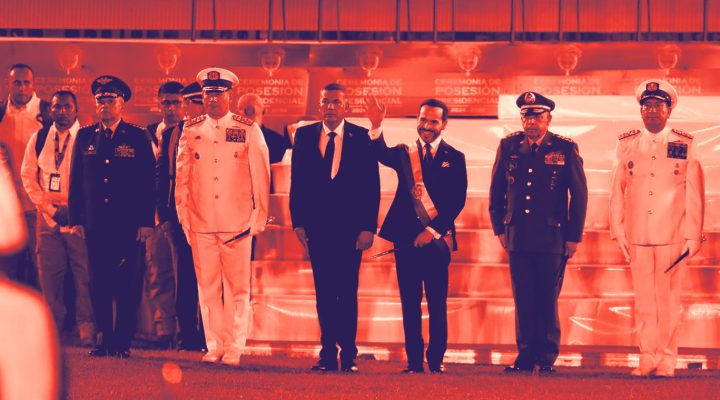
Colombia Changes Course: How Might the New Government Redefine Colombian Foreign Policy and the Political Balance in Latin America?
The transition from the Gustavo Petro administration to that of Abelardo de la Espriella marks a redefinition of Colombia’s development model. This analysis explores the diplomatic shift toward the U.S. and Israel, the move away from multilateral agendas, and the democratic implications of the reconfiguration of Latin America.
By Christy Crouse, Sofia Forero Alba | | Abelardo De La Espriella, Colombia-U.S. Relations, Colombian Foreign Policy, Latin American Geopolitics, Omar Bula Escobar, Political Transition in Colombia
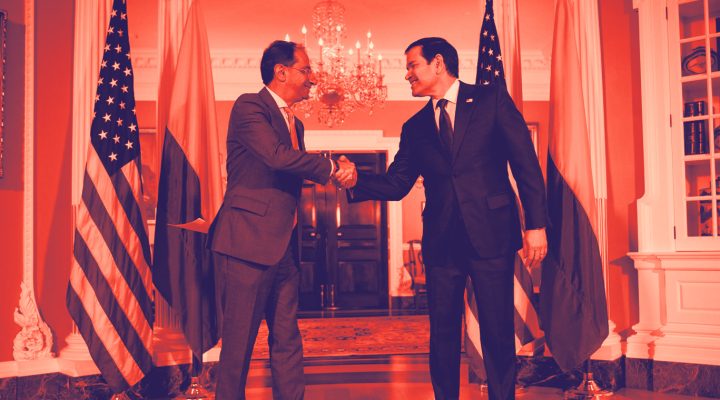
Colombia’s Foreign Policy After Its Change of Course
Abelardo de la Espriella's victory marks a change of course in Colombia. We analyze how his administration may redefine foreign policy, multilateralism, and democratic balances in Latin America in the face of human rights challenges.
By Christy Crouse | | 2026 Colombian Elections, Abelardo De La Espriella, América Latina, Colombia, Colombian Foreign Policy, Democracy and human rights, Latin American Politics, Política Exterior, Right-Wing Populism
News
Search in News
We call for immediate action to address the judicial crisis
By Dejusticia | | Sistema Judicial
While designing and approving a new justice reform and adopting institutional measures that allow for reforms that do not require regulatory modification, high courts and the Attorney General can take ...
Lea más 
Case of indigenous people from Bojayá who could not vote in the plebiscite is about to reach the Court
By Dejusticia | | Acuerdo de paz, Corte Constitucional, Derecho a la igualdad, Derecho a la participación política, Derecho al voto, Emberá, Plebiscito
Although on October 2, 2016, 95.78% of the inhabitants of Bojayá (Chocó) who went to the polls to vote on the peace plebiscite said Yes to the agreement between the ...
Lea más 
“Today, even Chavistas are persecuted in Venezuela”: Rafael Uzcátegui
By Angélica María Cuevas Guarnizo | | crisis Venezuela, DDHH, Human Rights, Nicolás Maduro, Venezuela
The cinematic escape of the ex-prosecutor, Luisa Ortega from Venezuela to Colombia, and later to Brazil and Costa Rica, has been full of denunciations of corruption against government ministers, Presidential ...
Lea más 
The civil rights of the families of missing persons need to be protected
By Dejusticia | | Boletín
The family of Miguel Angel Diaz, a missing member of the Patriotic Union (UP), is awaiting the ruling of a nullity filed before the Constitutional Court in an attempt to ...
Lea más 
Osamah, the Yemeni activist who has not seen reconciliation
By Dejusticia | | Sur Global
By: Mariana Escobar Roldán Osamah Al Fakih does not remember witnessing peace in Yemen. Sometimes his country has been less volatile, but at least in the last 30 years, it ...
Lea más 
Los Guáimaros resist being forgotten
By Irina Alejandra Junieles Acosta | | Álvaro Uribe, Boletín, Comisión de la verdad, FARC, Paramilitares, Proceso de paz
It's been 15 years since Yurleidys Tapia lost her father, Jose Manuel Tapia, in an appalling massacre. A few weeks ago the 21-year-old girl, with pale skin and expressive eyes, ...
Lea más Search in Opinion
I don’t care if they call me a dictator.
By Nina Chaparro González | | bukele, Democracy, Dictadura, El Salvador, Program for strengthening - Others
During his six years in office, Bukele has consolidated his power, paving the way to become the dictator he appears to be announcing himself as.
Lea más NGOs at risk of global extinction
By Nina Chaparro González | | financiación internacional, NGO, Program for strengthening - Others
How can non-governmental organizations transform themselves? What were they like when they did not depend on international funding?
Lea más Colombia: going back to the original balance of justice
By Paola Molano Ayala | | gorillaz, JEP, Transitional Justice, Victims
There is a crucial aspect of Colombia’s transitional justice model that is worrying: the current inability of the Special Jurisdiction for Peace (JEP) to offer legal security to those who participated in the conflict, including in human rights violations, and have not been identified as among the most responsible. And making sure they also contribute to the satisfaction of the rights of the victims. The JEP must avoid keep moving towards maximalist approaches and go back to the balance in the Peace Agreement.
Lea más
Stories
FromTheTerritory
We travel with 20 indigenous activists of the world to the heart of the Sierra Nevada de Santa Marta. Listen to this story about the Kankuama Resistance.
Dejusticia's
Documentaries
Discover some of the documentary pieces that we have made. Indigenous resistance, migration of Venezuelans to Colombia and stories of women coca growers, are some of our topics of interest.
