


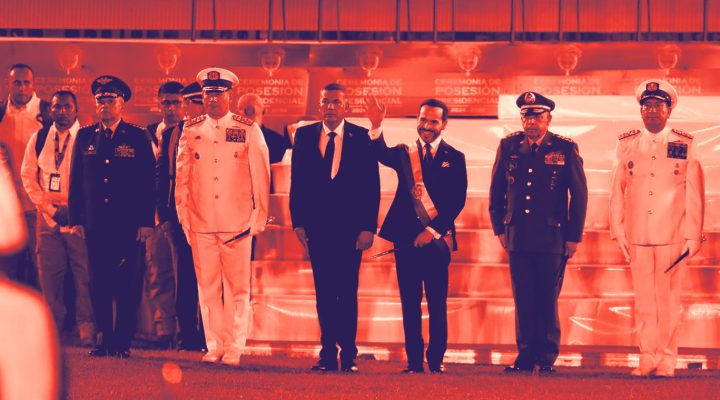
Colombia Changes Course: How Might the New Government Redefine Colombian Foreign Policy and the Political Balance in Latin America?
The transition from the Gustavo Petro administration to that of Abelardo de la Espriella marks a redefinition of Colombia’s development model. This analysis explores the diplomatic shift toward the U.S. and Israel, the move away from multilateral agendas, and the democratic implications of the reconfiguration of Latin America.
By Christy Crouse, Sofia Forero Alba | | Abelardo De La Espriella, Colombia-U.S. Relations, Colombian Foreign Policy, Latin American Geopolitics, Omar Bula Escobar, Political Transition in Colombia
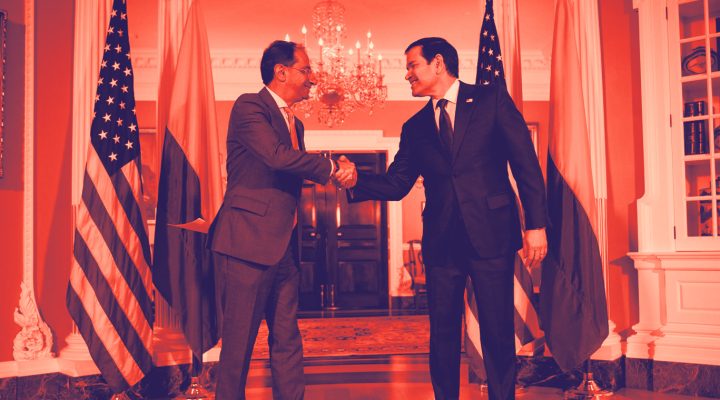
Colombia’s Foreign Policy After Its Change of Course
Abelardo de la Espriella's victory marks a change of course in Colombia. We analyze how his administration may redefine foreign policy, multilateralism, and democratic balances in Latin America in the face of human rights challenges.
By Christy Crouse | | 2026 Colombian Elections, Abelardo De La Espriella, América Latina, Colombia, Colombian Foreign Policy, Democracy and human rights, Latin American Politics, Política Exterior, Right-Wing Populism
News
Search in News
A Colombian woman appeals to the government for help locating her son arbitrarily detained in Venezuela
By Dejusticia | | Crisis en Venezuela, Venezuela
A Colombian woman living in Caracas, Ramona Emilia Rangel Colmenares, sent a right of petition to the Colombian embassy in Venezuela appealing for help with obtaining information about the ...
Lea más 
The national government geographically isolated Chocó
By Nelson Camilo Sánchez León | | Boletín, Chocó, Derechos económicos, Derechos sociales
The Quibdó-Medellín road is 123 kilometers long and about half of it is unpaved. The route takes about six hours, while a road like Bogota-Neiva, which is more than twice ...
Lea más 
It is necessary to consolidate the JEP as soon as possible: press release
By Dejusticia | | Boletín, Jurisdicción Especial para la Paz
In a press release directed to the public opinion, national government, Congress, CSIVI, Selection Committee for the members of the Integral System of Truth, Justice, Reparation and Non-Repetition, the JEP's ...
Lea más 
The Constitutional Court has the last word to save the Ciénaga Grande of Santa Marta
By Dejusticia | | Derecho al Medio Ambiente, Guardianships
The Ciénaga Grande of Santa Marta represents one of the worst environmental disasters of recent years in Colombia. In 2016, there were at least ten episodes of massive fish mortality ...
Lea más 
The migratory wall facing refugees
By Lucía Ramírez Bolívar | | Crisis en Venezuela, Estados Unidos, Venezuela
Before leaving Venezuela for Colombia, Johan worked for Movistar as a telecommunications engineer. Today, three months after arriving by bus to Bogotá, the young man of 22 years sells cookies ...
Lea más 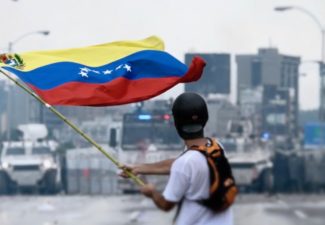
Colombian lawyers reject Constituent Assembly in Venezuela
By Dejusticia |
This is the message that a group of Colombian researchers, professors and ex-judges put forward in a public letter, replicating similar initiatives by constitutionalists from other Latin American countries. In ...
Lea más Search in Opinion
I don’t care if they call me a dictator.
By Nina Chaparro González | | bukele, Democracy, Dictadura, El Salvador, Program for strengthening - Others
During his six years in office, Bukele has consolidated his power, paving the way to become the dictator he appears to be announcing himself as.
Lea más NGOs at risk of global extinction
By Nina Chaparro González | | financiación internacional, NGO, Program for strengthening - Others
How can non-governmental organizations transform themselves? What were they like when they did not depend on international funding?
Lea más Colombia: going back to the original balance of justice
By Paola Molano Ayala | | gorillaz, JEP, Transitional Justice, Victims
There is a crucial aspect of Colombia’s transitional justice model that is worrying: the current inability of the Special Jurisdiction for Peace (JEP) to offer legal security to those who participated in the conflict, including in human rights violations, and have not been identified as among the most responsible. And making sure they also contribute to the satisfaction of the rights of the victims. The JEP must avoid keep moving towards maximalist approaches and go back to the balance in the Peace Agreement.
Lea más
Stories
FromTheTerritory
We travel with 20 indigenous activists of the world to the heart of the Sierra Nevada de Santa Marta. Listen to this story about the Kankuama Resistance.
Dejusticia's
Documentaries
Discover some of the documentary pieces that we have made. Indigenous resistance, migration of Venezuelans to Colombia and stories of women coca growers, are some of our topics of interest.
